

Plenty of families reach a point where they start wondering whether there’s a different way to raise curious, capable kids. Some want more time together. Some want their children to experience the world rather than just read about it. Some simply want out of the school run. Whatever brought you here, this guide covers everything you need to know about what worldschooling is, how it works, and whether it might be the right fit for your family.
What Is Worldschooling?
Worldschooling is a travel-based form of education in which children learn through direct experience of the world around them. That might mean studying ancient history while walking through Roman ruins, picking up a second language by spending months in a country where it’s spoken, or understanding ecosystems by living near one.
It’s not a single method or a fixed curriculum. It’s a philosophy that treats the world itself as a learning environment. Some families follow a structured academic program alongside their travels. Others take a more open-ended approach. Most land somewhere in between, adjusting as their children grow and their circumstances change.
What stays consistent is the core idea: that experiential, place-based learning, the kind that happens when a child is genuinely immersed in a place and its people, tends to stick in ways that textbook learning often doesn’t.
Worldschooling puts the world at the center of a child’s education. It’s not a rejection of learning. It’s a deliberate choice to learn differently, using travel, culture, community, and real experience as the primary classroom.
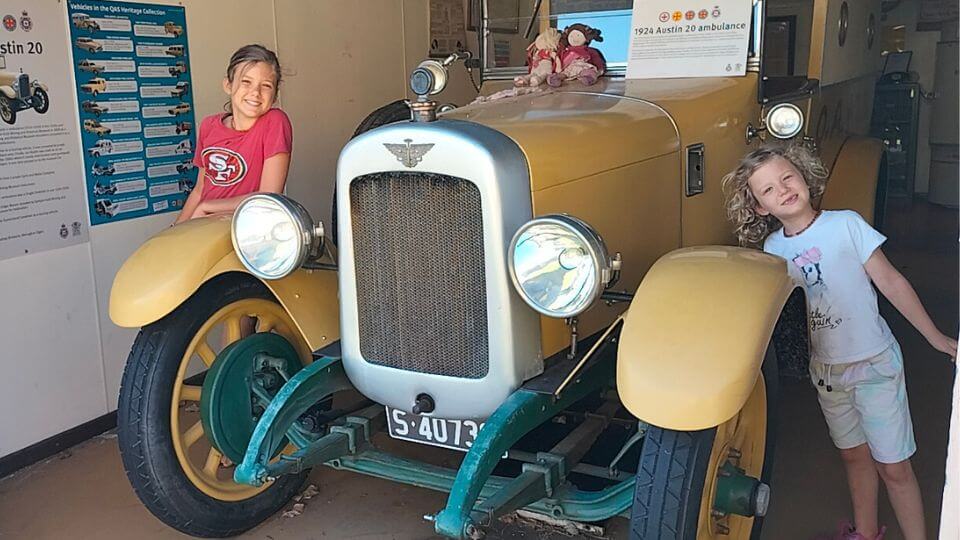
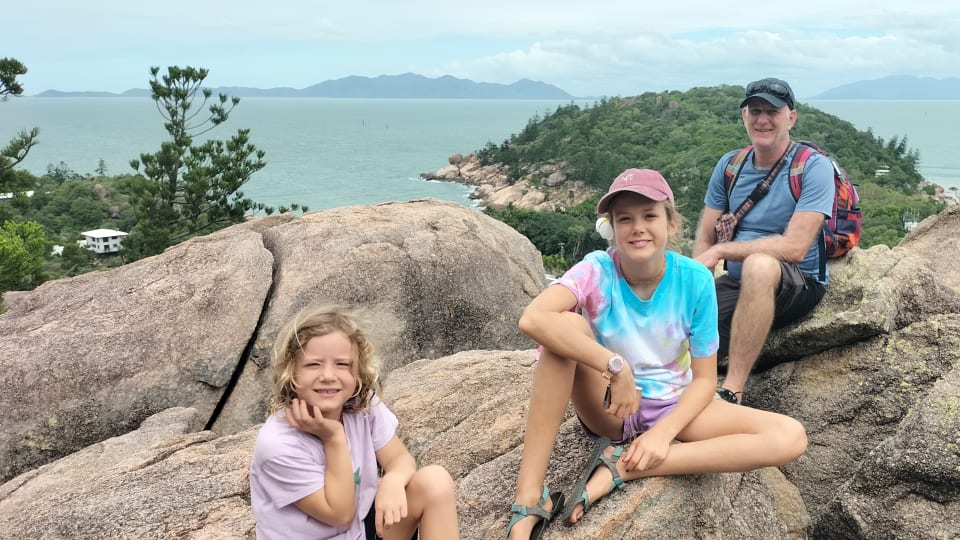
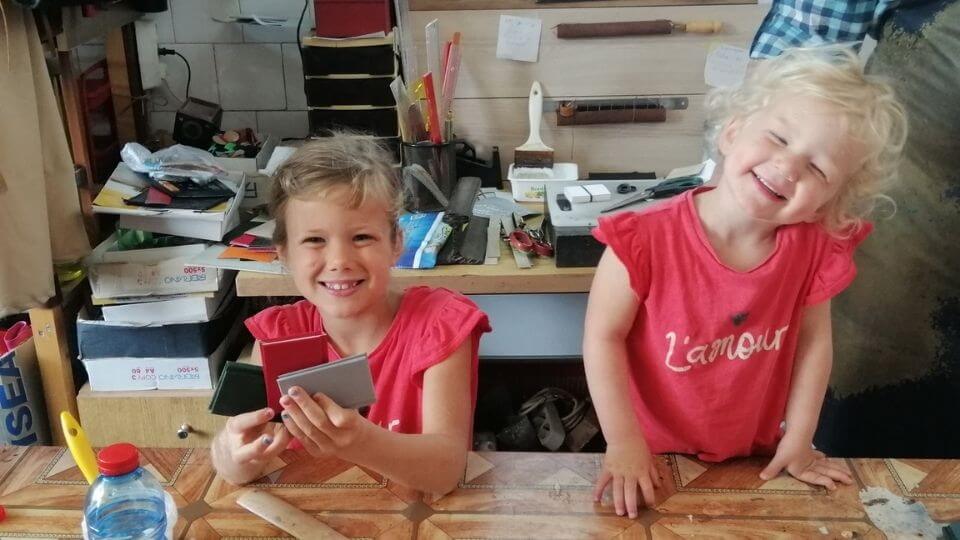
No two worldschooling families look exactly alike, and that’s by design. (That’s our worldschooling family below – Romy, Ayla, Elly, and Colin – full-time unschooling worldschoolers, on the road since February 2017).

How Worldschooling Works in Practice
Day-to-day, worldschooling looks different depending on the family, the destination, and the ages of the children involved.
A typical week (though it depends on the family’s approach) might include:
- A few hours of structured learning in the morning, using an online curriculum or self-directed reading
- Afternoons spent exploring markets, museums, nature, or local neighborhoods
- Language practice through real conversations rather than worksheets
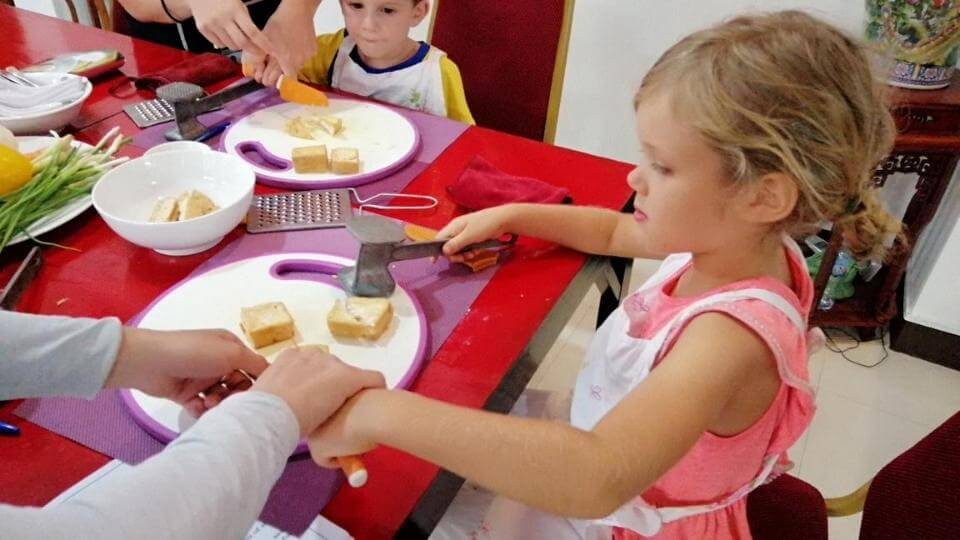
- Cooking, budgeting, navigating, and problem-solving as part of daily life
Some families travel slowly, spending several months in one place to allow for deeper culture and language immersion. Others move more frequently. Many connect with other travel families through worldschooling communities, giving their children consistent social contact even as the geography changes.
There’s no single schedule that works for everyone. The flexibility is part of what draws families to this way of life.
The History and Origins of Worldschooling
The roots of worldschooling stretch back further than the term itself. John Holt, the American educator and author, began writing in the 1960s and 1970s about the limitations of conventional schooling and the idea that children learn best when they’re free to follow their curiosity. His work laid much of the philosophical groundwork for both unschooling and, later, worldschooling.
The broader concept of learning through travel has existed for centuries. The Grand Tour, a tradition among European families of means in the 17th and 18th centuries, was built on the idea that direct exposure to other cultures produced a more complete education than any classroom could.
What changed in the early 21st century was access. The rise of remote work, affordable long-haul travel, and online education made travel-based education a realistic option for a much wider range of families, not just the wealthy or the unconventional.
Worldschooling vs Homeschooling vs Unschooling
These three terms often get used interchangeably, but they describe different things. Understanding the distinctions helps families figure out where they sit and what approach might suit them best.
Key Differences Between Each Approach
Homeschooling is the broadest category. It refers to any arrangement in which a child’s education occurs outside mainstream schooling, usually directed by parents. It can be highly structured, loosely structured, or anything in between. Homeschool laws vary significantly by country and even by region, so families need to understand the legal requirements in their home country before making any decisions.
Unschooling sits within the homeschooling spectrum. It’s a child-led, self-directed approach rooted in the belief that children learn naturally when given freedom, resources, and trust. It’s not the absence of learning. It’s the absence of imposed curriculum. John Holt’s influence is felt most directly here.
Worldschooling can sit alongside either of these approaches. A worldschooling family might:
- Follow a structured curriculum while traveling
- Enroll their children in local schools at each destination
- Take a full unschooling approach on the road
- Use a mix of online education and immersive local experience
The travel is what defines worldschooling. The educational philosophy behind it is a separate choice.
Which Approach Is Right for Your Family?
There’s no universal answer here, and anyone who tells you otherwise is selling something.
The right approach depends on your children’s ages and learning styles, your own comfort with structure or flexibility, your financial situation, and how much time you’re realistically able to give to facilitating learning. It also depends on what your children need socially and emotionally, which is worth thinking about honestly rather than optimistically.
Some families find that a structured online school gives them confidence and continuity. Others find that structure gets in the way of the very experiences they traveled to have. Most families experiment, adjust, and land on something that works for their specific mix of people.
Why Families Choose Worldschooling
The reasons families make this choice are as varied as the families themselves. But certain patterns come up again and again, and they’re worth looking at honestly rather than through rose-tinted glass.
Benefits of Worldschooling for Children
Children who grow up traveling tend to develop a particular kind of fluency that’s hard to teach in a classroom. That includes:
- Cultural differences: Regular exposure to different ways of living builds genuine cultural awareness, not just tolerance in the abstract
- Language: Children who spend extended time in a country where another language is spoken pick it up faster and more naturally than through formal instruction alone
- Adaptability: Moving between environments, social groups, and routines builds resilience and problem-solving in ways that a stable, predictable school day rarely does
- Contextual learning: History learned at a historical site, geography understood through physical experience, science observed in the field, these things connect differently than the same content on a page
Children also tend to develop strong social-emotional skills through worldschooling. Navigating new social situations, making friends across cultural differences, and managing the uncertainty of constant change are all genuinely demanding, and children who do it regularly tend to get good at it.
Benefits of Worldschooling for the Whole Family
For the family as a unit, worldschooling tends to shift the texture of daily life in ways that go beyond education.
Parents and children spend significantly more time together, and that time is often more varied and more engaged than the typical school-week routine allows. Shared experiences, whether that’s getting lost in a new city, learning to cook a local dish, or figuring out a bus system in a language none of you speak, build a different kind of family relationship.
Many families also report that travel recalibrates what they value. The focus shifts from accumulating things to accumulating experiences. That’s not a guarantee, and it’s not for everyone, but it’s a pattern that comes up consistently among families who’ve been doing this for a while.
Challenges of Worldschooling
Worldschooling is not without its difficulties. Families who go in with clear eyes tend to do better than those who expect it to be straightforwardly wonderful.
Common Concerns Parents Have Before Starting
The concerns most parents raise before starting are consistent:
- Cost: Many families assume worldschooling is expensive. The reality is more nuanced. Slower travel in lower-cost regions can be more affordable than a conventional life at home, but it requires planning and financial flexibility.
- Logistics: Visas, accommodation, healthcare, and keeping children’s documentation current are all real administrative burdens that don’t disappear just because the lifestyle is appealing.
- Social connection: Parents worry their children will be lonely or miss out on the social fabric of school. This is a legitimate concern, not an irrational one, and it deserves a real answer rather than dismissal.
- Uncertainty about outcomes: Not knowing whether you’re doing enough, or whether your children are learning what they need to learn, is genuinely uncomfortable for most parents.
None of these concerns are reasons not to worldschool. But they’re all worth taking seriously before you start.
Will Worldschooled Kids Fall Behind Their Peers?
This is one of the most common fears, and the evidence doesn’t support it as a general outcome. Children who learn through direct experience, real-world problem-solving, and self-directed curiosity often develop strong critical thinking and communication skills. What they may lack is familiarity with the specific content and format of mainstream schooling, which can matter if they later want to re-enter that system.
The honest answer is that outcomes vary and depend heavily on how engaged the parents are, how well the approach suits the individual child, and whether the family is intentional about covering core skills alongside experiential learning. Worldschooling is not a passive process. It requires active involvement from parents.
Can Worldschooled Kids Sit Exams?
Yes. Worldschooled and unschooled children can and do sit formal exams. Many families use internationally recognized qualifications to give their children documented credentials, and there are examination centers in most countries that allow independent candidates to register. The path requires planning, but it’s well-traveled.
How to Start Worldschooling
Moving from thinking about worldschooling to actually doing it is where most families get stuck. This section is for families who are ready to take the next step.
Best Age to Start Worldschooling
There’s no single best age, and families start at every stage of their children’s lives.
Younger children, roughly primary school age and below, tend to adapt to new environments with less friction. They’re less attached to existing social structures and more naturally curious about new places. That said, very young children also have more logistical needs, and parents of toddlers will find the practical demands of travel more intense.
Older children and teenagers can get enormous value from worldschooling, but the transition may need more support. Leaving established friendships and familiar routines is harder at 13 than at 7. Involving older children in the planning process, giving them genuine input into destinations and activities, tends to make the transition smoother.
Worldschooling Curriculum Options
The range of approaches families use is wide:
- Structured curricula: Some families follow a formal homeschool curriculum that maps to their home country’s educational standards, giving them a clear framework and documented progress
- Online schools: Accredited online schools allow children to follow a recognized program from anywhere in the world, with teacher contact and assessed work
- Unschooling: Families who take a child-led approach trust their children to direct their own learning, with parents facilitating access to resources, experiences, and people
- Local school enrollment: Some families enroll their children in local schools at each destination, which offers deep immersion in local culture and language alongside a structured school day
- Hybrid approaches: Most worldschooling families end up combining elements of several of these, adjusting as they go
No single approach is right for every family or every child. The best curriculum is the one your child will actually engage with.
Online Schools for Worldschooling Kids
Online schools are a practical option for families who want the continuity of a recognized program without being tied to a physical location. They typically offer a structured timetable, qualified teachers, assessed coursework, and in some cases, accredited qualifications.
The quality and approach vary significantly between providers, so it’s worth researching options that align with your home country’s educational framework or the qualifications you’re aiming for. Check whether the school is accredited, what the time zone requirements are for live lessons, and how much flexibility the program allows for travel. Many families find that online education works well as a backbone, with the travel itself filling in everything the screen can’t provide.
How to Afford Worldschooling
Money is the barrier that stops more families than almost anything else. The good news is that worldschooling is financially possible for more families than most assume. The less good news is that it requires honest planning.
Budgeting for a Worldschooling Lifestyle
The cost of worldschooling varies enormously depending on where you go, how you travel, and what activities you do. Families who travel slowly through Southeast Asia, Central America, or parts of Eastern Europe often find their overall cost of living lower than at home.
Faster travel, or travel through Western Europe, North America, or Australia and New Zealand, tends to cost more. Accommodation is usually the biggest variable. Families who rent apartments for weeks or months at a time rather than booking hotels night by night tend to spend significantly less. Housesitting and Workaways can eliminate accommodation costs completely, or at least partially if you do them intermittently.
The general principle is: slower travel in lower-cost regions is more affordable than most people expect. Check current costs directly with local providers and expat community forums in the regions you’re considering, since costs vary and will change over time.
Income Strategies for Worldschooling Families
Digital nomad families fund their travels in a range of ways:
- Remote employment: Many families have one or both parents working remotely for an employer, which provides a stable income without requiring a fixed location
- Freelancing: Writing, design, development, consulting, and other skills translate well to freelance work that can be done from anywhere
- Location-independent businesses: Some families run online businesses, e-commerce stores, or content platforms that generate income independently of where they’re based
- Teaching and tutoring: Online language teaching and tutoring are common income sources for worldschooling parents, with flexible hours that can fit around family life
The key is to establish income before you leave, not to hope it will materialize once you’re on the road. Most families who make this work have spent months building their remote income before they commit to the lifestyle.
Best Destinations and Communities for Worldschooling
Some places are better suited to worldschooling families than others, not because they’re more beautiful, but because of practical factors that make longer stays easier and more rewarding.
Top Destinations Favored by Worldschooling Families
When worldschooling families talk about where they’ve spent meaningful time, a few characteristics come up consistently:
- Visa flexibility: Countries that offer longer tourist visas, digital nomad visas, or straightforward visa extension processes make it easier to stay long enough for real immersion rather than surface-level tourism
- Cost of living: Destinations where accommodation, food, and daily life are affordable (such as Malaysia) allow families to stretch their budget further and travel more slowly
- Existing communities: Places with established expat or worldschooling communities (for example, Bansko in Bulgaria) mean children have a ready-made social network and parents have a support structure
- Learning environment: Destinations with rich history, diverse ecosystems, distinct cultural traditions, or strong local craft and food cultures offer natural learning opportunities that go beyond what any curriculum can provide
Regions that come up frequently among worldschooling families include Southeast Asia, Central America, Southern Europe, and parts of Latin America, though families travel and settle across every continent.
Worldschooling Communities and Hubs Worldwide
One of the most significant shifts in travel-based education over the past decade has been the growth of organized communities and programs specifically designed for worldschooling families. There are almost endless options for hubs and programs around the world now. The point of this guide isn’t to name them all, but here are a few to start your research.
The following communities have a solid reputation and are likely to stick around for a long time (while many others only enjoy a fleeting moment).
Boundless Life is a program that places families in curated worldschooling communities in various locations around the world. It combines accommodation, a structured learning program for children, co-working for parents, and a community of like-minded families. It’s a higher price point than many hubs, but an excellent (highly rated) option for those seeking a done-for-you type approach.
Green School in Bali, Indonesia, is a well-established alternative school with a nature-based curriculum. It draws families from around the world and has become a reference point in the worldschooling community for its approach to experiential, environmentally grounded education.
Worldschool Pop-Up Hubs offer an affordable way for traveling families to connect with others. They create weeklong hubs around the globe, designed to help worldschoolers explore together. Organized by worldschooling families, you can expect organized meet-ups in various locations, plus time for spontaneity and chilling out. Although the official hub is only a week long, many families will stay in the area and continue to meet up during the weeks around the main event.
These programs vary in structure, cost, and location, so check directly with each for current details.
Practical Tips for Worldschooling Families
Once you’re in motion, the questions shift from “should we do this” to “how do we make this work day-to-day?” Here’s what tends to matter most.
Day-to-Day Routines That Work on the Road
Routines on the road don’t look like routines at home, and trying to replicate a school-day structure in a new country usually creates more friction than it solves.
What tends to work better is a loose rhythm rather than a fixed schedule. Many families anchor their day with a consistent learning window, often in the morning before the heat or the day’s activities take over, and leave the rest of the day open for exploration. That rhythm can flex around travel days, local festivals, or unexpected opportunities without falling apart.
The flexibility is a feature. A child who spends a morning learning about a local craft and an afternoon watching it being made has had a more complete lesson than any worksheet could provide.
Keeping Kids Socially Connected While Traveling
Social connection is a real challenge, and it’s worth being honest about that rather than dismissing it. Children who travel full-time don’t have the built-in social structure of a school, and that gap needs to be actively filled.
Strategies that worldschooling families use include:
- Connecting with other travel families through worldschooling groups and online communities before arriving in a new destination
- Enrolling children in local sports, arts, or activity classes, which provide regular contact with local children. For example, our daughter is a competitive gymnast and has joined clubs in various cities and countries, from Australia and New Zealand to India, Malaysia, Singapore, Georgia, and Turkey.
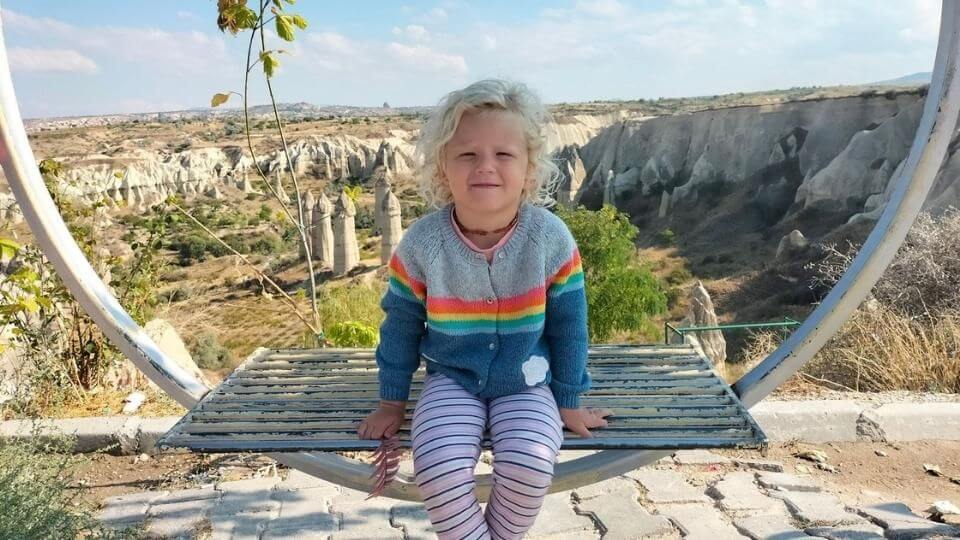
- Staying in one place long enough for friendships to develop, rather than moving every few days. We aim to stay for a few months in each place. Sometimes it works out that we’re only in a destination for a month (which is short by our standards), but we have stayed in a few places for much longer (e.g., Turkiye for over a year!)
- Maintaining online friendships with children from previous destinations or from home
Children who worldschool often develop strong social-emotional skills precisely because they have to work harder at making and maintaining connections. It’s not effortless, but it’s not impossible either.
Tools and Resources Recommended by Worldschoolers
The tools that worldschooling families rely on tend to fall into a few categories:
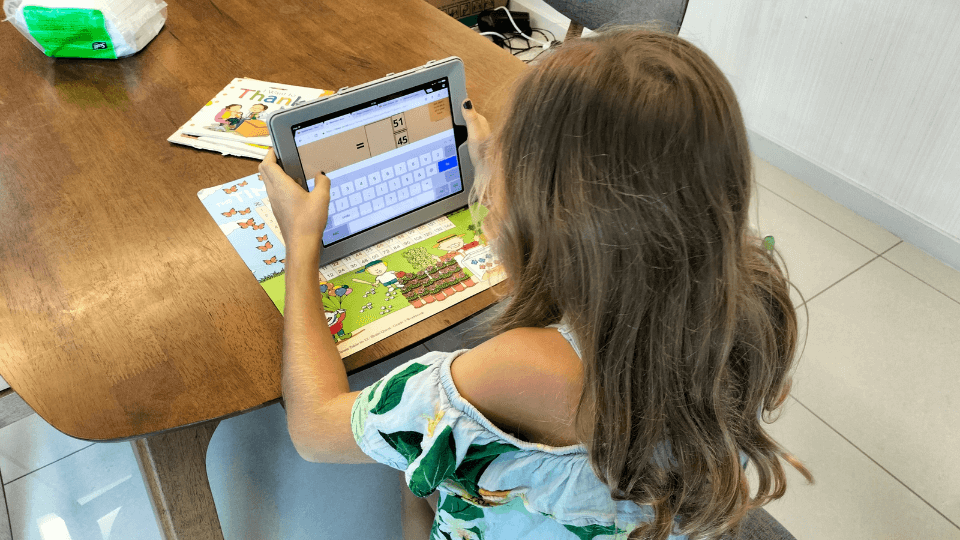
- Online learning platforms (such as Fables World) that allow children to work through structured content at their own pace, with progress tracking for parents
- Digital libraries and e-readers, which solve the practical problem of carrying books across multiple countries
- Language learning apps as a supplement to real-world immersion, particularly useful for building vocabulary before arriving in a new country
- Worldschooling community forums and social media groups, which are among the most practical resources available for destination research, curriculum recommendations, and connecting with other families
The specific tools change as platforms evolve, so ask in active worldschooling communities for current recommendations (there’s no shortage of them on Facebook).
Frequently Asked Questions About Worldschooling
Worldschooling is legal in many countries, but the rules depend on where you’re from and where you spend significant time. Most families need to understand their home country’s requirements around compulsory education, which may involve formally deregistering from the school system or notifying local authorities. Any country where you spend an extended period may also have its own rules about children’s education. Research your specific situation carefully, and consider consulting a legal or education advisor if you’re unsure.
Yes. Worldschooled and unschooled children do go to university, through a range of pathways including recognized qualifications, portfolio-based applications, and alternative entry routes that many universities now offer. The path requires planning, but it’s not closed.
Yes, though the term is most commonly used to describe families who travel. Some families apply the same philosophy of experiential, place-based learning within their local community, using field trips, apprenticeships, community involvement, and real-world projects as the backbone of their children’s education. The travel amplifies the approach, but it isn’t the only way to live it.
Conclusion
Worldschooling isn’t a single thing. It’s a way of thinking about education that puts real experience at the center, and it takes a different shape for every family that tries it. The families who make it work tend to share a few things: they plan their finances before they leave, they stay flexible about curriculum and structure, and they take their children’s social needs seriously rather than assuming travel will solve everything.
If you’re weighing up whether this life might suit your family, the most useful next step is to connect with families who are already doing it. The worldschooling community is genuinely generous with information, and hearing real experiences will tell you more than any guide can. This overview of “What is Worldschooling” is a starting point. The conversations you have from here are where the real picture forms.
We are an unschooling worldschooling family, slow-traveling full-time, without a home base since February 2017. For further related reading, you may be interested in our recommendations for digital nomad tools, a comprehensive resource we’ve created for a location-independent lifestyle.