

Long-haul travel with children is one of those things that sounds harder than it is, right up until the moment that it’s exactly as hard as it sounds. The difference between a travel day that works and one that unravels often comes down to what you did in the weeks before you left. Read on for the most practical, experience-grounded tips for long-haul flights with kids that will help your whole family land in one piece.
(This post includes affiliate links for which we may earn a commission at no extra cost to you should you make a purchase. See our full disclosure and Privacy Policy for more information)
Before the Flight: How to Prepare for a Long Haul Flight with Kids
Planning Ahead and Avoiding Last-Minute Rushing
The morning of a long-haul flight isn’t the time to be hunting for passports or to realize the kids’ tablets aren’t charged. Getting ahead of the logistics by at least a few days takes a specific kind of pressure off the whole family.
A simple pre-travel checklist helps here. Not a mental one. An actual written one.
- Charge all devices the night before
- Pack carry-on luggage the day before departure, not the morning of
- Confirm check-in details and any pre-selected seats
- Lay out travel clothes and shoes the night before
- Have snacks and entertainment ready to grab, not buried in a bag
One thing that caught us off guard in the past is underestimating how much recovery time kids need after landing. Planning a low-key first day at your destination isn’t being overly cautious. It’s just being realistic about what tired children are like in a new place.
Using Social Stories to Prepare Kids for Flying
Young children often do better with new experiences when they know what to expect. A social story is a simple, sequential description of what will happen, told in plain language before the event. For flying, that might mean walking your child through the airport process step by step: arriving at the airport, checking bags, going through security, waiting at the gate, boarding the plane, and what the inside of the plane looks and feels like.
You don’t need a formal resource to do this. A conversation at bedtime in the days before you fly works well. Some families use picture books about airports and planes. Others draw simple pictures together. The goal is for nothing on travel day to feel completely unfamiliar.
For children who have flown before, revisiting what they remember and filling in any gaps is enough. For first-time flyers, the more concrete the preparation, the better.
Online check-in is worth doing as early as the airline allows, particularly if you haven’t yet locked in your seats. Many airlines open check-in 24 hours before departure, and that window matters when you’re traveling with young children and need specific seat configurations. Check your airline’s details for the current check-in window.
Priority boarding, when offered to families, is genuinely useful. Getting on the plane before the rush means you can get settled, stow your carry-on luggage, set up the kids’ entertainment, and find your rhythm before the aisle fills up. Check whether your airline offers this and how to access it, as the process varies by airline.
At the airport itself, build in more time than you think you need. Security with children takes longer. Toilet stops happen at inconvenient moments. Kids slow down in busy terminals. Arriving with time to spare means those delays are just part of the day rather than a source of stress.
Choosing the Right Seat for Your Family
How to Choose Seats Strategically on Long Haul Flights
Seat selection on a long-haul flight is one of the decisions that has the most impact on how the journey actually feels. Getting it right means thinking about your children’s ages, sleep habits, and how much space your family realistically needs.
For families with multiple children, keeping seats together is the obvious priority. On wide-body aircraft, rows of four across the middle section work well for families of four. Window seats give kids something to look at during take-off and landing. Aisle seats suit parents who expect to be up frequently, whether for toilet trips, to walk a restless toddler, or just to stretch. If you and your co-parent are splitting the night shift, having one of you on an aisle makes that easier.
Avoid seats directly in front of exit rows where possible. The tray tables on those seats are often built into the armrest, which limits space and can be awkward with young children.
Bassinet Seats, Bulkhead Rows, and Fly Tot Footrest Options
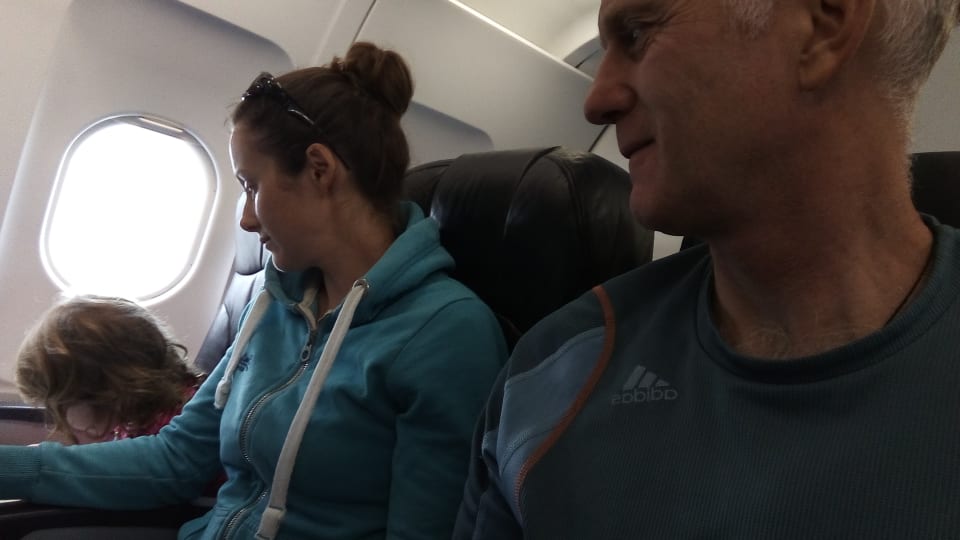
If you’re flying with a baby or very young infant, airplane bassinets are worth knowing about well before you book. These are small cots that attach to the bulkhead wall at the front of a cabin section. They have weight and length limits that vary by airline, so check the specifics with your carrier, but they are a genuine help for parents of young babies on overnight flights.
The critical thing to know: bassinet seats book out early. On popular long-haul routes, families who book late often miss out entirely. We learned this the hard way on a flight from New Zealand to Vietnam with a very young baby. By the time we got around to selecting seats, every bulkhead row was gone. Don’t leave this until the week before you fly.
Bulkhead rows are useful even without a bassinet. The extra floor space at your feet gives toddlers somewhere to sit and play, and there’s no seat in front of you to worry about reclining into.
An inflatable footrest cushion designed to fit between the seat and the tray table creates a flat surface for a small child to lie on. It’s not suitable for all aircraft or all seat configurations, so check compatibility before you buy. For families with children who are too big for a bassinet but too small to sleep comfortably in a standard seat, it fills a real gap.
What to Pack for Long Haul Flights with Kids
Essential Items Every Parent Should Pack in Hand Luggage
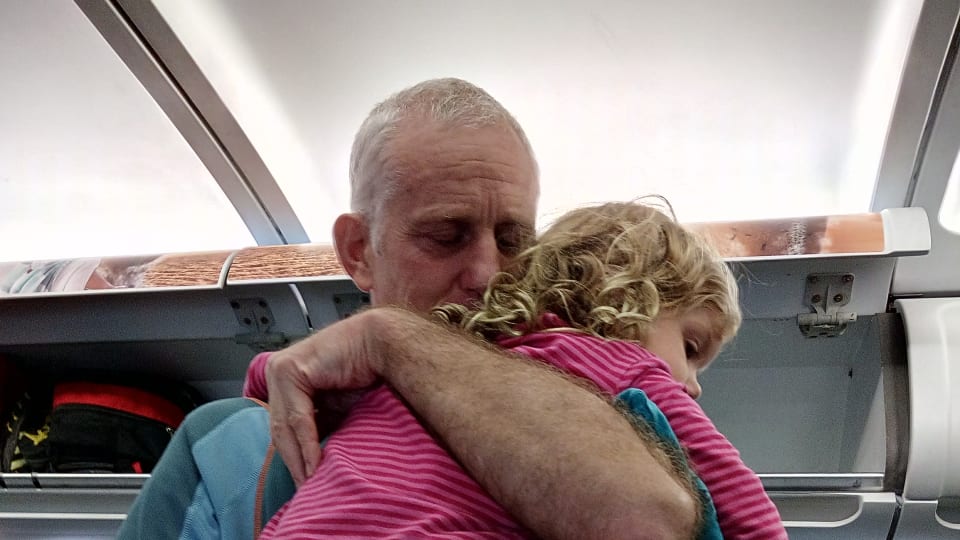
The goal with hand luggage on a long haul family flight isn’t to pack everything. It’s to pack the right things. There’s a difference, and it matters when you’re hauling bags through three airports.
Think in categories: entertainment, comfort, food, and hygiene. Each one needs to be covered, but none needs to be overpacked.
- A small first aid kit with any medications your child takes regularly
- Copies of travel documents, kept separate from the originals
- A change of clothes for each child, plus one for you
- Headphones sized for your child’s ears
- A reusable bag for rubbish and wet items
Anything that your child cannot go eight hours without should be in the carry-on, not in checked luggage.
Clothing: Layering, Easy Shoes, Spare Outfits, and Pyjamas
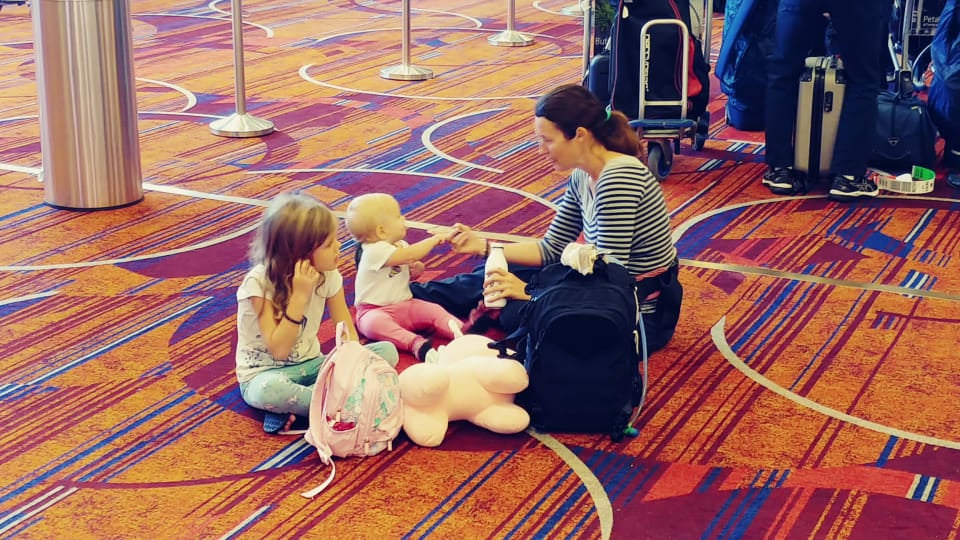
Cabin temperature on long-haul flights is unpredictable. It can feel warm during boarding and genuinely cold at 2 am. Layers are the practical answer: a light long-sleeved top over a t-shirt, with a zip-up hoodie or light jacket that can come off and go back on without waking a sleeping child.
Easy shoes matter more than most parents expect. Slip-on shoes mean faster security, easier toilet trips, and less fuss when kids want to take them off mid-flight. Avoid lace-up shoes for travel days.
Pack at least one full spare outfit per child in your carry-on. Spills happen. Motion sickness happens. Having a clean set of clothes within reach isn’t pessimistic; it’s just being prepared. A spare set of clothing is also useful for parents in case of spills or delayed luggage.
Pyjamas are worth packing for overnight flights, particularly for younger children. Changing into pyjamas is a familiar sleep cue that can help signal to a child’s body that it is time to wind down, even in an unfamiliar environment.
Sleep Comfort: Neck Pillows, Eye Masks, Blankets, and Sleep Masks
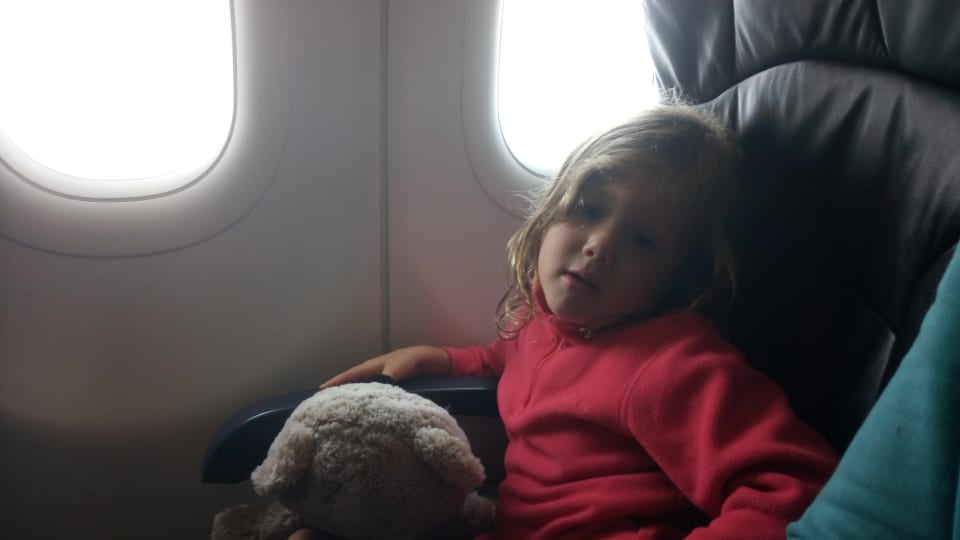
Getting kids to sleep on a plane isn’t guaranteed, and no amount of gear changes that. The right gear can create conditions that make sleep more likely.
A neck pillow sized for your child helps keep their head from lolling forward when they doze off while seated. Children’s versions are smaller and lighter than adult ones, and are worth having in the carry-on rather than packing them away.
Eye masks (sleep masks) block out the cabin lighting that airlines keep on longer than most children need. Even a simple, soft eye mask can help a child who is almost asleep but being kept awake by ambient light.
A small blanket from home, rather than relying solely on the airline-provided blanket, adds a familiar element of comfort. Airlines usually provide blankets on long-haul routes, but having something familiar can make a difference for younger children.
Wipes, Spill-Proof Bottles, and the Travel Potty
Wipes are non-negotiable. Pack more than you think you need and keep them at the top of your bag. They handle spills, sticky hands, tray-table cleanups, and the general mess that children generate in enclosed spaces.
Spill-proof water bottles are worth the bag space. Open cups on a turbulent flight are a recipe for wet clothes and a miserable child. A bottle with a secure lid that your child can use independently is one less thing for you to manage.
For families with toddlers who are in the middle of toilet training, a travel potty is a niche but genuinely useful item. Aircraft toilets are small, loud, and unfamiliar, which can be enough to put a recently trained toddler off using them entirely. A portable travel potty gives you a fallback option and can prevent accidents that would otherwise mean a full outfit change at 35,000 feet.
How to Pack Light Without Leaving Anything Behind
Packing One Cabin Bag for the Whole Family
Consolidating family essentials into a single shared carry-on is possible, but it requires being deliberate about what actually needs to be within reach during the flight versus what can go in checked luggage.
The test for every item is simple: will I need this during the flight, or am I packing it out of habit? Sunscreen, for example, does not need to be in your carry-on. A change of clothes does. Running that filter over every item before you pack cuts the bag down significantly.
A well-organized cabin bag also means you can find things quickly without unpacking everything in the overhead locker. Packing cubes or zip pouches by category, one for snacks, one for entertainment, one for hygiene, make a real difference when you are trying to find something in the dark at 3 am.
Bags Kids Can Carry Themselves
From around age three or four, most children can manage a small backpack of their own (at least physically, but not always mentally)! This is worth doing for practical reasons, but also because children who have ownership over their travel bag tend to be more engaged with what is in it.
Let them help choose what goes in. A sticker book, a small toy, a favorite soft animal. The bag should feel like theirs, not like an extension of your packing. That sense of ownership pays off during the flight when they reach for their own bag rather than asking you to find something.
Keep the weight realistic. A child’s travel bag should be light enough for them to carry comfortably through an airport without needing to hand it off to you.
Luggage Allowance Tips and How to Avoid Overpacking
Baggage allowances vary between airlines, routes, and fare types, and they change. Always check directly with your airline before you pack, particularly regarding carry-on size and weight limits, which are enforced more strictly by some carriers than others.
A few general habits help with overpacking:
- Lay everything out before it goes in the bag, then remove one item from each category
- Choose clothing that can be mixed and matched rather than packing complete outfits
- Check whether your accommodation has laundry access, which can significantly reduce how much clothing you need
- Weigh bags before you leave home if you’re close to the limit
The goal is to arrive at your destination without having spent the whole flight managing too much stuff.
Food, Snacks, and Drinks on the Flight
Snacks to Pack for Kids on Long Haul Flights
Snacks on a long haul flight do two things: they keep kids fed between meal services, and they give you a tool for managing mood and attention. A hungry child is harder to settle. Having snacks within easy reach means you can head that off before it becomes a problem.
Pack snacks that travel well and do not require refrigeration. Think about texture and mess: dry snacks are easier to manage than sticky or crumbly ones. Variety matters too, because a child who is bored of their snacks by hour three is not going to be interested in the same options at hour eight.
- Crackers or rice cakes
- Dried fruit in small portions
- Nut-free granola bars or protein bars (check airline policies on nuts before packing)
- Small pouches of fruit puree for younger children
Airline meal services on long-haul routes usually include a children’s meal option if pre-ordered. Check whether your airline offers this and order it when you book, as it’s not always available at the gate.
Note that some countries have strict biosecurity rules about bringing food across international borders, particularly fresh fruit, vegetables, dairy, and meat products. Check the rules for your arrival country. If in doubt, don’t take food off the plane with you, or be prepared to declare it when required. The consequences of getting this wrong at customs can range from confiscation to fines.
Sweets for Take-Off and Landing (and Why They Help)
The pressure inside an aircraft cabin changes during take-off and landing, and that change can cause discomfort or pain in children’s ears. Swallowing helps equalize the pressure, which is why sucking on a sweet or chewing gum is a practical tool rather than just a treat.
For babies, feeding during take-off and landing achieves the same effect. For toddlers and older children, a sweet they enjoy is usually enough to get them swallowing regularly through the pressure change.
Keep a small supply in an easy-to-reach pocket of your bag, not buried at the bottom. The pressure change happens quickly, and you want to be able to hand something over without a search.
Staying Hydrated: Spill-Proof Water Bottles and What to Order On Board
Cabin air on long-haul flights is significantly drier than normal air, and children can be susceptible to dehydration in that environment. Thirst is not always a reliable signal in kids, so deliberately building in regular drink breaks is worth it.
Bring a refillable, spill-proof water bottle and fill it after security. Most airports have water refill stations, and flight attendants will refill bottles on request during the flight. Having a bottle your child can manage independently means they can drink without needing your help every time.
Water is the best option for hydration. Juice and soft drinks are fine in moderation, but they are not as ideal for keeping kids hydrated over a long flight. If your child is resistant to plain water, diluted juice is a reasonable middle ground.
Entertainment for Kids on Long Haul Flights
Best Toys, Activities, Markers, and Creative Supplies
Non-screen entertainment deserves real space in your planning, not just as a backup for when the tablet battery dies. The right activities can hold a child’s attention for longer than you might expect, and they do not carry the overstimulation risk that screens do late in a flight.
A sticker book is a reliable option for many children between the ages of about 2 and 7. They are quiet, self-contained, and can occupy a child for a surprisingly long stretch. Reusable sticker books are worth the slightly higher cost because they last the whole trip rather than being finished in the first hour.
Other options that work well in a confined space:
- Washable markers with a small pad of paper
- A simple activity book matched to your child’s age
- A small set of figurines or characters they already know
- A magnetic drawing board for younger children
- A deck of cards for older kids
The tray table is your workspace. Keep it organized and the entertainment accessible without everything being out at once.
Screen Time, Tablets, Headphones, and In-Flight Entertainment
Screens are a legitimate and useful tool on a long-haul flight. The issue isn’t using them. The issue can be using them without any plan for when they stop.
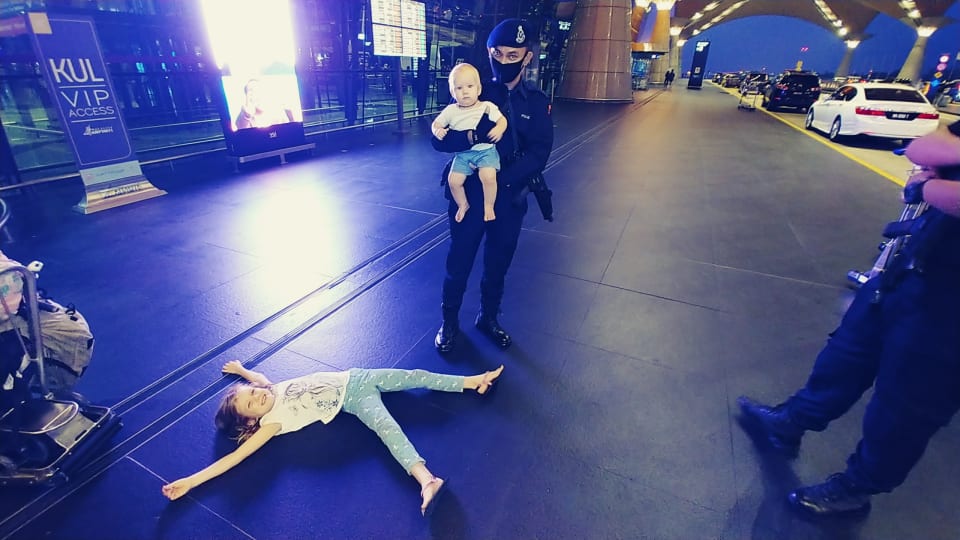
We learned this the hard way. Letting a child watch entertainment through the night with no wind-down period meant arriving at the destination with an overtired, overstimulated child who hadn’t slept and had no reserves left. The airport meltdown that followed was not a surprise in hindsight. It was a predictable outcome of a night with no rest.
A loose plan works better than a strict rule. Something like: screens for the first few hours, then a wind-down period with quieter activities or an audiobook, then an attempt at sleep. You don’t need to enforce it rigidly, but having the intention means you’re less likely to let screens run unchecked until landing.
Download content before you fly. In-flight Wi-Fi is not reliable enough to stream, and in-flight entertainment systems vary significantly between aircraft. Having your own content loaded means you’re not dependent on what the airline provides.
Headphones sized for children’s ears are worth packing. Adult headphones do not fit well on small heads, and the in-flight headphones provided by airlines are often uncomfortable for young children.
Tray Table Organizers and Keeping the Seat Area Under Control
A tray table organizer is a simple fabric pouch that hangs from the tray table and holds small items within easy reach. Crayons, a snack, a small toy, a spare wipe. It keeps the tray surface clear and means you’re not constantly picking things up off the floor.
Parents who travel regularly with children tend to discover this item through experience rather than recommendation. It’s not glamorous, but it makes a real difference to how manageable the seat area feels over a ten-hour flight.
Beyond the organizer, the general principle is to keep only what you need for the current activity out, and put things away before moving to the next one. It sounds obvious, but in practice it’s easy to let the seat area accumulate clutter that then becomes a source of stress.
Keeping Kids Happy and Managing the Hard Moments
Walking the Aisle, Toilet Breaks, and Keeping Energy Moving
Sitting still for ten or more hours is hard for adults. For children, it can be genuinely difficult. Building in regular movement breaks is not indulgent; it’s practical.
A walk to the back of the plane and back every couple of hours gives kids a change of scenery and burns off a small amount of the energy that could otherwise manifest as restlessness in their seats. Toilet breaks are a natural opportunity for this, even when they’re not strictly necessary.
The galley area at the back of the plane is often a good place to stand with a toddler for a few minutes. Flight attendants are generally understanding about this, particularly on long-haul routes where they’ve seen every version of traveling with young children.
How to Handle Tantrums and Meltdowns at 35,000 Feet
Meltdowns on planes happen. They’re not a sign that you’ve failed as a parent or that your child is unusually difficult. They’re what happens when a tired, overstimulated child runs out of coping capacity in a confined space with no exit.
The most useful thing to know is that other passengers are probably more understanding than you expect. Many people on a long-haul flight have either traveled with children themselves or have enough empathy to recognize that you are doing your best.
In practice, the same things that work on the ground tend to work at altitude: staying calm yourself, getting down to your child’s level, offering something familiar and comforting, and not trying to reason with a child who’s past the point of reason. If you can get up and walk the aisle, do it. Movement helps.
If the meltdown is happening because your child is overtired, the goal is sleep, not distraction. Dimming the screen, offering a blanket, and reducing stimulation is more likely to help than introducing a new activity.
Making Friends with the Cabin Crew
Flight attendants on long-haul routes have seen everything. They’re not going to be surprised by your toddler’s tantrum or your baby’s crying. They’ll respond to a parent who is friendly, communicative, and not demanding.
Introduce yourself early. Let them know you have young children and ask if they have any recommendations for the flight. A small, genuine interaction at the start of the journey may result in flight attendants who check in on you, bring extra snacks without being asked, and are more flexible when you need something outside the usual routine.
This isn’t about gaming the system. It is about recognizing that the people working the flight are a resource, and a friendly relationship with them makes a long flight easier for everyone.
Sleep Strategies for Kids on Long Haul Flights
How to Get Kids to Sleep on a Plane
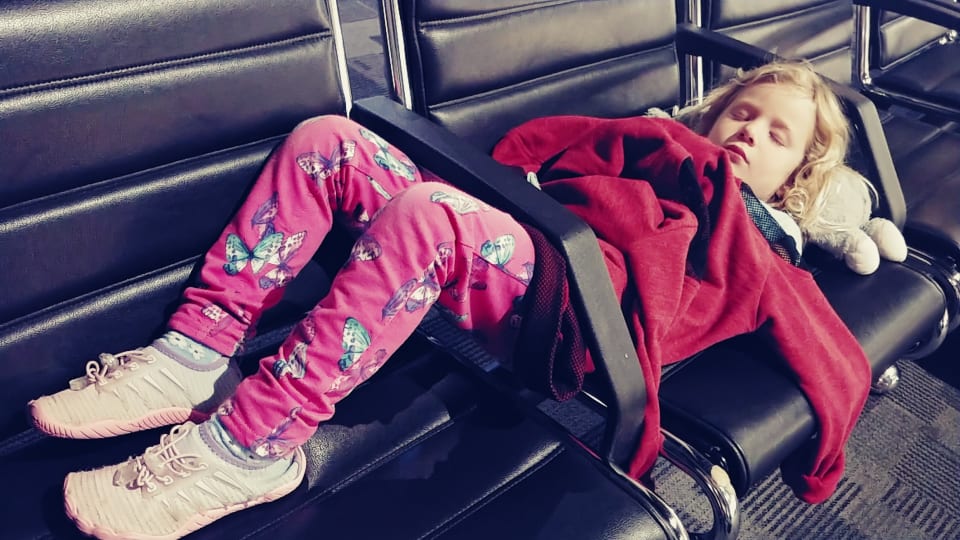
Not every child will sleep on a plane. Setting that expectation before you board means you’re not spending the flight feeling like you’ve failed every time your child’s eyes stay open. The goal is to create conditions that make sleep more likely, not to guarantee it.
Familiar sleep cues help. If your child has a routine at home, replicate it as much as you can. Pyjamas, a familiar blanket or soft toy, dimming the screen, and lowering your voice all signal that it’s time to wind down. The environment is different, but the cues are the same.
Timing matters. Try to align your child’s sleep attempt with the local time at your destination rather than the time you departed. This isn’t always possible on every route, but where it is, it gives you a head start on adjusting to the time zone.
Avoid the trap of letting entertainment run right up to the moment you want your child to sleep. The transition from a bright screen to sleep is hard for adults and harder for children. Build in a wind-down period of at least twenty to thirty minutes before you want them to settle.
Napping When the Kids Nap: Rest for Parents Too
Parent rest on a long-haul flight isn’t a luxury. It’s a practical necessity. You’re going to need to function when you land, and that’s harder if you’ve spent the entire flight managing children without a break.
If you’re traveling with a co-parent or another adult, take turns. One person is on duty while the other rests. It doesn’t need to be a formal schedule, but having the intention means you’re more likely to actually rest rather than both of you staying half-awake out of habit.
If you’re traveling solo with children, rest when they rest. Even closing your eyes for thirty minutes while a child sleeps beside you makes a difference. You don’t need to be watching them every moment they’re asleep.
Adjusting to a New Time Zone After a Long Haul Flight
Young children can take several days to adjust to a new time zone, and that adjustment period is harder on them than it is on most adults. Planning demanding activities for the first day after a long haul flight is a risk worth taking seriously.
We found this out in a way that’s hard to forget. After a long overnight flight, we had a birthday water park visit planned for the day after landing. The child in question had barely slept on the plane, was running on local time that made no sense to their body, and by mid-morning was in full meltdown. The water park wasn’t the problem. The timing was.
A low-key first day, or even just a low-key first morning, gives children’s bodies time to start adjusting before you ask them to engage with something exciting and stimulating. Getting outside in natural light during the destination’s daytime hours helps reset the body clock. Meals at local time, even if your child isn’t hungry, also help. Expect some disrupted nights in the first few days and plan around them rather than against them.
Managing Expectations and Parental Wellbeing on Long Flights
Setting Realistic Expectations Before You Board
A long haul flight with children isn’t going to be comfortable in the way a flight without children is. Accepting that before you board takes a specific kind of pressure off. You’re not trying to have a pleasant flight. You’re trying to get everyone to the destination in reasonable shape.
That reframe matters. When the goal is survival rather than enjoyment, small wins feel like wins. The child who slept for four hours instead of eight. The toddler who made it through take-off without crying. The hour of quiet in the middle of the night when everyone was settled. Those are the moments to notice.
Scheduling Breaks Between Parents
If you’re traveling with a co-parent, the flight is easier when you treat it like a shift rather than a shared responsibility where both of you are always on. One person handles the kids while the other reads, sleeps, or just sits quietly. Then you swap.
It sounds simple, but in practice many parents default to both being engaged all the time, which means neither gets any rest. Agreeing on a rough rotation before you board, even informally, makes it more likely to happen.
Connecting with Other Traveling Parents
There’s a particular solidarity among parents on long-haul flights. You can usually spot the other families in the boarding queue, and a brief exchange of knowing looks or a short conversation at the gate can be genuinely comforting.
Other traveling parents aren’t going to judge your child’s meltdown. They’re going to recognize it. And occasionally, a conversation with another family in the same situation is enough to remind you that you’re not doing this wrong; you’re just doing something hard.
Frequently Asked Questions: Long Haul Flights with Kids
The most reliable combination is a mix of screen and non-screen options, with the non-screen activities front-loaded so screens feel like a treat rather than the default. A sticker book, washable markers, a small activity book, and a familiar toy cover the basics for most ages. For older children, a deck of cards or a travel-sized game adds variety. Download content to a tablet before you fly and pack headphones that actually fit your child’s ears. Keep entertainment in a part of your carry-on that you can reach without unpacking everything.
Start with realistic expectations: some children sleep easily on planes, and some do not, regardless of what you do. What you can control is the conditions. Familiar sleep cues help, pyjamas, a blanket from home, a soft toy, and a wind-down period away from screens before you want them to settle. Try to time the sleep attempt to align with nighttime at your destination. Bassinet seats help with very young babies. For toddlers and older children, a flat or semi-flat surface, like an inflatable footrest cushion designed to fit between the seat and the tray table, can make for more comfortable sleeping.
It depends on your children’s ages and the length of the flight. For a flight under six hours, seat selection matters less. For a ten-hour overnight flight with a toddler, a bulkhead row or a seat with extra legroom can make a meaningful difference to how the night goes. Bassinet seats are worth prioritizing for families with infants, and they need to be booked early. For older children who can manage in a standard seat, the money spent on a seat upgrade might be better directed toward a direct flight rather than a cheaper connecting option. Check what your airline charges for seat selection as part of your overall booking, since the cost varies significantly.
Focus on snacks that travel well without refrigeration and are not too messy in a confined space. Crackers, dried fruit, and granola bars are practical choices. Fruit pouches work well for younger children. Pack more than you think you need because snacks do double duty as food and a mood-management tool. Keep a small supply of sweets separate and accessible for take-off and landing, where the swallowing action helps children manage ear pressure during cabin pressure changes. Check your airline’s policy on outside food if you’re unsure, though most long-haul carriers allow passengers to bring their own snacks on board.
The most important things to take from this guide are these: prepare before you leave, not on the morning of the flight; choose your seats early, especially if you need a bassinet; and build in recovery time after landing before you ask your kids to do anything demanding. Getting those three things right will make a bigger difference to your family trip than any individual piece of gear or entertainment.
If you’re planning your first long-haul flight with children, or heading back into it after a break, use this guide as your starting point and adjust for what you know about your own kids. Every family is different, but the fundamentals hold.