

Traveling with kids is one of the most rewarding things a family can do together, and also one of the most logistically demanding. A little preparation goes a long way toward keeping everyone calm, comfortable, and actually enjoying the trip. Read on for family travel hacks that make a real difference.
(This post includes affiliate links for which we may earn a commission at no extra cost to you should you make a purchase. See our full disclosure and Privacy Policy for more information)
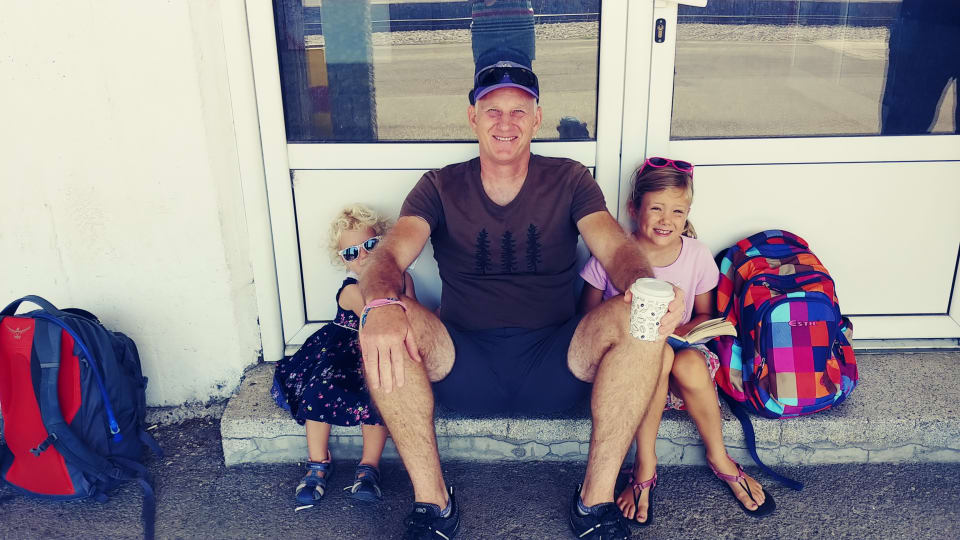
Planning Your Family Trip the Smart Way
Good family trips rarely happen by accident. The ones that feel relaxed and enjoyable are almost always the result of thoughtful planning up front, even if the itinerary itself stays loose.
Research and Planning Foundations for Family Trips
Start by getting clear on what kind of trip your family can realistically handle. That means being honest about your kids’ ages and temperaments, how long the journey will take, and what the destination actually requires of you day to day.
When we were planning our trip to Vietnam, we made the classic mistake of treating the first day as a full activity day. We had a long-haul flight behind us, a significant time zone shift, and a kid who had barely slept. The itinerary looked great on paper. In practice, everyone was miserable by mid-morning.
The lesson we took from that trip: leave the first couple of days after a long-haul flight deliberately light. Don’t front-load your best activities. Give the family time to find their feet, sleep when they need to, and eat something familiar before you start ticking off the highlights.
Beyond that, a few research habits that hold up across most family getaways:
- Read recent accounts from other traveling families, not just general travel guides. Parents notice different things.
- Check whether your destination has reliable public transportation or whether a rental car makes more sense for getting around with kids and gear.
- Look at the physical demands of the activities you are planning. A full day of walking that suits adults can be genuinely exhausting for a six-year-old.
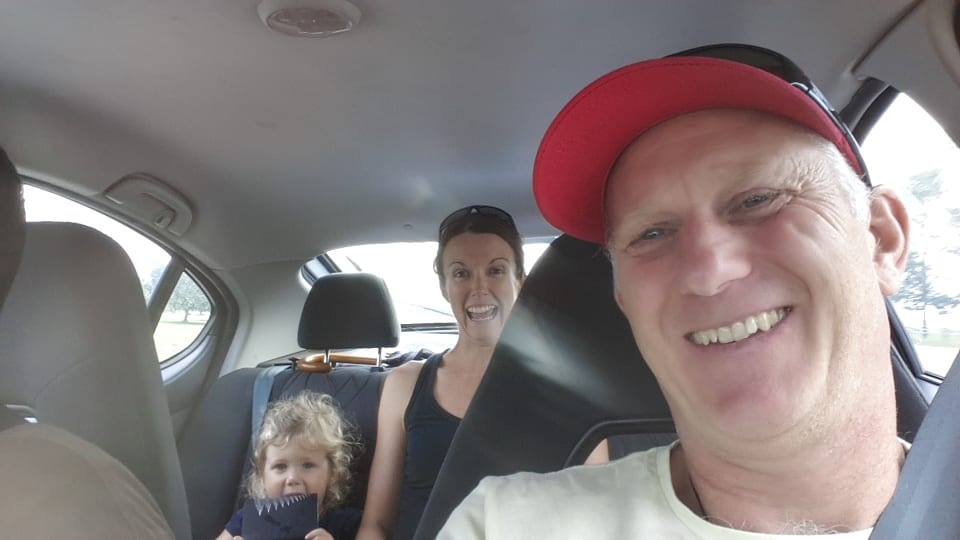
Giving Kids Input Into Travel Plans
Involving kids in the planning process does two things. It gives them something to look forward to and reduces the number of times you hear, “but I didn’t want to come here,” once you arrive.
This doesn’t mean handing over the itinerary. It means giving kids a few real choices within the framework you’ve already set. Let them pick one activity per day, or choose between two options for an afternoon. Older kids can help research a destination, look up what the weather will be like, or decide what they most want to see.
When kids feel like the trip is partly theirs, they tend to be more patient when things do not go perfectly.
Planning for Downtime and Realistic Daily Schedules
One of the most common planning mistakes families make is over-scheduling. A day that looks manageable on a spreadsheet can feel relentless when you are navigating it with tired children, a pram, and a bag full of snacks.
A realistic daily schedule for traveling with kids usually means one or two main activities, not four. It means building in time for slow mornings, unexpected detours, and some unplanned days. That unscheduled time is not wasted. It is often where the best moments happen.
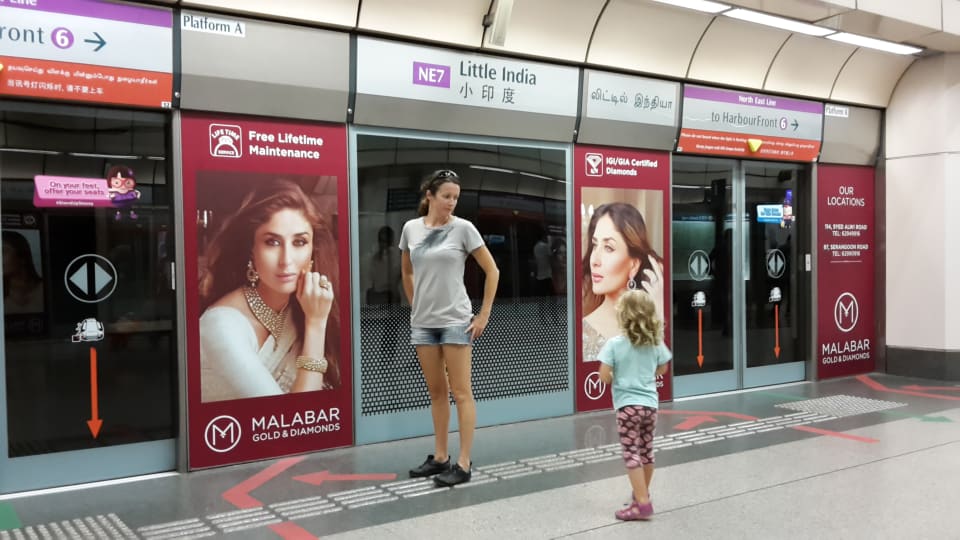
Smart Packing Strategies for Families
Packing for a family is its own skill set. The goal isn’t to bring everything; it’s to bring the right things in a way that makes them easy to find and use.
Packing Cubes and Bag Organization for Family Travel
A good packing system is the difference between a bag you can navigate at 6 am in a dark hotel room and one that defeats you every time. Packing cubes are the most practical tool for keeping a family’s luggage organized, and once you use them, it’s hard to go back.
The most useful approach is to assign cubes by person rather than by category. Each family member gets their own cube or set of cubes. That way, when your seven-year-old needs a clean shirt, you’re not unpacking the entire bag to find it.
Color-coding by person makes this even faster. It also helps kids take some ownership of their own things, which is worth encouraging from an early age.
A few other organization habits worth building into your packing system:
- Keep a dedicated pouch for documents, cards, and anything you need to access quickly at the airport.
- Use a separate bag or cube for dirty laundry so it never gets mixed back in with clean clothes.
- Pack the things you will need first, like snacks, a change of clothes, and entertainment, at the top or in your air-travel carry-on.
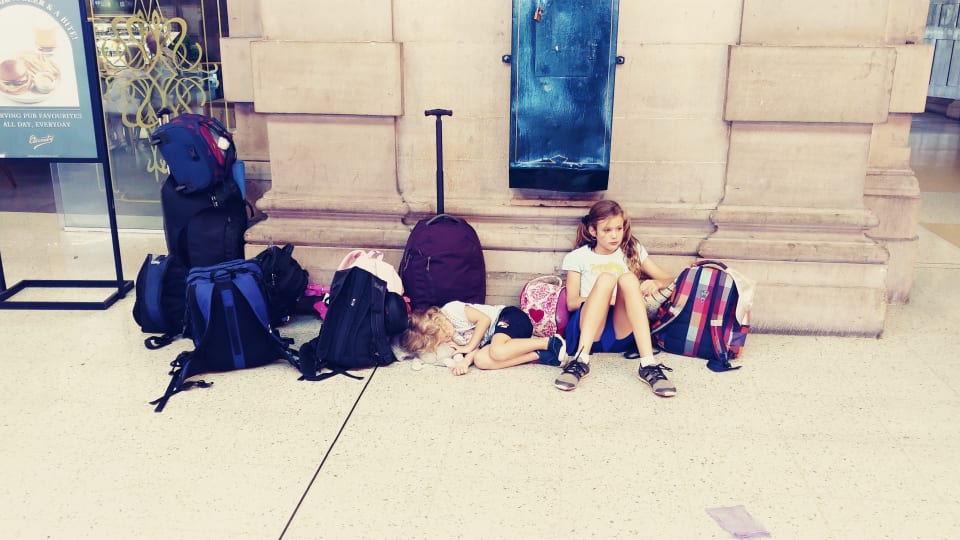
Backpacks and Travel Bags for Kids
Giving kids their own bag is one of the simplest family travel hacks there is. Even young children can carry a small backpack with their own water bottle, a soft toy, and a few activities. It gives them a sense of responsibility and takes a small but real load off the adults.
The bag doesn’t need to be large. For younger kids, something that fits a drink, a snack, and one or two comfort items is plenty. For older kids, a slightly larger pack can hold a tablet, headphones, and a book, keeping their entertainment within reach without everything ending up in your bag.
Look for bags with padded straps and a chest clip for younger children. Comfort matters when a kid is wearing something for a full day of travel.
Travel-Size Products
Travel-size toiletries and products save space and simplify airport security at many airports. The practical approach is to decant your regular products into reusable travel containers rather than buying single-use travel versions every trip.
A Ziploc bag or a clear toiletry pouch keeps liquids organized and speeds up security checks. Many airports require liquids to be presented separately, so having them already in one place saves time and stress at the checkpoint.
For families, it’s worth keeping a small toiletry kit permanently packed with the basics: sunscreen, hand sanitizer, lip balm, and any medication the kids regularly need. Refresh it after each trip rather than repacking from scratch every time.
Portable Batteries and Travel-Ready Gear
A portable battery pack is one of the most useful pieces of travel gear a family can carry. Phones die at the worst moments, and airport charging points aren’t always available or conveniently located.
Carry one with enough capacity to charge at least two devices. Keep it in your air-travel carry-on so it’s accessible during the flight and at the airport. Check airline guidelines on battery capacity before you travel, as restrictions apply to larger power banks.
Other gear worth having ready:
- A universal travel adapter if you’re crossing between countries with different plug standards.
- Noise-canceling headphones or earbuds for adults, which make long travel days significantly more bearable.
- A small reusable bag that folds flat or into a pouch, useful for day trips, beach visits, or carrying extra shopping on the way home.
Packing a Change of Clothes
Pack a change of clothes for every family member in your carry-on or day bag. This applies to adults too, not just kids.
Spills happen. Motion sickness happens. A child who was fine at boarding can arrive at the destination in clothes that need to go straight in the wash. Having a clean set within reach means you can deal with it without digging through checked luggage or, worse, arriving somewhere without options.
For kids who are prone to motion sickness, pack two changes. And keep a small supply of wet wipes and a spare plastic bag for containing anything that needs to be dealt with discreetly.
Keeping Kids Entertained on Long Flights and Road Trips
The question of how to keep kids occupied during long travel days is one every family figures out through trial and error. A few approaches hold up consistently well.
Entertainment Kits for Travel Days
An entertainment kit doesn’t need to be elaborate. The goal is variety, because what works at hour one of a flight is rarely what works at hour seven.
A practical kit for a long flight or family road trip might include:
- A small notebook and a few colored pencils or markers.
- A couple of new books or activity books the kids haven’t seen yet. Novelty helps.
- A simple card game or travel-sized board game.
- Sticker books for younger children, which are quiet, mess-free, and genuinely absorbing.
- Headphones that fit properly, because kids’ ears are smaller than adults’ and ill-fitting headphones are a constant source of frustration.
Downloading Content and Managing Screen Time During Travel
Travel days are a reasonable time to relax the usual screen time rules. A long-haul flight is not a normal Tuesday, and treating it like one creates unnecessary stress for everyone.
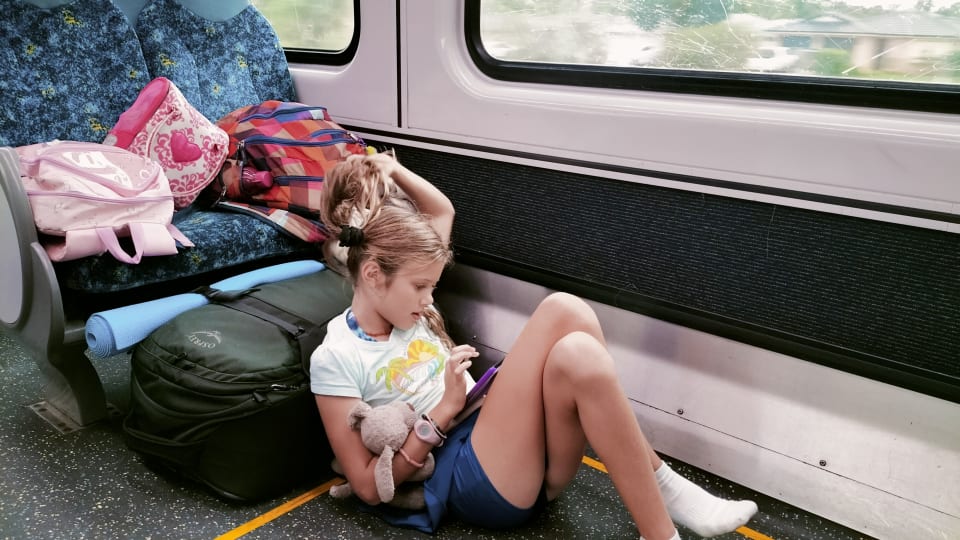
That said, there’s a real risk in letting screens run unchecked into the late hours of a flight. We learned this the hard way. Our child watched inflight entertainment well past the point of tiredness, got a second wind, and then crashed hard at the airport. The meltdown that followed wasn’t pretty, and it set the tone for the first day of the trip.
The practical fix is to set a loose end time for screens rather than a strict limit on hours. When the cabin lights go down and the crew dims the screens, that’s a natural cue to wind things down. Download content in advance so you’re not dependent on in-flight entertainment systems, which vary widely in quality and reliability. A mix of shows, movies, and audiobooks gives you options depending on how your child is traveling.
Take Turns to Keep the Kids Happy
On a family road trip, shared entertainment keeps everyone in the same headspace and avoids the isolation that comes from everyone disappearing into their own screen.
We use family-friendly podcasts regularly on long drives. Greeking Out, Story Pirates, and Smash Boom Best are ones our kids genuinely enjoy. Podcasts are also a practical solution for kids who get car sick when reading or watching screens. Audio keeps them engaged without triggering nausea.
Classic car games hold up for a reason. I Spy works across a wide age range. Car Cricket keeps older kids occupied and competitive. Car bingo can be prepared in advance and pulled out when energy starts to flag. Taking turns choosing the game or the podcast episode gives everyone a stake in the entertainment and reduces the “it’s not fair” dynamic that can derail a long drive.

Road Trip Organization Tips for Families
A well-organized car makes a family road trip significantly more manageable. The difference between a chaotic back seat and a functional one usually comes down to a few simple systems.
Road Trip Packing and Car Organization
Think of the car as a moving base camp. Everything should have a place, and the things you need most often should be the easiest to reach.
A few habits that make a real difference:
- Keep a small bag or organizer on the back of the front seat for snacks, wipes, and small entertainment items. Kids can access it themselves without asking.
- Store luggage in the boot in the order you’ll need it. If you’re stopping overnight, the overnight bag should come out first.
- Use a cooler bag for drinks and perishable snacks rather than loose items rolling around the back.
- Check the boot and storage capacity of your rental vehicle category when booking, and pack accordingly.
Regular Breaks and Stretching on Road Trips
Kids need to move. Sitting still for hours is hard for adults and genuinely difficult for children, and the energy that builds up from not moving tends to come out in other ways.
Plan a stop roughly every two hours, or more often if the kids are young or restless. Even a ten-minute break at a rest stop or park makes a difference. Let them run, stretch, and reset before getting back in the car.
Breaks also give you a chance to check in on how everyone is doing, refill water bottles, and deal with any car sickness before it becomes a bigger problem.

Comfort Items For Traveling Kids
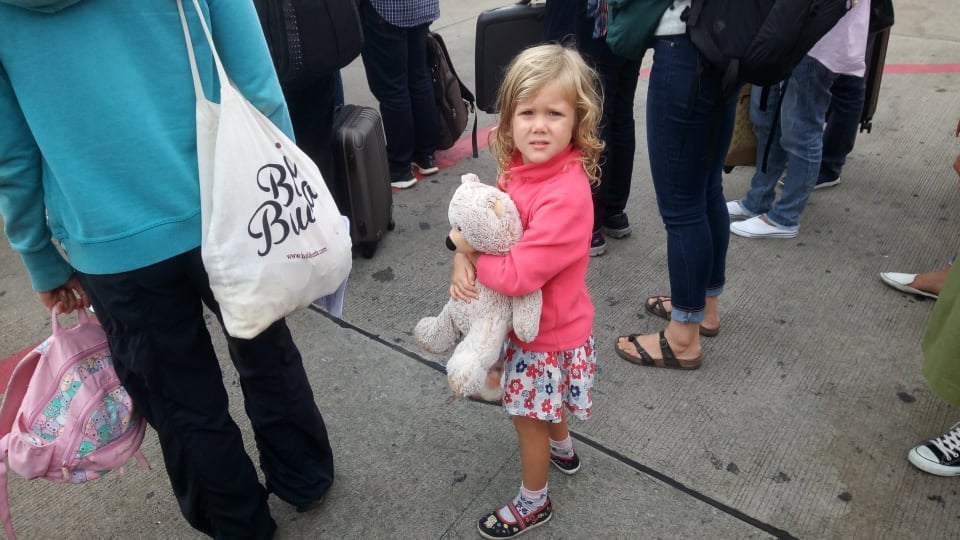
Familiar comfort items make unfamiliar situations feel safer for kids. A favorite soft toy, a well-worn blanket, or a particular pillow can be the difference between a child who settles and one who does not.
These items are worth protecting in your packing. Keep them in the cabin or within easy reach rather than buried in checked luggage. For younger children especially, having something familiar to hold during a long flight or an overnight drive provides genuine comfort that no amount of entertainment can fully replace.
Car Seat and Booster Seat Travel Solutions
Car seat and booster seat requirements vary by country and by state or region within countries. The rules around age, weight, and height thresholds differ, and they change over time. Before any family road trip, check the current regulations for every region you’ll be driving through.
If you’re hiring a rental car, many providers offer car seats as an add-on. Book in advance, confirm the seat type available, and check it carefully when you pick up the car. Bring your own if you have any doubts about fit or condition.
For families flying to a destination and then driving, it’s worth weighing up whether to bring your own seat or hire one locally. Both options have trade-offs depending on the length of the trip and your children’s ages.
Car Sickness Kit Essentials
Many children are prone to car sickness, so it’s worth preparing for rather than hoping it won’t happen. A basic kit in an easy-to-reach spot in the car covers most situations:
- Motion sickness medication or natural alternatives, discussed with a pharmacist or doctor before the trip.
- Wet wipes and paper towels in quantity.
- A spare change of clothes for each child prone to sickness.
- Plastic bags for containing mess quickly.
- A small bottle of water and something plain to eat, like crackers, for settling stomachs after an episode.
For kids who feel sick when reading or watching screens in the car, audio is the practical workaround, as covered in the entertainment section above.
Airports with kids require a different mindset than airports without them. The goal is not efficiency. It is calm.
Arrive with more time than you think you need. Security lines, bathroom stops, and the general pace of moving through an airport with children all take longer than they do solo. Rushing through an airport with kids is a reliable way to start a trip on the wrong foot.
Many airports have play areas, family lanes at security, and family bathrooms that are worth seeking out. A quick search before you travel can tell you what your departure airport offers. Knowing where the play area is before you land in a terminal with a restless four-year-old is genuinely useful.
Keep your air-travel carry-on organized so that the things you need at security- liquids, electronics, snacks- are easy to pull out without unpacking everything. A bag that requires full excavation at the security belt is stressful for everyone behind you and for you.
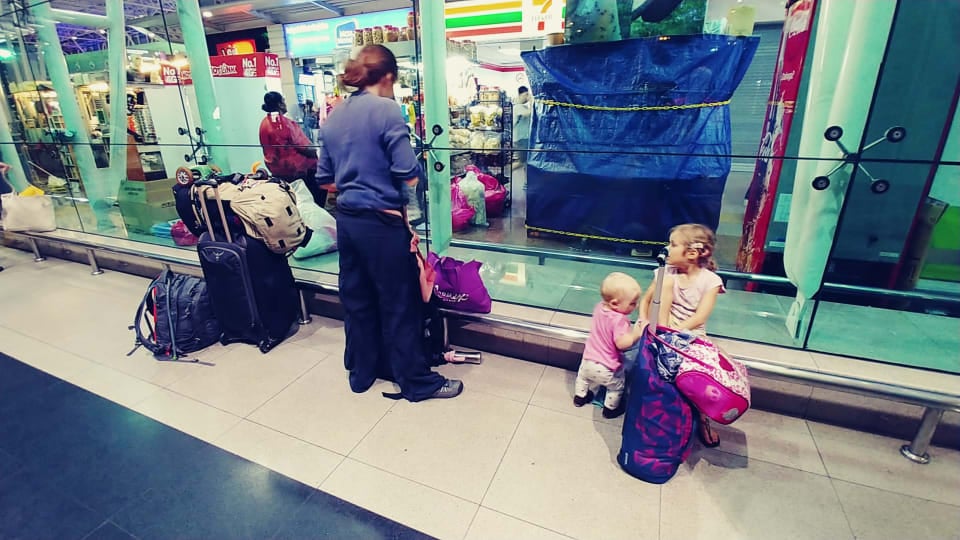
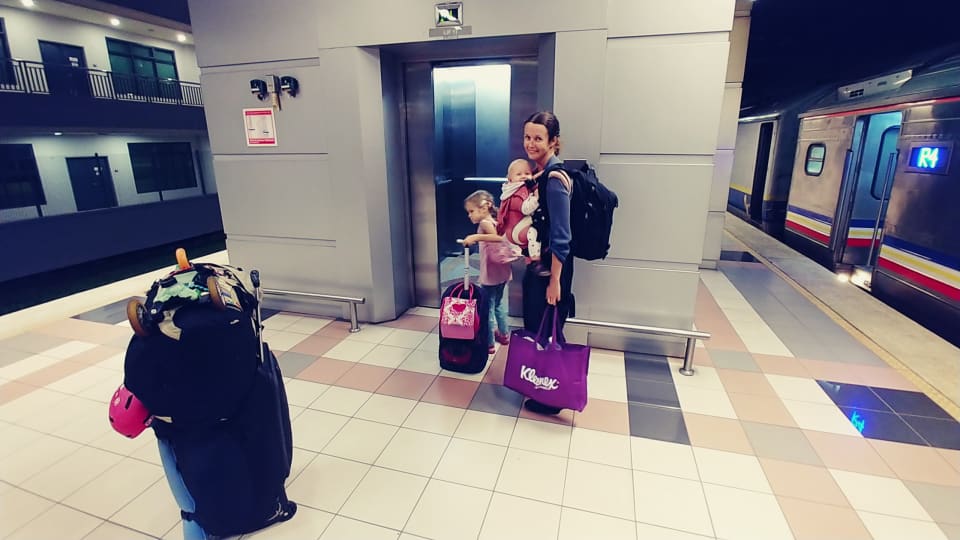
We slow-travel full-time, so we carry everything we own with us. One of our children seems to own about a million tiny things, and packing has always been a challenge for her. Once, she had so many small items crammed into her carry-on bag that the scanner couldn’t read it, and we had to unload everything! Lesson learned – we try to encourage her to pack less in her carry-on bag these days.
Boarding Strategies and Special Accommodations for Families
Many airlines offer family boarding, which allows families with young children to board before the general cabin. This is worth using when it’s available. It gives you time to get settled, stow your bags, and get the kids organized before the aisle fills up.
Policies vary between airlines and change over time, so check what your specific carrier offers when you book. If family boarding isn’t listed, it’s worth asking at the gate.
If you have a child with specific needs, whether that’s a medical condition, a mobility consideration, or significant anxiety around flying, contact the airline before travel. Most carriers have processes for accommodating families, but they work better when flagged in advance rather than at the gate.
Making Layovers Fun For Kids
A long layover does not have to be a miserable stretch of time in a departure lounge. With a bit of planning, it can be a genuine break in the journey rather than just dead time.
For shorter layovers, a walk around the terminal, a sit-down meal, and a browse through the shops is usually enough to keep kids occupied. For longer ones, especially those that involve long-haul travel from places like New Zealand, where connections are almost always extended, it’s worth thinking more creatively.
One option we have used and genuinely recommend is booking an airport transit hotel for a long layover. A few hours in a room with a proper shower, a bed, and some quiet makes an enormous difference to how everyone feels when they board the next flight. You arrive at your destination feeling like a human being rather than a piece of luggage. Some major hub airports have transit hotels within the terminal or a short shuttle ride away. Search for options when you book your flights and factor the cost into your overall travel budget.
For kids, the novelty of a hotel room in an airport is often enough to make it feel like part of the adventure rather than a delay.

Lounge Passes and Airline Credit Cards for Families
Airport lounges offer a quieter, more comfortable place to wait, with food, drinks, and seating that’s generally far better than the main terminal. For families, the practical value is real: somewhere to sit without competing for chairs, food that doesn’t require queuing, and a calmer environment for kids who are already tired.
Access options vary. Some travel credit cards include lounge access as a benefit, which can extend to accompanying family members depending on the card and the lounge network. Day passes are available at some lounges and can be purchased at the door or in advance. Prices and policies differ, so check what’s available for your specific airport and lounge before you travel.
It’s worth running the numbers to see whether a travel credit card with lounge access makes financial sense for your family’s travel frequency. For families who fly internationally more than once or twice a year, the benefits may stack up.
Snacks, Hydration, and Food for Family Travel
Food is one of the most practical levers you have on a travel day. Hungry kids are unhappy kids, and unhappy kids make long journeys feel longer.
Snacks and Food Planning for Family Trips
Pack more snacks than you think you need. Travel days almost always run longer than planned, and having food on hand means you’re not dependent on airport prices or the timing of in-flight meal service.
The most useful snacks for travel are non-perishable, not too messy, and familiar enough that kids will eat them without negotiation. Think about what your children reliably eat at home and bring versions of that rather than introducing new foods on a travel day.
A few categories worth covering:
- Something filling and slow-release, like nuts or a seed-based bar, for the stretches between meals.
- Something easy and familiar for fussy moments, crackers, dried fruit, or a favorite treat.
- Something that works as a small reward or distraction when things get difficult.
If you’re crossing international borders, be aware that many countries have strict biosecurity rules regarding the carrying of fresh food, fruit, and certain packaged items. Rules vary by destination and change over time, so check the current requirements for your specific route before you pack your snack bag.
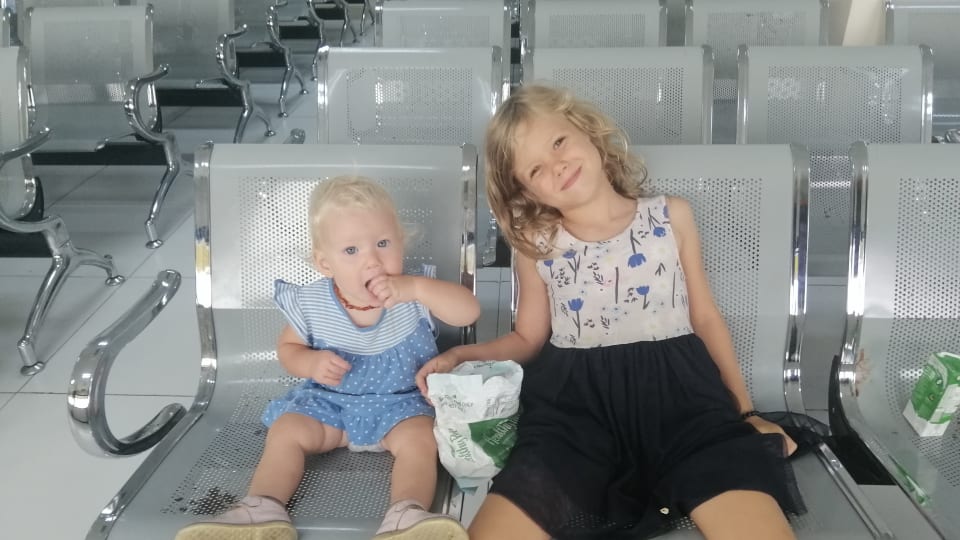
Water Bottles and Staying Hydrated While Traveling
Dehydration makes everyone feel worse, and it’s easy to let it creep up on a travel day when you’re distracted and moving between environments. Cabin air on flights is particularly drying, and kids often don’t notice they’re thirsty until they’re already uncomfortable.
Reusable water bottles are worth the small amount of extra weight. Bring one per person, fill them after security at the airport, and refill them whenever you have the chance. On a road trip, keep bottles within reach rather than packed away.
For younger children, a bottle with a straw or a sports cap is easier to manage independently and less likely to spill onto the back seat.
Managing Health, Comfort, and Jet Lag with Kids
The health side of family travel is easy to underestimate until it catches you out. A little preparation and realistic expectations go a long way.
Managing Jet Lag With Kids
Here is the thing about jet lag and kids: they don’t recover the way adults do. Adults can push through a tired day, get a decent night’s sleep, and feel mostly functional the next morning. Kids often cannot. The disruption to their sleep cycle can take several days to settle, and a good night’s sleep on night one does not mean they are back to normal on day two.
As covered in the planning section, we learned this in Vietnam. The practical answer is to leave the first couple of days after a long-haul flight unscheduled, eat at local meal times, and let the new time zone find you rather than forcing it.
A few things that help with the adjustment:
- Get outside in natural daylight as soon as you can after arrival. Light is the most powerful signal for resetting the body clock.
- Try to eat at local meal times even if no one is particularly hungry. It helps anchor the new rhythm.
- Don’t fight the early wake-ups in the first couple of days. Use them for a quiet walk or a slow breakfast rather than trying to force more sleep.
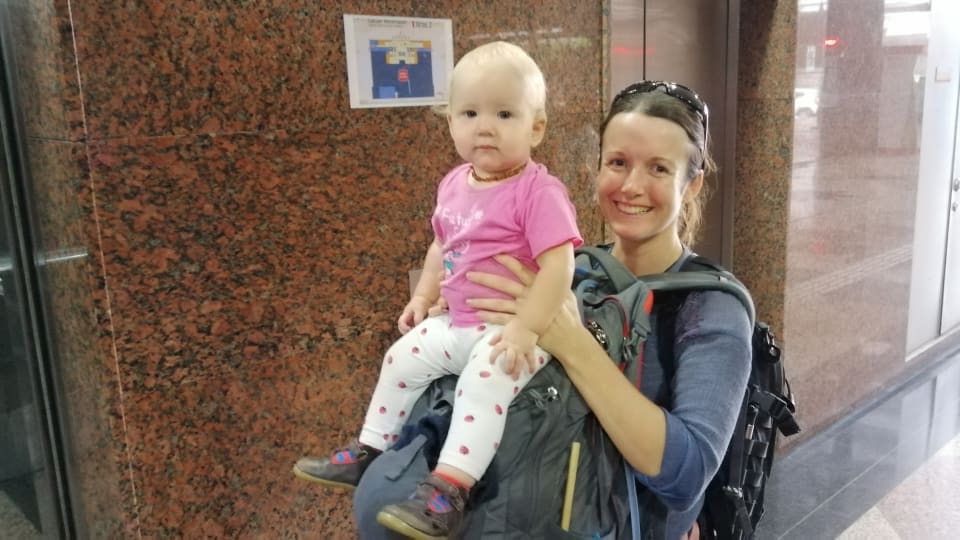
Sleep Solutions For Traveling Kids
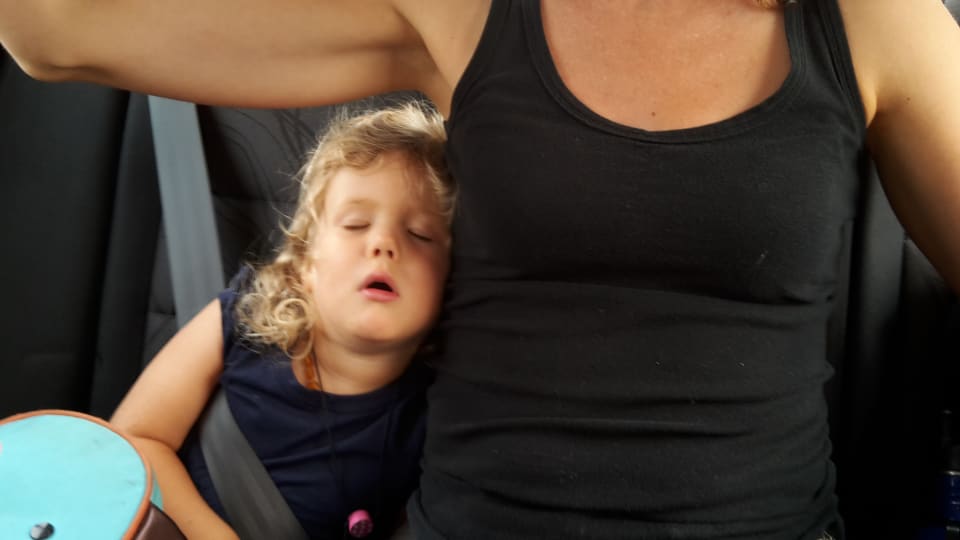
Sleep is harder to come by on the road, and the tools that help at home don’t always travel well. A few approaches that hold up across different types of trips:
- Maintain as much of the bedtime routine as possible. Bath, book, and a familiar song work in a hotel room just as well as they do at home.
- Bring something from home that signals sleep: a particular blanket, a white noise app, or a nightlight that packs flat.
- Manage light and noise in the sleep environment. Blackout blinds are not always available in accommodation, but a sleep mask or a piece of dark fabric over the curtain gap can help.
- On overnight flights, dress kids in comfortable clothes they can sleep in rather than changing them mid-flight, which disrupts everyone.
The goal isn’t perfect sleep. It’s enough sleep to keep the trip enjoyable. Adjust expectations accordingly and build in recovery time when you know a rough night is coming.
Accommodation and Making the Most of Family Travel
Where you stay shapes the whole experience of a trip, often more than families expect before they travel.
Kid-Friendly Accommodation Choices
The most practical accommodation for families is usually the one that offers the most space and flexibility. A self-contained apartment or a family suite with a separate sleeping area makes a real difference when you’re traveling with young children who go to bed before the adults are ready to stop for the night.
Kitchen access is worth prioritizing, particularly on longer trips or when traveling with children who have specific dietary needs or preferences. Being able to prepare a simple breakfast or heat up a familiar meal takes pressure off the days when everyone is tired, and no one wants to navigate a restaurant.
A few accommodation categories that tend to work well for families:
- Apartments and holiday rentals, which offer space, a kitchen, and a more home-like environment.
- Family suites or connecting rooms in hotels, which give adults and children separate sleeping spaces.
- Kid-friendly resorts where the facilities, pools, activities, and dining are designed with families in mind.
- Guesthouses and smaller properties in family-friendly destinations, which can offer a more personal experience and often more flexibility around meal times and check-in.
Proximity to what you plan to do matters, too. Staying close to the main attractions or within easy reach of public transportation significantly reduces the daily logistics load.
Capturing Travel Memories With Kids
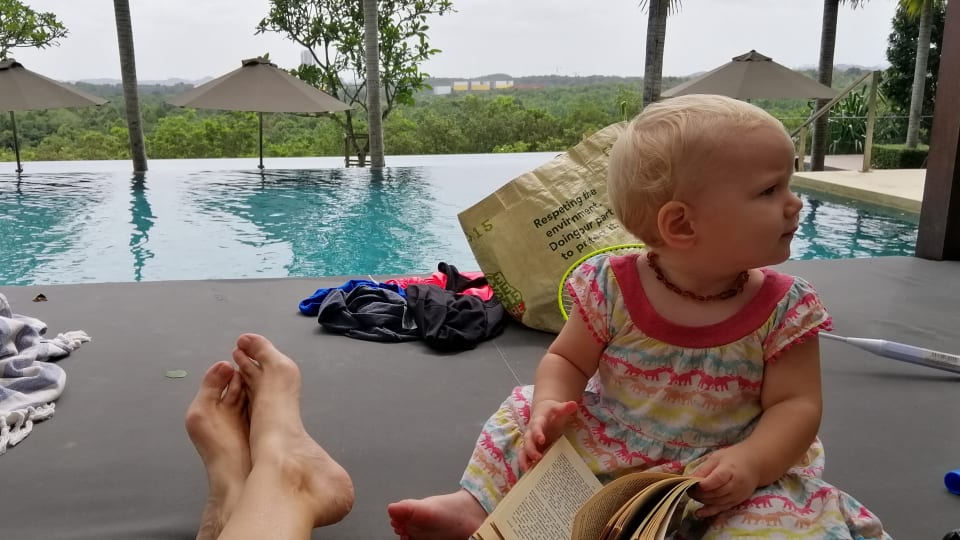
The photos and journals from a family trip become more valuable over time than almost anything else you bring home. Building in a few simple habits makes it easier to capture memories without it feeling like a chore.
A travel journal is one of the most durable approaches. Even young children can contribute: a drawing of something they saw, a ticket stub stuck to a page, or a sentence about their favorite part of the day. Older kids can keep their own journal alongside yours. Looking back at these years later is genuinely moving.
For photos, a simple routine works better than trying to document everything. One or two photos at each main stop, a candid shot of the kids doing something ordinary, and a family photo every day or two gives you a real record without turning every moment into a photo opportunity.
Involving kids in the documentation, for example, letting them take photos on a simple camera or a spare phone, or giving them the job of collecting small mementos, makes them active participants in the memory-making rather than just subjects in someone else’s record of the trip.
Frequently Asked Questions About Family Travel Hacks
The most effective packing hacks for families come down to organization and restraint. Use packing cubes assigned by person so you can find what you need without unpacking everything. Keep a change of clothes for every family member in your carry-on, including adults. Pack a small toiletry kit that stays permanently ready and just needs refreshing between trips.
Bring less than you think you need. Most destinations have shops, and the weight and stress of overpacking is rarely worth it. Focus on the things that are hard to replace or buy locally: medication, comfort items, and any specialist gear your kids rely on.
A clear, resealable bag for liquids helps comply with security rules at many airports. Check the requirements for your departure airport. A small bag on the back of the front seat keeps road trip essentials within reach. Simple systems, consistently used, make the whole trip run more smoothly.
Variety is the key. What works at the start of a flight won’t necessarily work four hours in, so having a range of options matters more than finding the one perfect activity.
Download content before you fly rather than relying on inflight entertainment. A mix of shows, movies, and audiobooks gives you flexibility. Pack a small entertainment kit with low-tech options: a notebook, colored pencils, sticker books, and a card game. New items the kids have not seen before hold attention longer than familiar ones.
Manage screen time with a loose end time rather than a strict hour limit. When the cabin dims and the crew signals it’s time to sleep, use that as a natural cue to wind down. An overtired child who has been watching screens for too long is harder to manage at the airport than one who got some rest mid-flight.
A well-stocked family travel first-aid kit covers the most common situations without being so large it becomes a burden to carry. General categories to include:
1. Wound care: adhesive bandages in a range of sizes, antiseptic wipes, and a small tube of antiseptic cream.
2. Allergy relief: antihistamine suitable for your children’s ages, in both tablet and liquid form if needed.
3. Motion sickness relief: medication or natural alternatives, discussed with a pharmacist before travel.
4. Rehydration sachets: useful for stomach bugs, heat, or any situation where a child has lost fluids.
5. Any prescription medication your family uses regularly, in sufficient supply for the full trip plus a few extra days.
Consult a pharmacist or travel health professional before you travel, particularly for long-haul or international trips. Some destinations have specific health considerations that are worth preparing for in advance. Check any destination-specific recommendations for your route and travel dates.
The biggest shift in how we travel as a family came from accepting that a good trip is not the same as a packed trip. Leaving room in the schedule, building in recovery time after long-haul flights, and having the right gear organized and ready are the practical foundations that make everything else easier. These are the family travel hacks that hold up across every kind of trip, from a weekend road trip to a month or longer abroad. If you found this useful, share it with another family who is planning their next adventure, and check out the rest of the site for destination guides, packing lists, and more practical advice for traveling with kids.
DISCLAIMER: This article/page contains affiliate links. This means that if you make a purchase after clicking on one of these links, then we may receive a small commission – at no extra cost to you. See our full disclosure and Privacy Policy for more information. Thank you for supporting our site and helping make it the inspiring location-independent, long-term family travel and worldschooling blog it aims to be!