

On the island of Luzon, Manila is one of Southeast Asia’s most historically rich cities, drawing curious families with colonial landmarks, lively neighborhoods, and day trips that stretch well beyond the city limits. Whether you’re planning a short stopover or a longer stay, this guide covers the full picture of kid-friendly activities and things to do in Manila.
(This post may include affiliate links for which we may earn a commission at no extra cost to you should you make a purchase. See our full disclosure and Privacy Policy for more information)
Classic neighborhoods and Places to Visit in Manila
Manila’s most established attractions span several centuries and several moods. You can walk the walls of a Spanish fortress in the morning, stand in a park shaped by national memory in the afternoon, and watch the sun drop into Manila Bay in the evening. These aren’t interchangeable sights. Each one carries its own weight, and together they give your family a real sense of what this city is built on.
Intramuros: The Walled City
Intramuros is Manila’s original Spanish colonial settlement, enclosed by stone walls built in the late 16th century. The name means “within the walls” in Latin, and the district still functions as a distinct neighborhood, with churches, plazas, and government buildings occupying the same footprint they have for centuries. San Agustin Church, completed in 1607, is the Philippines’ oldest stone church and a UNESCO World Heritage Site.
Families exploring Intramuros should know upfront that the cobblestone streets are uneven throughout, and prams or strollers are poorly suited to most of the area. The most practical ways to get around are on foot with a guided tour, by rented bike, or by horse-drawn calesa, which are available within the walls. Guided tours are worth considering because the history here is dense, and the stories behind the buildings add a lot to what you’re seeing.
Arroceros Forest Park
Arroceros Forest Park is a small, shady city forest in Ermita, roughly a kilometer from Intramuros. Reviewers mention shaded walking paths, benches, a riverwalk at the back, and signs naming the trees, which makes it a low-key nature-study stop. It’s a quiet break from the traffic around Manila’s historic core, though the dense trees can keep the air still on hot days.
Intramuros Walled City
Fort Santiago
Fort Santiago
Fort Santiago sits at the northwestern edge of Intramuros and is one of the oldest military fortifications in the Philippines. Built by Spanish colonizers in the late 16th century, it later became a site of imprisonment during both the Spanish colonial period and the Japanese occupation in World War II. The fort is where national hero José Rizal spent his final hours before his execution in 1896, and the Rizal Shrine within the complex holds personal artifacts and documents from his life.
The grounds are open to walk, and the mix of stone archways, grassy lawns, and open courtyards gives your family room to move. The terrain is mostly flat near the main areas, though some sections have uneven stone paths to watch for with younger children.
Binondo: The World’s Oldest Chinatown
Binondo was established in 1594, making it the world’s oldest Chinatown. It sits just across the Pasig River from Intramuros and has been a center of Chinese-Filipino commerce and culture for more than four centuries. Narrow, busy streets are lined with shophouses, temples, and family-run businesses that have operated for generations.
The architecture reflects the history of Chinese-Filipino settlement, with Spanish colonial influences visible alongside traditional Chinese design elements. Ongpin Street is the main artery, and the Binondo Church, formerly known as the Minor Basilica of Saint Lorenzo Ruiz, anchors the district’s historic core. The Chinese-Filipino food culture here is deeply embedded in the neighborhood’s identity, and the area is widely regarded as one of the best places in Manila to experience that culinary tradition, though specific eateries are worth researching closer to your visit.
Binondo
Divisoria Market
Divisoria Market
Divisoria is one of Manila’s oldest and best-known market districts, centered around Juan Luna Street in Tondo. It’s a dense, high-volume trading area where wholesale and retail goods sit side by side, and the range of what’s available, from fabric and clothing to household goods and seasonal items, is hard to match anywhere else in the city.
It’s worth visiting with a local guide if this is your family’s first time. The crowds are thick, especially on weekends, and the layout isn’t immediately intuitive. Keeping your family together and staying aware of your surroundings is practical advice, not a warning. With the right company, it’s an interesting slice of how Manila moves.
Manila Baywalk and Bay Sunset
The Manila Baywalk runs along Roxas Boulevard and is one of the city’s most recognizable evening destinations. The promenade stretches for several kilometers along the waterfront, and the sunsets here have a long-standing reputation for being among the most vivid in the region, partly due to the way light scatters across Manila Bay.
It’s a straightforward walk rather than a structured activity. Vendors and food stalls line parts of the route, and the early-evening atmosphere is relaxed and social. It’s a good way to end a day of sightseeing without adding another entrance queue.
Cultural Attractions and Museums
Manila’s museum and cultural venue scene has grown considerably over the past decade, and families now have strong options across different parts of Metro Manila. The venues in this section sit in different cities within the metro area, so it’s worth grouping visits by location to avoid unnecessary travel on any given day.
National Museum Complex
Museo Pambata
Cultural Center of the Philippines
National Museum Complex
The National Museum Complex occupies several buildings around Rizal Park and covers natural history, fine arts, and anthropology under one institutional umbrella. The National Museum of Fine Arts is housed in a restored neoclassical building and holds Juan Luna’s monumental painting “Spoliarium,” which is worth seeing for its sheer scale alone. The National Museum of Natural History, in a separate building, features a central atrium with a Tree of Life installation that rises through multiple floors.
The complex suits families with children of all ages. The natural history building in particular has exhibits that hold attention without requiring much prior knowledge of Philippine history.
Museo Pambata
Museo Pambata is a children’s museum located along Roxas Boulevard in Manila. The museum is designed specifically for children, with themed rooms and interactive exhibits built around Filipino culture, history, and everyday life. It’s one of the few venues in Manila built entirely around the experience of younger visitors.
Note: The museum reopened in December 2024 after a period of closure. Depending on when you’re reading this, the museum may still be restoring its full program of exhibits and activities.
Cultural Center of the Philippines
The Cultural Center of the Philippines sits on reclaimed land in the CCP Complex in Pasay and is the country’s main venue for performing arts. The building itself, designed by National Artist Leandro Locsin, is a significant piece of mid-20th century Philippine architecture. The center hosts theater, ballet, opera, and contemporary performances year-round.
For families, the main draw is a live performance rather than a daytime visit. Programming varies by season, so checking what’s scheduled during your stay is a practical first step.
Ayala Museum (Makati)
The Ayala Museum is located in Greenbelt, Makati, and covers Philippine history, pre-colonial gold artifacts, and contemporary Filipino art across several floors. The diorama galleries on the upper floors walk through key moments in Philippine history in a format that’s accessible to older children and adults alike. The gold collection, drawn from pre-colonial Philippine cultures, is one of the more quietly remarkable things to see in Manila.
The museum is well-maintained and air-conditioned throughout, which makes it a practical choice on hot days. It’s not designed for very young children, but older kids interested in history or art will find plenty to engage with.
Ayala Museum
The Mind Museum
The Mind Museum (BGC, Taguig)
The Mind Museum is a science museum located in Bonifacio Global City, Taguig, and it’s one of the more deliberately child-focused cultural venues in Metro Manila. The exhibits are organized into five galleries covering the atom, life, Earth, the universe, and technology, and most are hands-on. It also has a dedicated outdoor science garden.
The interactive format suits a wide age range, and the exhibits are designed to be explored rather than just observed. Allow plenty of time and flexibility in your plans!
Manila Ocean Park
Manila Ocean Park is an oceanarium and marine-themed attraction located near Rizal Park. It includes aquarium exhibits, animal shows, and various interactive experiences with marine life.
This isn’t something we’d recommend or visit ourselves. The attraction involves captive marine animals and trained-animal performances, which sits outside what we’re comfortable encouraging.
Indoor Activities
Manila’s heat and the heavy downpours of the wet season can quickly shut down an outdoor plan, so it’s worth keeping a few indoor backups in your pocket. The options below sit in different parts of Metro Manila, so pick whichever is closest to where your family is already spending the day.
National Library of the Philippines
The National Library of the Philippines sits on Kalaw Avenue in Ermita, close to Rizal Park. It has a children’s reading area that reviewers describe as spacious and colorful, plus a gallery of historical documents for older kids and adults. The building is air-conditioned, which makes it a cool break during a day around the park.
National Library of the Philippines
Indoor Play Centres
Indoor play centers are easy to find in Metro Manila’s malls. Many require everyone in the play area to wear grip socks, so pack a pair for each person in your family.
SuperPark Philippines Eastwood
SuperPark Philippines Eastwood is an indoor activity park inside Eastwood Mall in Quezon City, on Metro Manila’s eastern side. It’s built around trampolines and a large set of active games, and reviewers mention staff on the floor who coach kids through trampoline tricks. It suits school-age kids who want to burn off energy when the weather keeps them indoors.
Cheeky Monkeys
Cheeky Monkeys at Met Live Mall is a soft-play indoor playground on Macapagal Boulevard in Pasay, about 2km south of Star City. Reviewers describe a big play area with obstacles for a mix of ages, and adults can go in alongside their kids. It’s under a kilometer from the SM Skating Rink at SM Mall of Asia, covered below.
Kidzooona Shangri-La Plaza
Kidzooona Shangri-La Plaza is an indoor playground inside Shangri-La Plaza mall in the Ortigas Center area of Mandaluyong. Reviewers mention a large ball pit, pretend-play zones with costumes, and a trampoline, with space for toddlers through to older kids. It’s about 300m from the SM Skating rink at SM Megamall, so the two combine easily.
Active Fun Taguig
Active Fun Taguig is an indoor playground on 9th Avenue in Bonifacio Global City, under a kilometer from the Mind Museum. Reviewers point to a long slide as the main draw, and mention a place for parents to wait and a toilet inside the play area. It fits neatly into a BGC day alongside the museum.
Ice Skating
A mall ice rink is an unexpected way to cool down in the tropics, and Metro Manila has a few. Both rinks below rent balance supports for first-timers, and reviewers suggest bringing your own socks since the rental gear gets mixed feedback.
SM Skating at SM Mall of Asia
SM Skating at SM Megamall
SM Skating at SM Mall of Asia
SM Skating at SM Mall of Asia is an ice rink in Pasay, under a kilometer from Cheeky Monkeys. It’s a straightforward way for beginners to get their first go on the ice, and reviewers mention on-site lockers. It fills up, so allow for some company on the ice.
SM Skating at SM Megamall
SM Skating at SM Megamall is a second rink in Ortigas Center, about 300m from Kidzooona Shangri-La Plaza. Reviewers describe a larger rink than it looks from the outside, with bleachers for family members who’d rather watch than skate, which suits mixed-age groups.
Outdoor Activities
Star City
Star City is an amusement park within the CCP Complex in Pasay, with both indoor and outdoor rides spread across the site. The ride range covers younger children and older kids, and the indoor Snow World attraction, which simulates a snow environment, is a practical option on hot or rainy days given Manila’s climate.
It’s a straightforward amusement park experience rather than a themed destination, but it’s well-established and centrally located within the metro area. Height and age restrictions apply to some rides, so check those in advance if you’re traveling with very young children.
Star City
La Mesa Eco Park
La Mesa Eco Park
La Mesa Eco Park is a 33-hectare nature reserve in Quezon City, built around the La Mesa watershed. The park has trails for walking and biking, birdwatching areas, an archery range, and open green space that feels noticeably different from anything else in Metro Manila.
La Mesa has a documented history of partial closures, so before planning a visit, check the park’s current operating status directly.
Parks and Playgrounds
Rizal Park
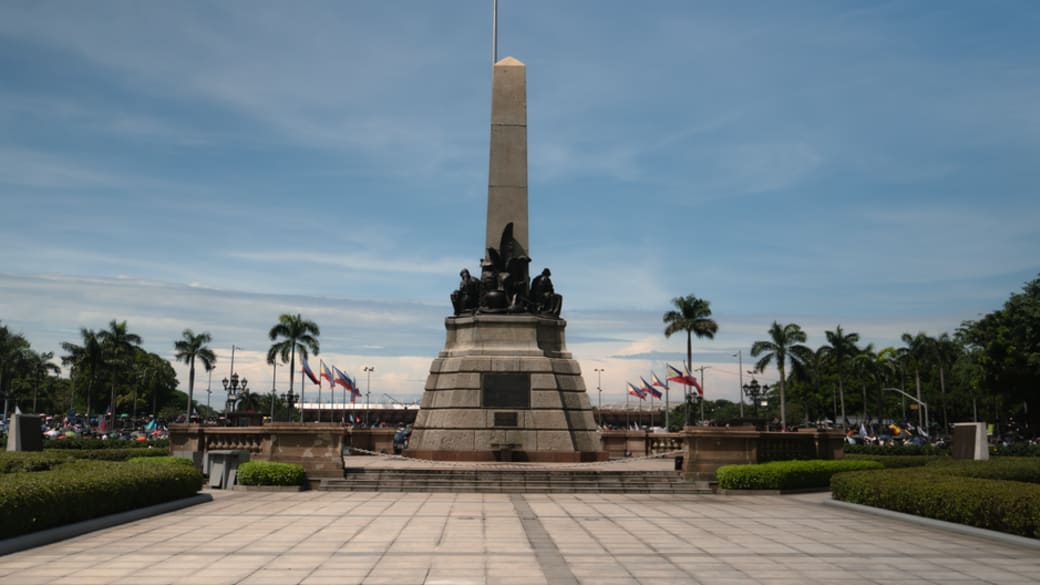
Rizal Park stretches along the Manila waterfront in Ermita and is one of Asia’s largest urban parks. It’s the site of José Rizal’s monument and the place where he was executed in 1896, making it a significant landmark in Philippine national identity. The park includes open lawns, a Chinese garden, a Japanese garden, and an orchidarium.
It’s a comfortable place to spend a few hours without a fixed agenda. The open space suits families with younger children who need room to move, and the gardens offer a quieter contrast to the busier sections near the monument.
Rizal Park Children’s Playground
Rizal Park has its own gated children’s playground on the Taft Avenue side. Reviewers mention slides, swings, a boot-shaped playhouse, and colorful dinosaur figures, with public toilets inside the fence. It gives younger kids a place to run around during a visit to Rizal Park.
Quezon Memorial Circle and the Circle of Joy Playground
Quezon Memorial Circle is a large circular park in Quezon City, built around the mausoleum of former Philippine President Manuel L. Quezon. The grounds include open lawns for picnics, a museum within the memorial shrine, and the Circle of Joy playground, one of Metro Manila’s better-known dedicated play areas.
The park is large enough that your family can spend a few hours without retracing your steps. The playground is a natural anchor for visits with younger children, while the memorial and museum give older kids and adults something more substantive to explore.
Quezon Memorial Circle
Ayala Triangle Gardens
Ayala Triangle Gardens
Ayala Triangle Gardens is a 2-hectare landscaped park in the heart of Makati’s business district, sitting between three of the city’s main commercial thoroughfares. The park has a recently revamped playground designed for children aged 2 to 12, with equipment spread across a shaded area that makes it usable even during warmer parts of the day.
The surrounding area has many cafes and restaurants, making it easy to pair a park visit with a nearby meal. It’s a good option if your family is already spending time in Makati.
Legazpi Active Park
Legazpi Active Park is a compact city park in Legazpi Village, Makati, about 1km from Ayala Triangle Gardens. Reviewers describe two separate play structures, one for younger children and one for older ones, plus open grass for picnics and a circular path around the edge. Step-free access from the street also makes it easy to manage with a stroller.
Washington SyCip Park
Washington SyCip Park sits right next door to Legazpi Active Park, so the two combine easily. Reviewers focus on the mature shade trees, a koi pond, a small fountain, and wheelchair-accessible paths rather than play equipment, so treat it as the picnic-and-wander half of the pair.
Day Trips from Manila
Manila sits on Luzon, the largest island in the Philippines, and that puts several very different day trip options within reach. Traffic in and out of the city is notoriously unpredictable, so building in extra time at both ends of any day trip is a practical habit, not overcaution.
Enchanted Kingdom (Santa Rosa, Laguna)
Enchanted Kingdom is the Philippines’ largest theme park, located in Santa Rosa, Laguna, roughly 35 to 45 kilometers south of Manila. It’s a full-day excursion, and given Manila’s traffic patterns, most families find it makes sense to leave early and plan to return in the evening.
The park has a wide range of rides and attractions organized across themed zones. Most major rides have height and age restrictions, which matters if you’re traveling with very young children. Review those restrictions before you go so your family can plan the day around what’s accessible.
Taal Volcano and Tagaytay
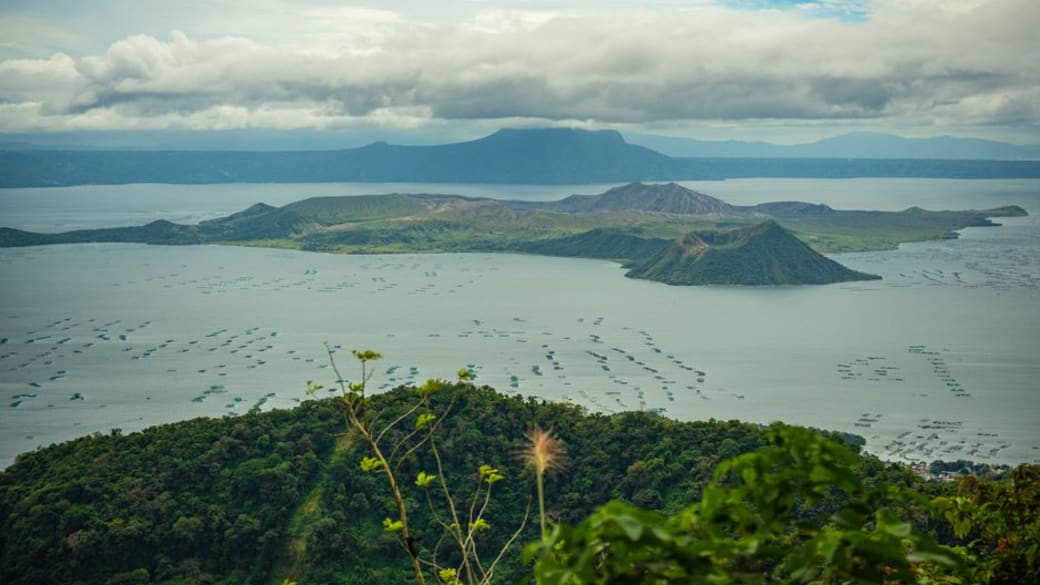
Tagaytay sits on a ridge overlooking Taal Lake, roughly 60 kilometers south of Manila. From the ridge, you can see Taal Volcano Island rising from the lake below, one of the Philippines’ most visually arresting natural views.
Taal is an active volcano, and access to the island and crater is subject to alert-level restrictions set by the Philippine Institute of Volcanology and Seismology. Check the current alert status before planning any activity on or near the volcano. The Tagaytay ridge remains a popular destination regardless of island access, with lake views available from multiple points along the road.
Corregidor Island
Corregidor Island sits at the mouth of Manila Bay, roughly 48 kilometers west of Manila by water. It was a major site of the Pacific War, and the island is largely preserved as a historical landmark, with ruins, tunnels, artillery batteries, and memorials spread across its terrain.
Ferries to Corregidor depart from the Manila pier area. The island suits families with older children who have some context for World War II history, since much of what’s there requires that background to be meaningful.
Mount Pinatubo
Mount Pinatubo is located in the Zambales mountain range, roughly 100 kilometers northwest of Manila. The volcano erupted catastrophically in 1991, and the crater lake that formed afterward has become one of the Philippines’ most visited natural sites. Getting to the crater involves a trek through lahar fields and a river crossing, typically by 4×4 vehicle followed by a hike.
The trek isn’t suitable for very young children, and trail conditions vary significantly by season. The dry season, roughly November through May, is the standard window for visits. Tour operators based in the nearby town of Capas, Tarlac organize the logistics, and joining an organized group is the standard approach for families visiting independently.
Beyond Manila
Manila is one stop on a very long map. The Philippines has more than 7,000 islands, and it’s impossible to mention them all. But if you’re stretching your trip beyond Luzon, you may enjoy our posts on things to do in Cebu with kids and things to do in Bohol with kids.
FAQs About Visiting Manila
What Is Manila Best Known For?
Manila is best known as the historic and political capital of the Philippines, with a history shaped by Spanish colonization, American occupation, and the Pacific War. Intramuros, the 16th-century walled city, is the most visible symbol of that colonial past, while sites like Corregidor Island and Fort Santiago carry the weight of WWII. The jeepney, a distinctly Filipino mode of transport that evolved from American military jeeps left after the war, is one of the city’s most recognizable cultural icons.
When Is the Best Time to Visit Manila?
The dry season, from roughly November through April, is the most practical time to visit Manila. The wet season brings heavy rainfall and the possibility of typhoons, particularly between July and October, which can significantly disrupt outdoor plans. December through February offers the most comfortable temperatures for sightseeing.
How to Get Around Manila?
Manila has several transport options, and the right choice depends on where you’re going and how much time you have. The LRT (Light Rail Transit) and MRT (Metro Rail Transit) lines cover key corridors across the metro area and are a reliable way to avoid road traffic on those routes. Taxis and ride-hailing apps are widely available and are the most practical option for families with luggage or young children. Jeepneys are the most distinctly Filipino way to travel and are worth experiencing at least once, though navigating routes without local knowledge takes some patience. The Pasig River Ferry is a scenic alternative for travel along the river corridor and a different way to see parts of the city. Manila’s traffic is notoriously unpredictable, so families who’ve been there consistently recommend building buffer time into any day’s plan.
Is Manila a Safe, Family-Friendly Place to Visit?
Many families visit Manila without incident, and the main practical advice is the same as in any large, busy city: stay aware of your surroundings, keep your family together in crowded areas, and avoid displaying valuables openly. Busy markets like Divisoria are worth visiting with a local guide, particularly on a first trip, as the crowds are dense and the layout can be disorienting. Sticking to well-trafficked areas, especially during the day, keeps the experience straightforward for most families.
Final Thoughts: What are the best things to do in Manila with Kids?
Manila has more depth than a short itinerary can cover, so pick a few areas and give them proper time rather than trying to cover everything. Intramuros and the National Museum Complex pair naturally for a history-focused day, while Bonifacio Global City and Makati suit families looking for a more modern urban experience. If you’re planning kids’ activities in Manila alongside day trips like Enchanted Kingdom or Taal, build in realistic travel time and keep your schedule flexible. Use this guide as your starting point for things to do in Manila, check current conditions for anything time-sensitive, and go.
DISCLAIMER: This article/page may contain affiliate links. This means that if you make a purchase after clicking on one of these links, then we may receive a small commission – at no extra cost to you. See our full disclosure and Privacy Policy for more information. Thank you for supporting our site and helping make it the inspiring, location-independent, long-term family travel and worldschooling blog it aims to be!