

Hanoi is one of those cities that quickly gets under your skin. The streets are chaotic in the best way, the history runs deep, and there’s far more to do with kids than many families expect. Whether you’re planning a few days or a longer stay, here’s everything you need to know about things to do in Hanoi.
(This post may include affiliate links for which we may earn a commission at no extra cost to you should you make a purchase. See our full disclosure and Privacy Policy for more information)
Historic and Sacred Hanoi
The oldest parts of Hanoi are compact enough to explore on foot, which makes the historic quarter a natural starting point for families. You can move between temples, heritage houses, and lakeside landmarks without covering huge distances. That said, the sites spread across the city, so it helps to group visits by area rather than trying to cover everything in one go.
Dress modestly for religious sites. Covered shoulders and knees are expected at temples and pagodas, and many sites ask visitors to remove shoes before entering. Keeping a light layer in your bag makes this easy to manage with kids.
Explore Hanoi’s Old Quarter
The Old Quarter is Hanoi’s oldest continuously inhabited part, and it’s still organized around the trade guilds that shaped it centuries ago. Streets named for the goods once sold there – silk, paper, tin – give the area a logic that’s worth explaining to older kids as you walk. The narrow lanes are best explored slowly, on foot, with no fixed agenda.
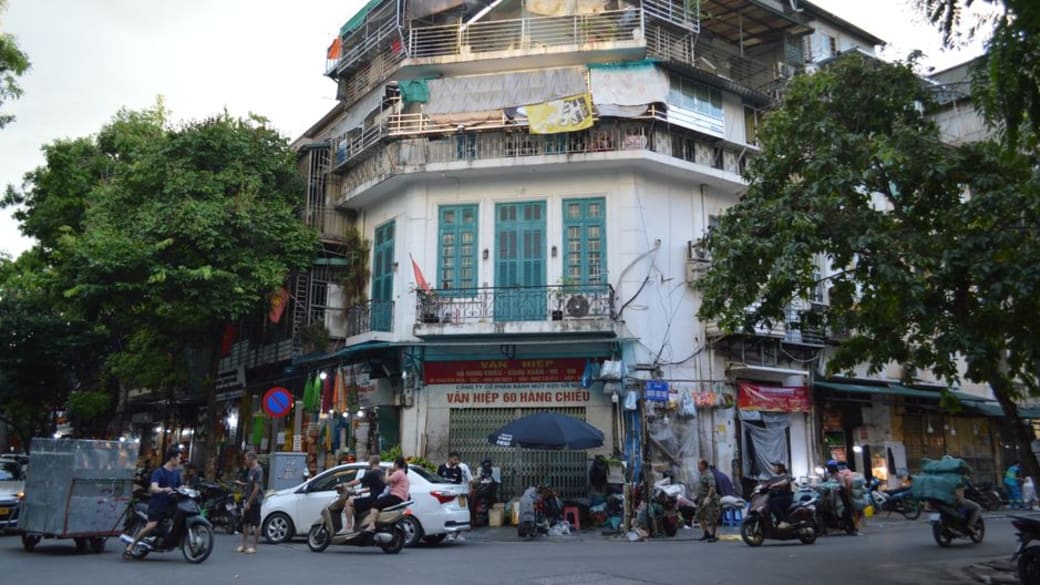
Ma May Heritage House (87 Ma May Street)
At 87 Ma May Street, this restored merchant house clearly shows how a prosperous Old Quarter family would have lived in the 19th century. The layout moves through a series of connected rooms and courtyards, showing how living space, storage, and commerce all shared the same building. It’s a small site, but the detail is specific enough to hold attention.
Bach Ma Temple
Bach Ma Temple is the oldest temple in the Old Quarter and sits right on the main street, easy to miss if you’re not looking for it. It’s an active place of worship, so visits should be quiet and respectful. The interior is compact but richly decorated, and the contrast between the temple and the street outside is part of what makes it worth stepping into.
Hoan Kiem Lake and Ngoc Son Temple
Hoan Kiem Lake sits at the southern edge of the Old Quarter and is one of the city’s most recognizable landmarks. The lake is surrounded by a walking path that’s busy at most hours, particularly in the early morning when locals gather to exercise. Ngoc Son Temple sits on a small island in the northern part of the lake, reached by the red Huc Bridge. The temple is dedicated to General Tran Hung Dao and remains an active religious site, so the same modest dress expectations apply.
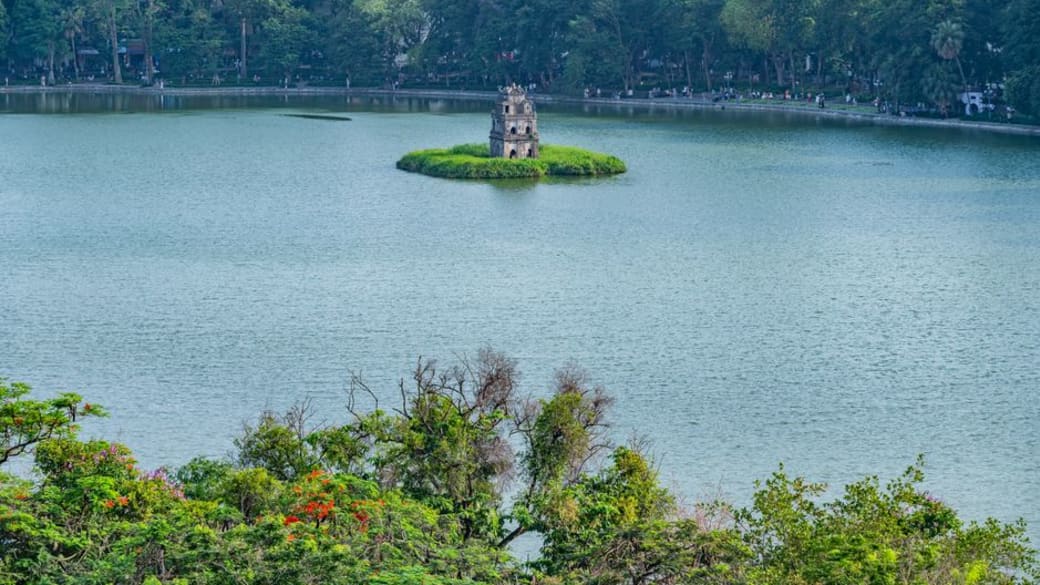
Ho Chi Minh Mausoleum and One Pillar Pagoda
The Ho Chi Minh Mausoleum houses Ho Chi Minh’s preserved body in state and draws visitors from across Vietnam and beyond. The site has a formal atmosphere and strict rules around dress and behavior, including no shorts, no sleeveless tops, and no photography inside the mausoleum itself. The One Pillar Pagoda is a short walk away and is one of Vietnam’s most photographed structures, a small wooden pagoda built on a single stone pillar rising from a lotus pond. The two sites are close enough to visit in one day.
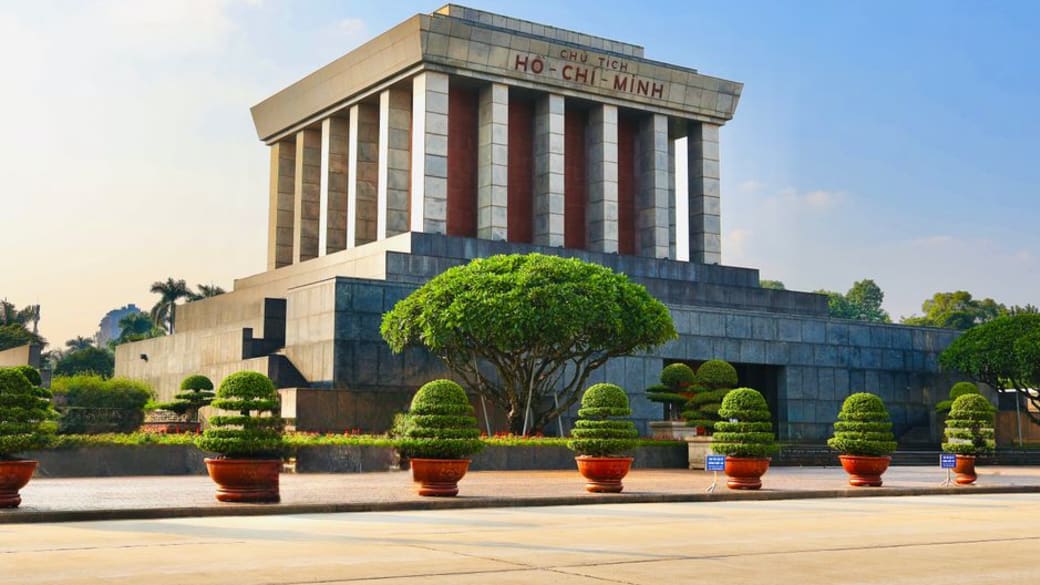
St. Joseph’s Cathedral
St. Joseph’s Cathedral is a French colonial-era church in the heart of the Old Quarter, about a five-minute walk from Hoan Kiem Lake. The neo-Gothic facade sharply contrasts with the surrounding streets, and the interior is worth a look if the doors are open. It’s an active parish church, so visit outside service times.
Temple of Literature
The Temple of Literature is one of Hanoi’s most visited historic sites and one of the best-preserved examples of traditional Vietnamese architecture. Built in 1070, it was Vietnam’s first national university, and the grounds are organized into a series of walled courtyards that you move through in sequence. Stone steles mounted on stone tortoise backs record the names of doctoral graduates from centuries past. The site is large enough to give kids room to move between courtyards without feeling confined.
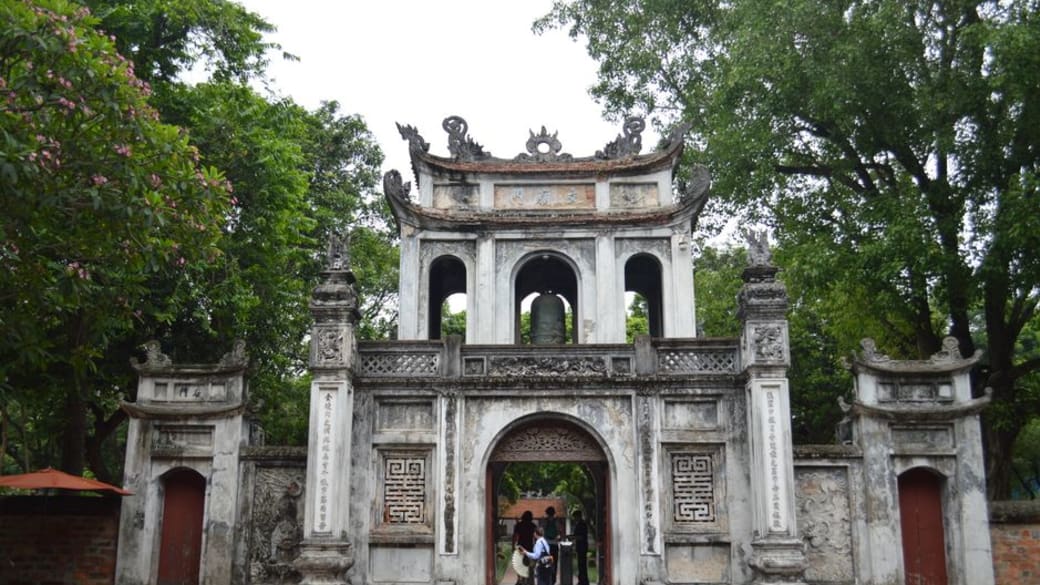
Hanoi Train Street
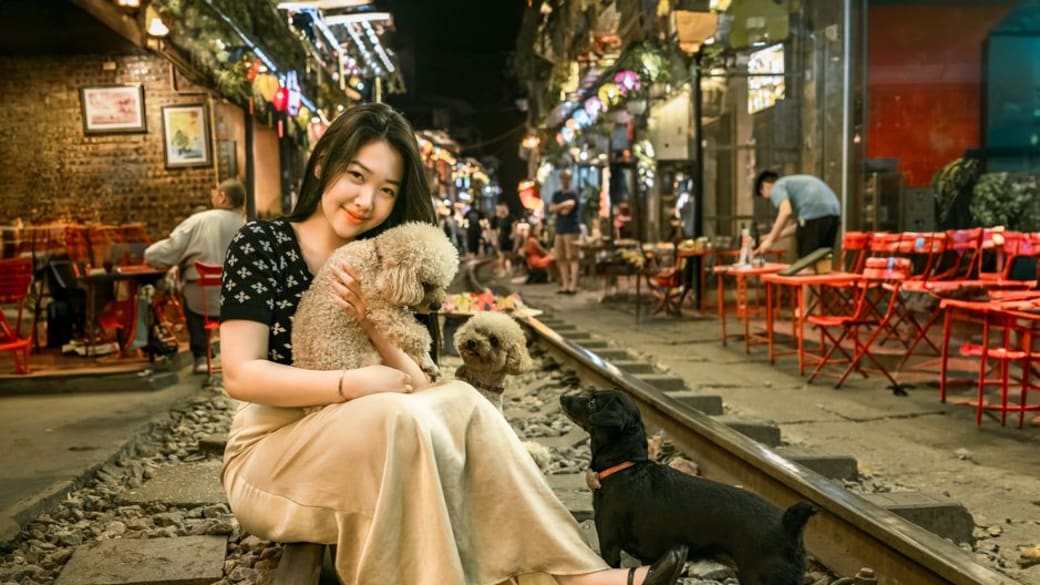
Hanoi Train Street is a narrow residential lane where an active railway line runs close enough to the houses on either side that residents pull their furniture back when a train passes. It’s a genuine neighborhood, not a staged attraction, and the trains do still run. Access and viewing arrangements have changed over the years, so check current conditions locally before visiting with young children.
Tran Quoc Pagoda and West Lake
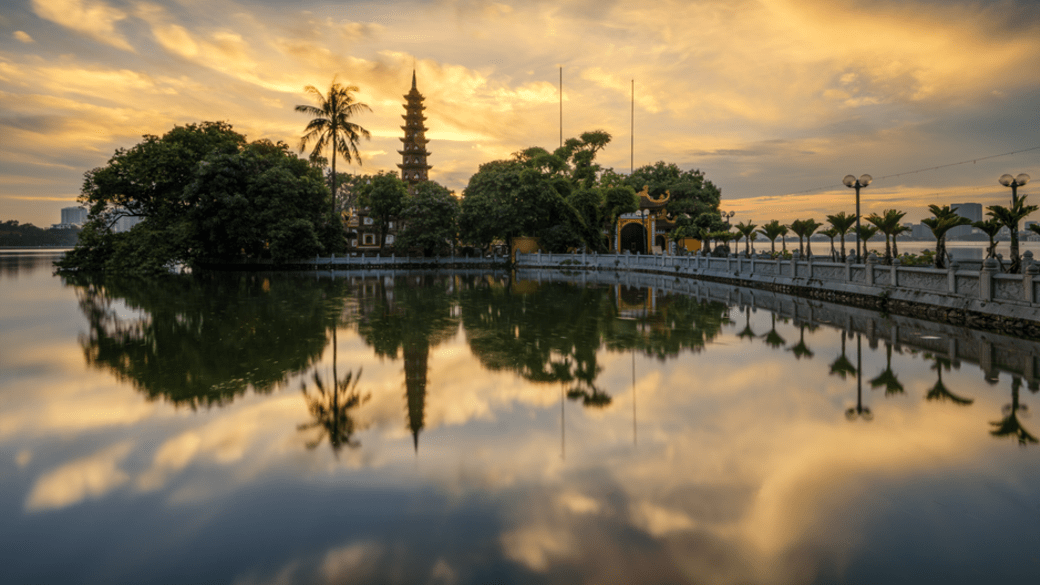
Tran Quoc Pagoda sits on a small peninsula on the southeastern shore of West Lake and is considered Hanoi’s oldest Buddhist pagoda. The multi-tiered tower is the most photographed element, but the grounds also include a bodhi tree grown from a cutting said to originate from the tree under which the Buddha attained enlightenment. West Lake itself is the largest lake in Hanoi, and the area around it is quieter and more residential than the Old Quarter.
Quan Thanh Temple
Quan Thanh Temple is on the southern shore of West Lake, a short walk from Tran Quoc Pagoda. It’s dedicated to Tran Vu, a deity associated with protecting the northern part of the city, and the large bronze statue inside the main hall is its most notable feature. It’s an active temple, so the same respectful visit approach applies.
Cultural Attractions and Museums
Hanoi’s museums and performance venues cover a wide range of subjects, from the country’s ethnic diversity to its most difficult modern history. The quality and depth across these institutions make them worth building into your itinerary rather than treating as rainy-day backups. A few are particularly well-suited to families, especially those with outdoor elements or hands-on components.
Hanoi Opera House
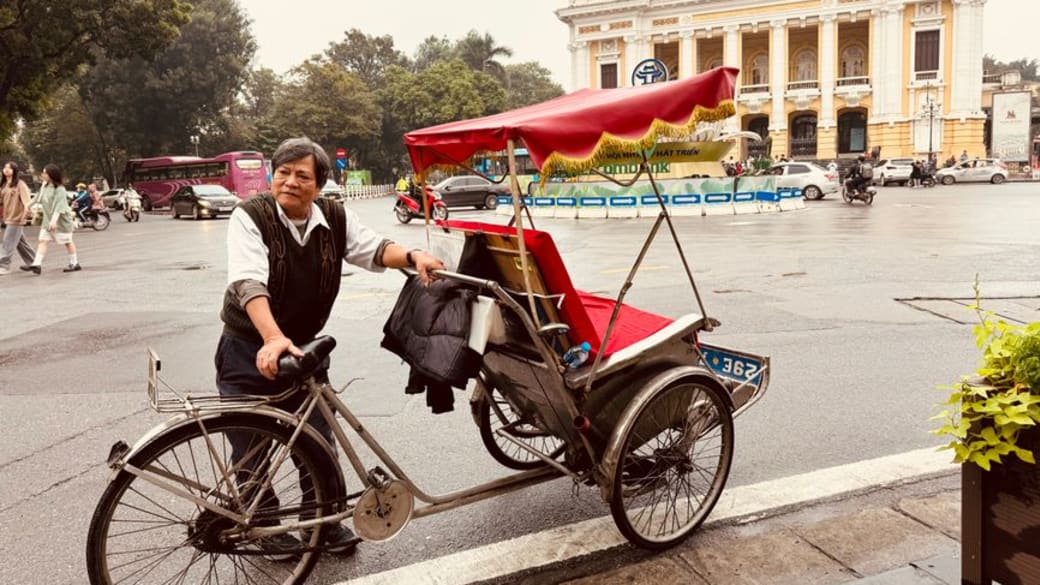
The Hanoi Opera House on Trang Tien Street is a French colonial building completed in 1911 and modeled on the Paris Opera. The exterior is worth seeing even if you don’t go inside, but performances do take place regularly and the interior is worth experiencing if the opportunity arises. Check what’s on during your visit, as the program varies.
Hoa Lo Prison Museum
Hoa Lo Prison was built by the French colonial administration in the late 19th century and later used to hold American prisoners of war during the Vietnam War. The museum covers both periods, and the exhibits are direct about the conditions prisoners faced. It suits older children and teenagers who have some context for what they’re seeing, but the subject matter is heavy and worth thinking through before visiting with younger kids.
Hanoi Opera House
Hoa Lo Prison Museum
Vietnam Museum of Ethnology
The Vietnam Museum of Ethnology is one of the country’s most thoughtfully presented museums. It covers Vietnam’s 54 officially recognized ethnic groups through artifacts, photographs, and reconstructed living spaces. The outdoor section is particularly good for families, with full-scale traditional houses from different regions that you can walk through and around. The museum is about 8km from the Old Quarter.
Vietnam Museum of Ethnology
Imperial Citadel of Thang Long
Imperial Citadel of Thang Long
The Imperial Citadel of Thang Long was Vietnam’s political center for several centuries and is a UNESCO World Heritage Site. The above-ground structures include gates, towers, and exhibition halls, while excavations have revealed layers of occupation going back over a thousand years. The grounds are large enough to explore at a relaxed pace, and the outdoor space gives families room to move between exhibits without feeling rushed.
Thang Long Water Puppet Theatre
Water puppetry is a Vietnamese art form that originated in the Red River Delta, and Thang Long Water Puppet Theatre on Dinh Tien Hoang Street is one of Hanoi’s main venues for seeing it performed. Puppeteers operate the puppets from waist-deep behind a bamboo screen, controlling the figures with submerged rods and strings. Live traditional music accompanies the performances, and the stories draw on Vietnamese folklore and rural life. It’s a short show, which suits younger children well.
Thang Long Water Puppet Theatre
Indoor Activities
When the heat or rain makes outdoor sightseeing less appealing, Hanoi has a handful of purpose-built indoor venues worth knowing about. They’re all inside large shopping and entertainment complexes, so food and rest stops are easy to find nearby.
VinKE (Times City)
VinKE is a career-simulation play zone for children, located at Times City. Kids take on different professional roles, from doctors to pilots to chefs, earning and spending a play currency as they move between activity stations. It’s designed specifically for children rather than adults, so parents are more in a supervisory role than a participant one. The venue is large and well-organized, and it’s one of the more structured kids’ activities in Hanoi for families with children roughly between the ages of three and twelve.
VinKE (Times City)
AdventureS at Hanoi Centre
AdventureS at Hanoi Centre
AdventureS is a large indoor activity space inside the Hanoi Centre mall, less than 1km from the Temple of Literature. It covers about 1,500 square meters and includes trampolines, climbing walls, a ninja-style obstacle course, and an indoor zipline. The equipment stretches across a wide age range, and adults can join in too, which suits families with kids at different stages who all want to burn off energy.
X Space Immersive Digital Art Experience
X Space is an immersive digital art experience located inside Vincom Mega Mall at Royal City. The experience uses large-scale projections across floors, walls, and ceilings to create walk-through environments that shift and respond to movement. Designed for all ages, the rooms’ visual scale keeps younger children and adults engaged.
X Space Immersive Digital Art Experience
Vincom Ice Rink
Vincom Ice Rink
Vincom Ice Rink is in the same Royal City mall as X Space, so the two pair up easily on one indoor day. The rink covers about 3,000 square meters, one of the larger in the country, and it’s a cool break from Hanoi’s summer humidity. Rental skates are provided, and it’s worth asking staff to swap them if they feel dull.
National Library of Vietnam
The National Library of Vietnam is a French colonial-era library on Trang Thi Street, under 1km from Hoan Kiem Lake, with a shaded garden out front. It’s a working library rather than a visitor attraction, so it suits a quiet hour on a hot or wet day.
Outdoor Activities
Ho Tay / West Lake Water Park
West Lake Water Park, also marketed as Ho Tay Water Park, sits on the shore of West Lake roughly 5 to 7km north of the Old Quarter. It’s a seasonal activity in the truest sense: the slides, pools, and wave areas are at their best during Hanoi’s hot months, and visiting outside of warm weather makes much less sense. If your trip falls during the hotter part of the year and you’re traveling with kids who want a break from sightseeing, this is a straightforward option.
Hanoi Night Market and Dong Xuan Market
The Hanoi Night Market runs along Hang Dao Street and the surrounding Old Quarter lanes on weekend evenings, filling the road with clothing, souvenirs, street food, and local shoppers. It connects naturally to Dong Xuan Market, the large covered market at the northern end of the Old Quarter that operates daily. Dong Xuan is a working wholesale and retail market rather than a tourist attraction, and together they give a good picture of how commerce moves through this part of the city. Street food options along the night market route suit a range of budgets and appetites.
Bat Trang Ceramic Village: Hands-On Pottery Making
Bat Trang is a village about 15km southeast of central Hanoi with a pottery-making tradition going back several centuries. The main draw for families is the chance to sit at a wheel and make something with clay under the guidance of local potters. The village also has an on-site pottery museum that puts the craft in historical context. It’s a hands-on half-day that works well as a standalone excursion or can be combined with other things to do in Hanoi for kids who want something more active than sightseeing.
Parks and Playgrounds
Thong Nhat Park
Thong Nhat Park sits about 2km south of Hoan Kiem Lake and is one of the larger green spaces in central Hanoi. The park has playgrounds, open lawn areas, and a lake, and it’s a practical place to stop when your family needs unstructured time between sites. It’s not a destination in itself, but it’s a useful reset point in a city where the streets can feel relentless.
Thong Nhat Park
Cau Giay Park
Cau Giay Park
Cau Giay Park is a city park about 6km west of Hoan Kiem Lake, built around a central lake. It reopened after a renovation in 2025, and the children’s playground was redesigned with rope climbing structures and soft artificial grass underfoot. A walking path around the lake makes it an easy stop for families staying on the west side of the city.
Day Trips From Hanoi
Several of Vietnam’s most visited natural and cultural sites are within day-trip or overnight distance of Hanoi. The options below cover a range of landscapes and experiences, from limestone karst scenery to river journeys to incense-making villages. Distance references are included where known to help with planning.
Halong Bay
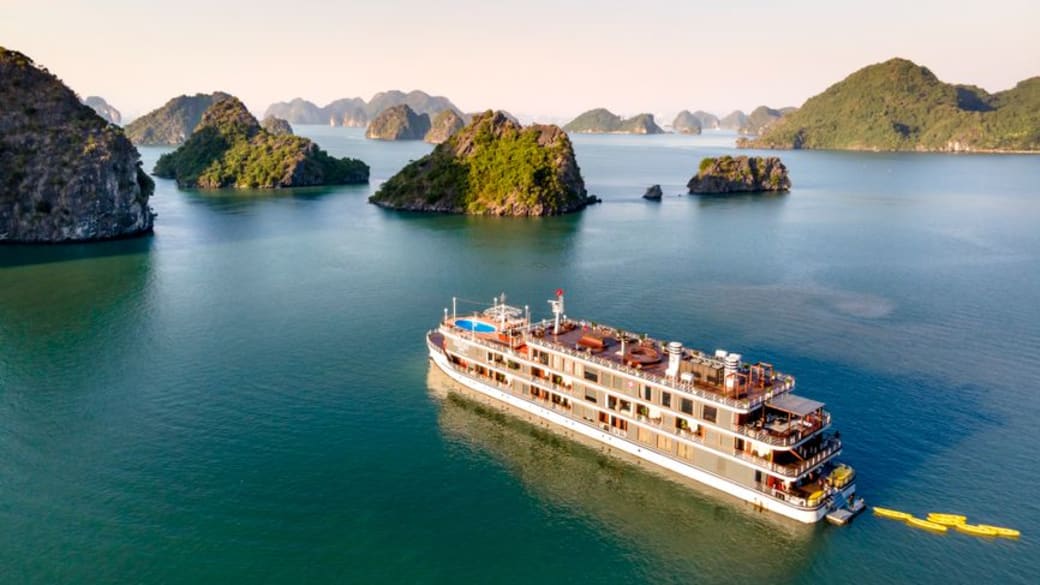
Halong Bay is about 170km east of Hanoi and is the most globally recognized excursion from the city. The bay contains thousands of limestone karsts and islands rising from calm water, and the standard way to see it is by overnight or multi-day cruise. Day trips are possible, but the bay is large, and an overnight stay gives a more complete experience. Many families choose a two-night cruise to cover more of the bay at a relaxed pace. Look for vessels with a strong safety record and family-friendly cabin configurations.
Ninh Binh: Trang An and Tam Coc
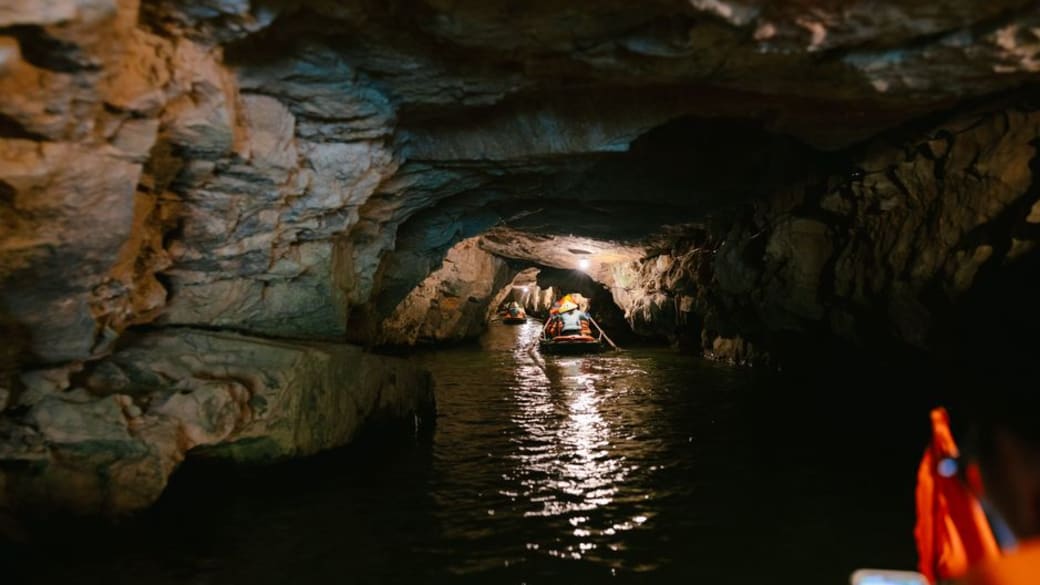
Ninh Binh province is roughly 90km south of Hanoi and contains two natural areas of interest in northern Vietnam. Trang An is a UNESCO-listed landscape of karst peaks, rivers, and cave systems explored by rowing boat. Tam Coc, a few kilometers away, offers a similar river-through-karst experience and is slightly more compact. Both involve boat journeys through low cave passages, which younger children generally find memorable. The two sites are close enough to combine in a single day.
Quang Phu Cau Incense Village
Quang Phu Cau is a village about 35- 40 km south of Hanoi known for producing incense sticks, and the outdoor drying displays- bundles of brightly colored sticks fanned out in circular arrangements- are what draw visitors. This is a working village, not a staged attraction, and the displays are only visible when the weather is dry. Rain forces the incense under cover, so this is not a wet-weather option. Plan it for a clear day and go early when the light is best for the visual effect.
Perfume Pagoda Excursion
The Perfume Pagoda is a complex of Buddhist temples and shrines built into the limestone cliffs of Huong Son mountain, roughly 60km southwest of Hanoi. Getting there is part of the experience: the journey involves a flat-bottomed boat along the Yen Stream through rice paddies and karst scenery, followed by either a cable car or a hike up to the main shrine. The full journey takes most of a day. It’s a site of significant religious importance and draws large numbers of Vietnamese pilgrims, particularly during the spring festival season.
FAQs About Visiting Hanoi
What are the Best Things to Do in Hanoi with Kids?
Hanoi rewards families who give it more than a day or two. The historic sites in the Old Quarter and around Hoan Kiem Lake are a natural starting point, but the Vietnam Museum of Ethnology, the day trip to Ninh Binh, and the hands-on pottery experience at Bat Trang are the kinds of things that stay with kids long after the trip. Use this guide as your planning base for things to do in Hanoi, then check current conditions locally for anything time-sensitive before you go.
What Is Hanoi Best Known For?
Hanoi is best known for its well-preserved Old Quarter, French colonial architecture, and role as Vietnam’s political and cultural capital. It’s also the gateway city for northern Vietnam’s most visited natural sites, including Halong Bay and Ninh Binh.
When Is the Best Time to Visit Hanoi?
Hanoi has four distinct seasons, which is unusual for Southeast Asia. The most comfortable weather for sightseeing generally falls in spring and autumn, when temperatures are moderate, and rainfall is lower. Summer brings heat and humidity along with the highest rainfall, while winter can be genuinely cool and overcast.
How to Get Around Hanoi?
Ride-hailing apps are widely used in Hanoi and are a practical option for families with young children or luggage. Taxis are available throughout the city, and many of the Old Quarter’s historic sites are close enough to walk between. For day trips, organized transport or private car hire is the most straightforward approach.
Is Hanoi Safe for Families?
Hanoi is generally safe for families, but traffic is the most consistent thing to watch for. Crossing the road requires patience and a steady pace, as vehicles move in a continuous flow rather than stopping for pedestrians at crossings. Keeping younger children close in busy street markets and on narrow Old Quarter lanes is sensible practice.
Where are the best places to visit in Southeast Asia?
Southeast Asia is a patchwork of countries linked by cheap flights, overland routes and ferries. Thailand, Vietnam, Cambodia, Malaysia, Indonesia and the Philippines each bring their own food, beaches, cities and temples, so it is easy to build a trip around whatever your family enjoys most. Costs stay friendly for long stays, which is a big reason so many worldschooling and slow travel families base themselves here. If you’re in the region or considering a trip there, check out our Southeast Asia activity guides for family-friendly stops across the whole region.
DISCLAIMER: This article/page may contain affiliate links. This means that if you make a purchase after clicking on one of these links, then we may receive a small commission – at no extra cost to you. See our full disclosure and Privacy Policy for more information. Thank you for supporting our site and helping make it the inspiring, location-independent, long-term family travel and worldschooling blog it aims to be!