

Paris may have a reputation for romance and high culture, but it’s also great at keeping children active, curious, and engaged. From underground bone chambers to open-air puppet theatres or world-famous museums and theme parks, there’s a lot more going on than the postcard version suggests.
(This post includes affiliate links for which we may earn a commission at no extra cost to you should you make a purchase. See our full disclosure and Privacy Policy for more information)
Paris, France – Popular Places to Visit
The Eiffel Tower: Tips for Visiting with Kids
The Eiffel Tower is about 330 meters tall, and the structure itself is far more impressive up close than any photograph prepares you for. The lift provides access to three levels, with the second level offering the most comfortable viewing experience for families with younger children. The top level is smaller and can feel crowded, which is worth knowing if you have kids who don’t love tight spaces.
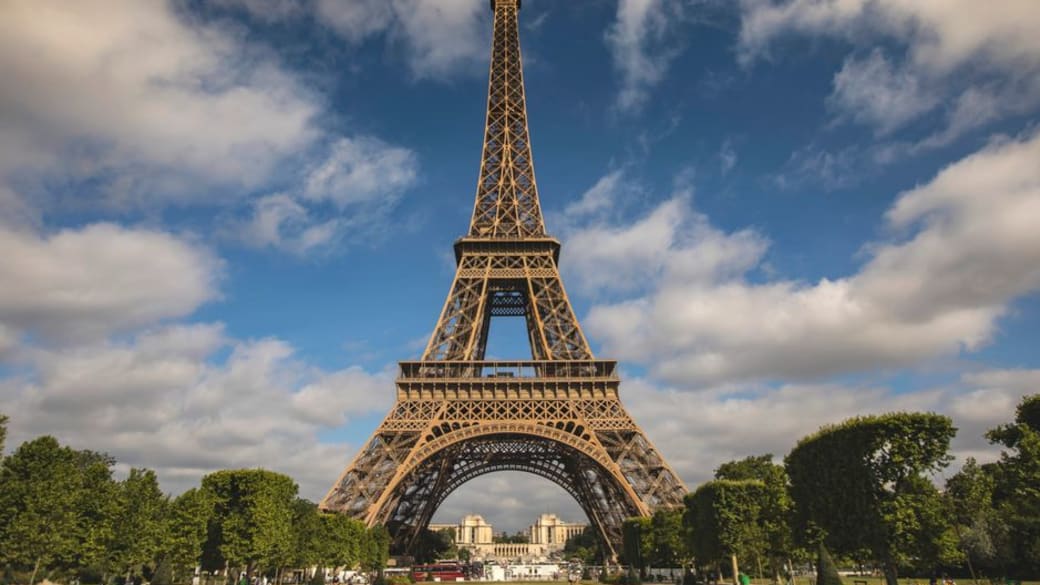
Queues at ground level can be long, especially in summer. Booking tickets in advance is strongly recommended. The surrounding Champ de Mars park gives your family room to decompress before or after the visit, and it’s a natural spot to sit and take in the view from a distance.
Arc de Triomphe and the Champs-Élysées
The Arc de Triomphe sits at the center of a twelve-road roundabout, which is one of the more dramatic pieces of urban planning your kids are likely to see anywhere. The monument itself commemorates French military victories and houses the Tomb of the Unknown Soldier beneath its arch. Visitors reach the top via a spiral staircase of around 284 steps, so it’s better suited to older children and adults than to toddlers or those with limited mobility.
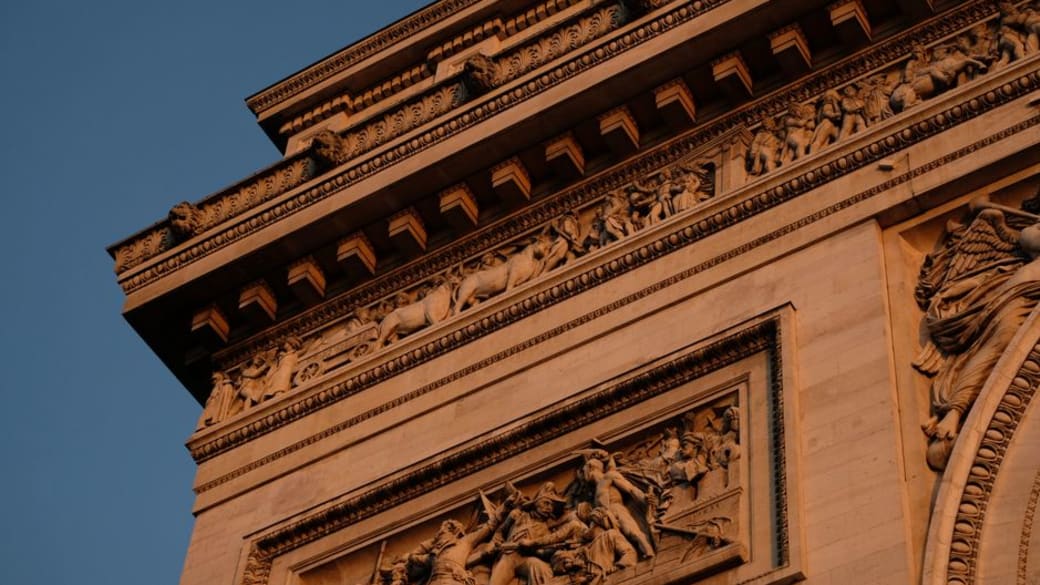
The Champs-Élysées stretches roughly 2km from the Arc de Triomphe down to the Place de la Concorde. It’s a wide, tree-lined boulevard that’s easy to walk with children, and its scale makes it clear how Paris was designed to impress.
Parc Monceau
Parc Monceau is in the 8th arrondissement, just over 1km from the Arc de Triomphe, so it fits neatly into a day that already includes the Champs-Élysées. The park dates to the 18th century and still has its follies, including a small pyramid, a curved colonnade around a pond, and a little Venetian-style bridge. Your family can wander the paths looking for them, then head to the playground and the benches when it’s time to stop.
Sacré-Cœur Basilica and the Montmartre District
Sacré-Cœur sits at the top of the Butte Montmartre, Paris’s highest point, and the climb is part of the experience. Families can walk up the steep steps or take the funicular railway, which runs from the base of the hill. The basilica’s white stone exterior is striking, and the interior is open to visitors, though it’s an active place of worship, so visitors should expect a degree of quiet.
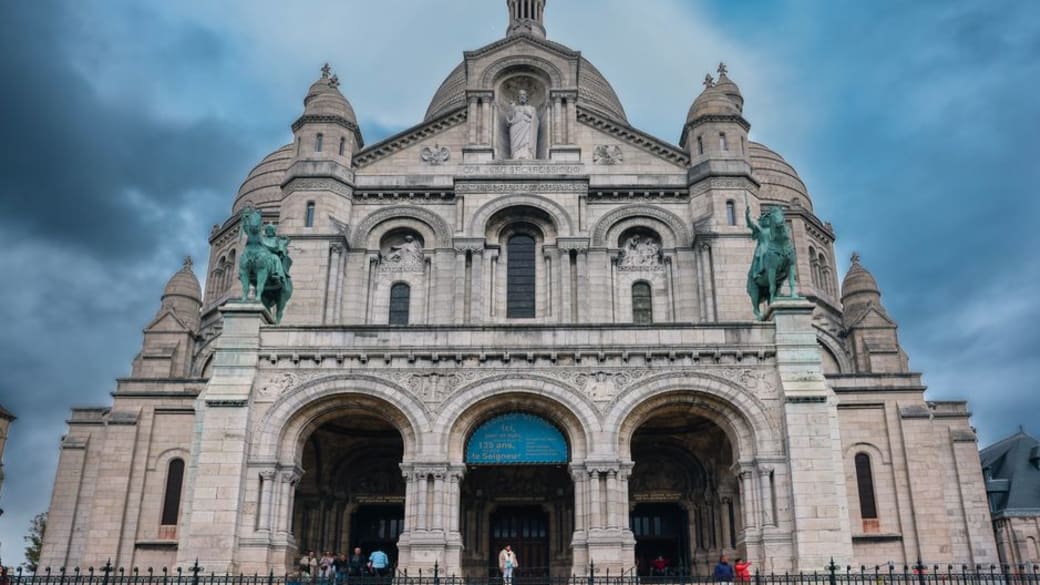
The Montmartre neighborhood around it is worth exploring at a relaxed pace. The streets are narrow and hilly, the architecture is older and more village-like than much of central Paris, and the Place du Tertre square has been associated with artists for well over a century.
Notre-Dame Cathedral
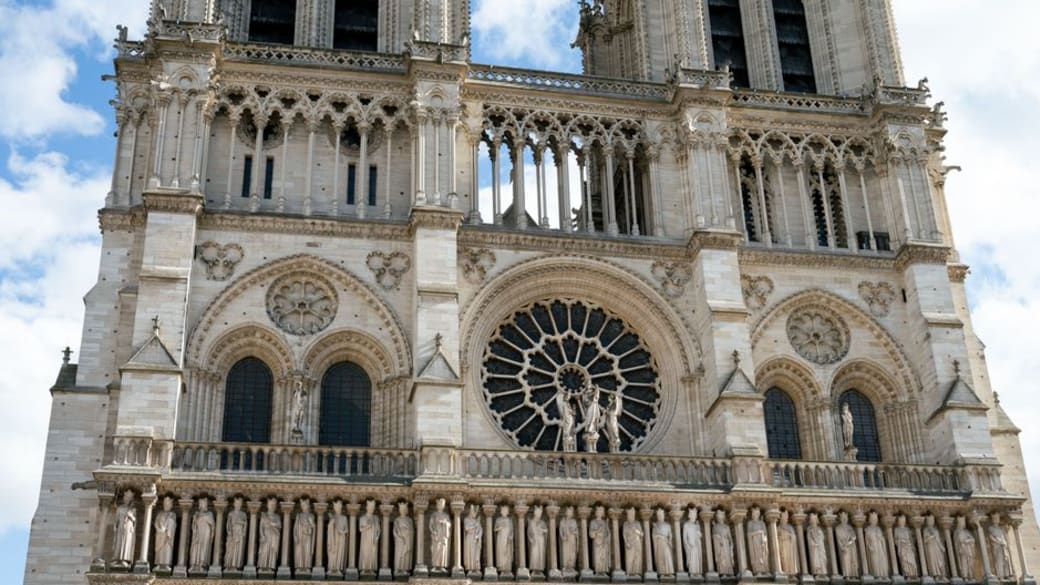
Notre-Dame Cathedral stands on the Île de la Cité, one of the two natural islands in the Seine at the heart of Paris. The Gothic architecture, including the flying buttresses, the rose windows, and the scale of the nave, gives children a concrete sense of medieval building ambition. The surrounding square and the riverbanks nearby make it easy to combine a visit with a walk along the water. (Note: restoration work following a long period of closure after a major fire is ongoing and could affect accessibility to some parts of the Cathedral).
Seine River Cruises and Riverbank Walks
A Seine River cruise gives your family a different angle on the city, passing landmarks including Notre-Dame, the Eiffel Tower, the Musée d’Orsay, and the Louvre from the water. Several operators run regular departures from central piers, and the boats are generally stroller-accessible.
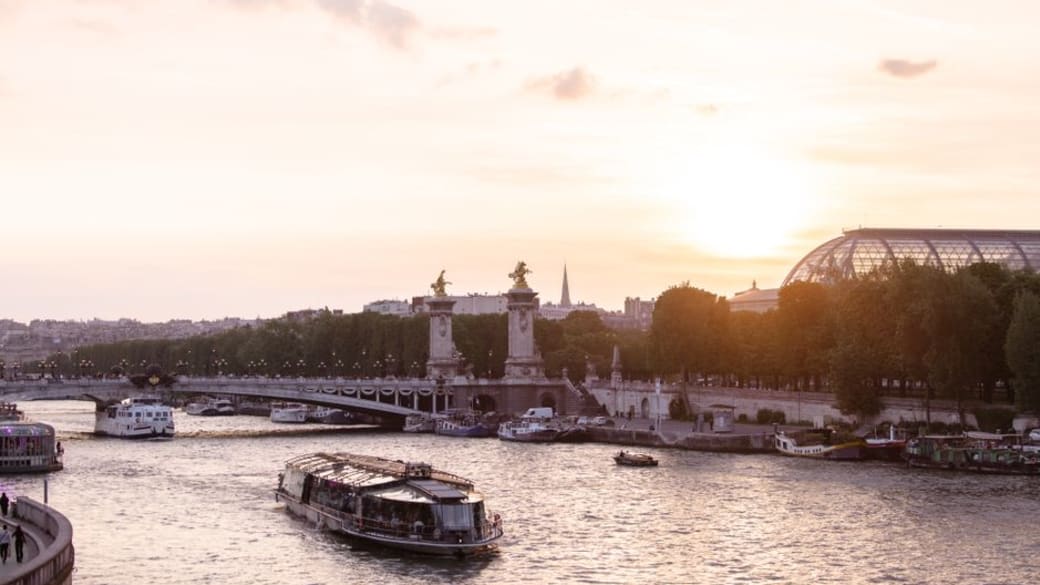
The riverbanks themselves are worth time on foot. The Voies sur Berges, the pedestrianized sections along the Left Bank, give families a car-free path with views of the city above. It’s a practical and pleasant way to move between neighborhoods without relying on the metro.
Paris Catacombs: What to Expect Below the City
The Paris Catacombs hold the remains of around six million people in a network of tunnels beneath the city’s 14th arrondissement. The official entrance is at the Place Denfert-Rochereau, and the visit involves descending roughly 20 meters underground via a spiral staircase of 130 steps. The tunnels are narrow, dimly lit, and cool year-round.

This one is not for every child. The ossuary section, where bones are arranged along the tunnel walls, is striking and historically significant, but it can be distressing for younger or more sensitive kids. Many families find it better suited to children aged ten and up. Queues can be long, and advance booking is advisable. If your family is comfortable with the subject matter, it’s an unusual and memorable experience.
Paris Neighborhoods and Architecture
Paris is a city that makes sense on foot. Each neighborhood has a distinct character shaped by centuries of different uses, communities, and architectural periods. Walking through them with children is one of the more underrated things to do in Paris.
Le Marais: History, Culture, and Place des Vosges
Le Marais is one of the few central Paris neighborhoods that escaped the major 19th-century rebuilding program that reshaped much of the city. As a result, it retains a dense mix of medieval lanes, Renaissance mansions, and 17th-century townhouses, giving it a texture unlike anywhere else in Paris.
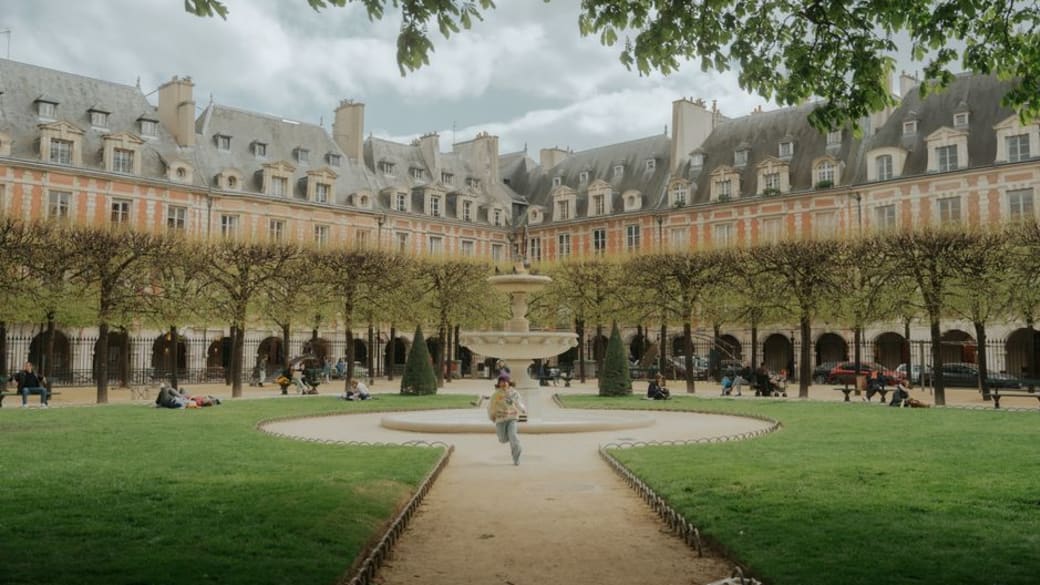
The Place des Vosges, completed in 1612, is Paris’s oldest planned square. Its uniform red-brick arcaded facades surround a central garden with fountains and lawns. Children have room to move, and the covered arcades provide shelter in wet weather. The square was originally built as a royal residence and later became a fashionable address; Victor Hugo lived at number six for sixteen years, and his former apartment is now a museum.
The wider Marais neighborhood is easy to navigate on foot, with the Jewish Quarter around the Rue des Rosiers adding another layer of historical depth to the area.
Latin Quarter and Saint-Germain-des-Prés
The Latin Quarter takes its name from the language of instruction at the medieval University of Paris, which was founded here in the 12th century. The neighborhood still has a strong student character, with the Sorbonne at its center and a dense network of bookshops, small theatres, and public squares. The streets are narrow and sometimes steep, which makes them interesting to walk but worth keeping in mind if you’re pushing a stroller.
The Panthéon, the neoclassical mausoleum that holds the remains of figures including Voltaire, Rousseau, and Marie Curie, sits at the top of the hill and is visible from much of the neighborhood. Saint-Germain-des-Prés, just to the west, feels slightly more open, with Boulevard Saint-Germain running through it and the church of Saint-Germain-des-Prés, Paris’s oldest church, anchoring the main square.
Palais-Royal Gardens and the Covered Passages
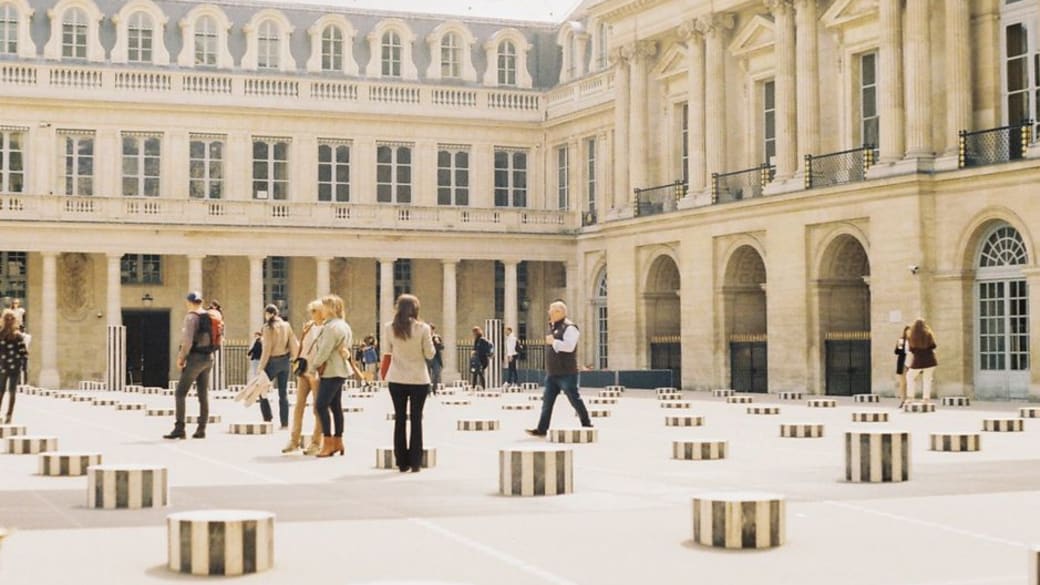
The Palais-Royal Gardens sit just north of the Louvre and are one of the more pleasant surprises for families in central Paris. The gardens are enclosed on three sides by colonnaded arcades and feel calm and contained compared to the busier streets outside. The central lawn and fountain area give children space to run, and the famous striped columns of the Buren installation in the courtyard reliably spark curiosity in kids of all ages.
Paris’s covered passages offer a different kind of architectural experience. Built mainly in the early 19th century as sheltered shopping arcades, several survive in good condition in the 2nd and 9th arrondissements. The Galerie Vivienne and the Passage des Panoramas are among the best preserved. Their glass roofs, mosaic floors, and ornate ironwork make the city’s history feel tangible.
Cultural Attractions and Museums
Paris has a concentration of world-class museums that would take weeks to cover properly. For families, the practical question is which ones are worth the time and energy with children in tow. The entries below focus on what the visit is actually like, not just what the collection contains.
The Louvre
The Louvre is the largest art museum in the world by floor area, and that scale is the first thing to plan around. The building is a former royal palace, and the collection spans ancient Egyptian artifacts, Greek and Roman sculpture, and European paintings from the medieval period through to the 19th century. The Winged Victory of Samothrace, the Venus de Milo, and the Mona Lisa are the three works many families make a point of seeing.
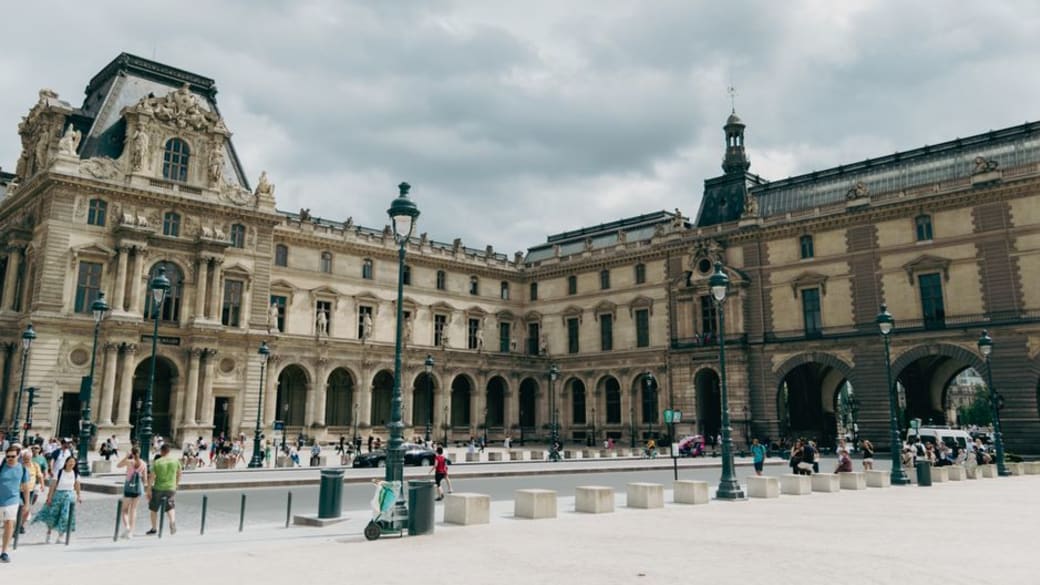
With children, the key is to pick a section and go deep rather than trying to cover the whole museum. The Egyptian antiquities wing can hold children’s attention for a while, and the scale of the Denon Wing’s grand staircase is impressive enough to draw them in and slow them down a little. If you have younger children likely to tire before the collection does, consider a shorter, focused visit rather than a full day.
Musée en Herbe
The Musée en Herbe is a dedicated children’s art museum in the 1st arrondissement, close to the Louvre and Palais-Royal Gardens. It runs temporary exhibitions designed specifically for children, typically connecting major artists or art movements to hands-on creative activities. The programming is age-aware, and the exhibitions are built to be explored rather than just observed.
It’s a smaller venue than the major Paris museums, which is part of its appeal for families with younger children who find large institutions overwhelming. The focus on participation rather than passive viewing makes it one of the more child-centered options in the cultural space.
Musée d’Orsay
The Musée d’Orsay is housed in a converted railway station on the Left Bank, and the building is as much a part of the visit as the collection. The main hall retains the Gare d’Orsay’s original iron-and-glass structure, and the giant station clocks are a reliable focal point for children who might otherwise be less engaged by 19th-century French painting.
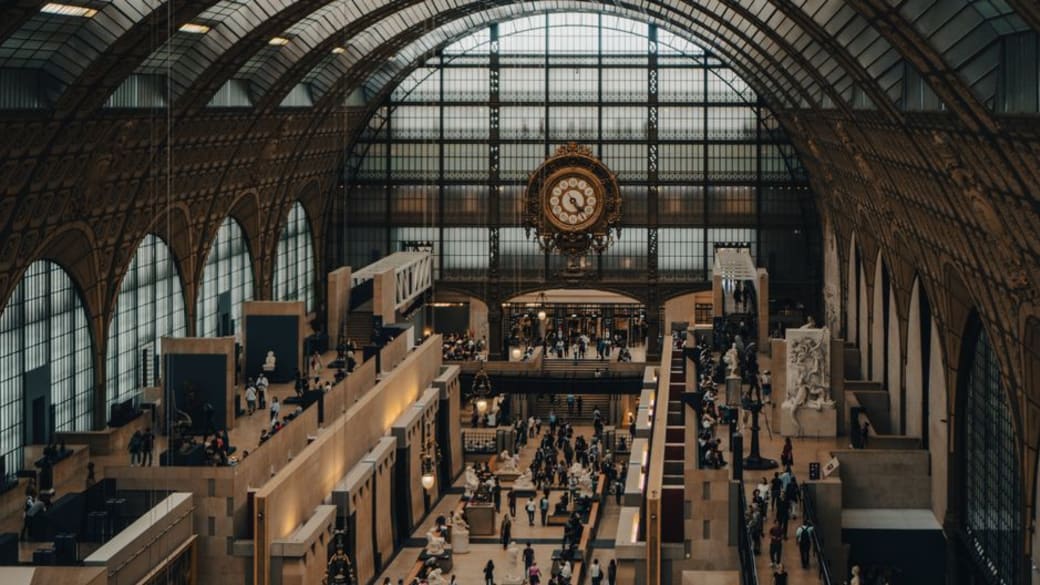
The collection covers art from roughly 1848 to 1914, with an exceptional holding of Impressionist and Post-Impressionist work. Monet, Renoir, Degas, Van Gogh, and Cézanne are all well represented. For families who have visited Monet’s Garden at Giverny or plan to, the Musée d’Orsay adds useful context. The museum is significantly more manageable in size than the Louvre, which makes it a better fit for families with younger children.
Musée de l’Orangerie
The Musée de l’Orangerie sits at the western end of the Tuileries Garden and centers on a single extraordinary commission: Claude Monet’s eight large-scale Water Lilies paintings, installed in two oval rooms on the ground floor. Monet designed the rooms himself, and the paintings wrap around the walls in a continuous panorama.
Other floors hold a smaller collection of early 20th-century works. The museum is compact enough to visit in under two hours, which suits families well. Its location at the edge of the Tuileries Garden makes it a natural pairing with outdoor time before or after.
Grande Galerie de l’Évolution
The Grande Galerie de l’Évolution is part of the Muséum National d’Histoire Naturelle in the Jardin des Plantes, in the 5th arrondissement. The building is a 19th-century iron-and-glass structure, and the central nave is dominated by a parade of preserved animal specimens arranged as if mid-migration.
The collection spans four floors and covers Earth’s biodiversity, the history of evolution, and the impact of human activity on species and ecosystems. The upper galleries address endangered and extinct species in a way that prompts conversation with older children. The museum suits a wide age range, though the darkened lighting in some sections may unsettle very young children.
Parc de la Villette and the Cité des Sciences et de l’Industrie
Parc de la Villette sits in the northeast of Paris, in the 19th arrondissement, and covers around 55 hectares. It’s a large, purpose-designed cultural park that combines outdoor green space with several major indoor venues, making it one of the most complete family destinations in the city.
The Cité des Sciences et de l’Industrie is the main science museum and one of Europe’s largest. Its permanent exhibitions cover space, mathematics, life sciences, technology, and the environment across multiple floors. Within the museum, the Cité des Enfants is a dedicated space for children, split into two age-group sections. Both sections focus on hands-on experimentation rather than display cases, and the age-split design means activities are calibrated to developmental stage rather than a compromise for a mixed audience.
Parc de la Villette and the Cité des Sciences et de l’Industrie
The museum also has a planetarium that runs regular projection shows on astronomy and space exploration. The Argonaute, a real French Navy submarine from the 1950s, is moored outside the museum and is open for self-guided visits. Children can move through the interior and get a concrete sense of what life aboard a working submarine involved.
La Géode, the mirrored geodesic dome adjacent to the museum, houses a hemispherical screen cinema. The park’s outdoor areas include the Jardin du Dragon, a large play area built around a dragon-shaped climbing structure that draws younger children. The park’s open lawns, canal paths, and cycle routes give families plenty of room to move between venues at their own pace.
Theme Parks and Outdoor Activities
Paris has three major theme and amusement parks within reasonable reach of the city center, each with a different character and a different age sweet spot. All three are worth considering as a full-day commitment rather than a half-day add-on.
Disneyland Paris
Disneyland Paris is located about 32km east of central Paris, in Marne-la-Vallée, and is reachable by RER train from central Paris stations. The resort includes two parks: Disneyland Park and Disney Adventure World, formerly known as Walt Disney Studios Park. Disneyland Park is the more traditional of the two, with themed lands, classic rides, and character meet-and-greet areas. Disney Adventure World is built around immersive lands based on Disney, Pixar, and Marvel stories, including World of Frozen and Avengers Campus.
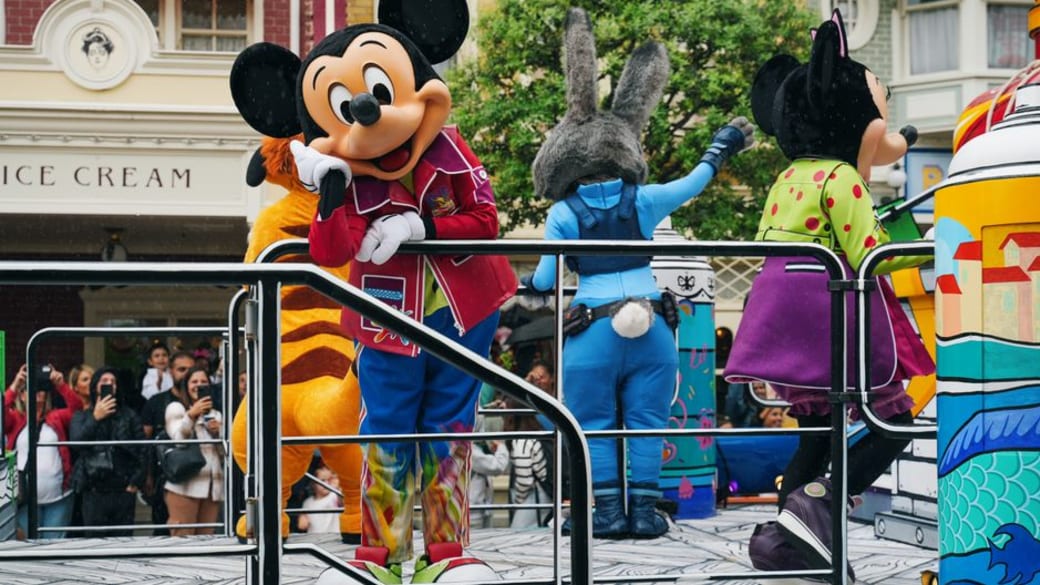
The resort suits a wide age range, though families with children under five will find the more accessible content in Disneyland Park’s Fantasyland area. Height restrictions apply to a number of the more intense attractions, so it’s worth checking these in advance if you have children at the borderline. The park is large enough that a single day can feel rushed; families with younger children, in particular, may find two days more comfortable.
Parc Astérix
Parc Astérix is about 35km north of Paris and is built around the Asterix and Obelix comic book characters created by René Goscinny and Albert Uderzo. The park is divided into themed areas representing different periods of history and different parts of the ancient world as depicted in the comics, including Gaul, Rome, Greece, and Egypt.
The ride mix spans a broad age range, from gentler attractions for younger children to several large roller coasters for older kids and adults. The theming is consistent, and the park has a distinct character that sets it apart from the Disney model. It’s a good option for families with children who know the Asterix stories, but the park’s visual storytelling is clear enough that prior knowledge isn’t essential.
Disneyland Paris
Parc Astérix
Jardin d’Acclimatation
Jardin d’Acclimatation: Amusement Park in the Bois de Boulogne
The Jardin d’Acclimatation sits within the Bois de Boulogne, about 8km west of central Paris, and is reachable by metro. It’s a long-established amusement park with a mix of rides, water play areas, a mirror maze, a puppet theatre, and a miniature train that runs through the park. Its scale and pace are noticeably different from larger theme parks: it’s more contained, more relaxed, and better suited to families with younger children.
The park sits within the broader woodland of the Bois de Boulogne, giving it a green, open feel. It’s a practical choice for a half-day or a full day depending on the age of your children, and its proximity to central Paris makes it easier to combine with other things to do in Paris than a trip to either of the out-of-town parks.
Paris Parks, Playgrounds and Green Spaces
Luxembourg Gardens
The Luxembourg Gardens cover about 23 hectares in the 6th arrondissement of central Paris. The formal French garden layout, with its geometric paths, sculpted lawns, and central octagonal pond, gives the space a clear structure that makes it easy for families with children to navigate.
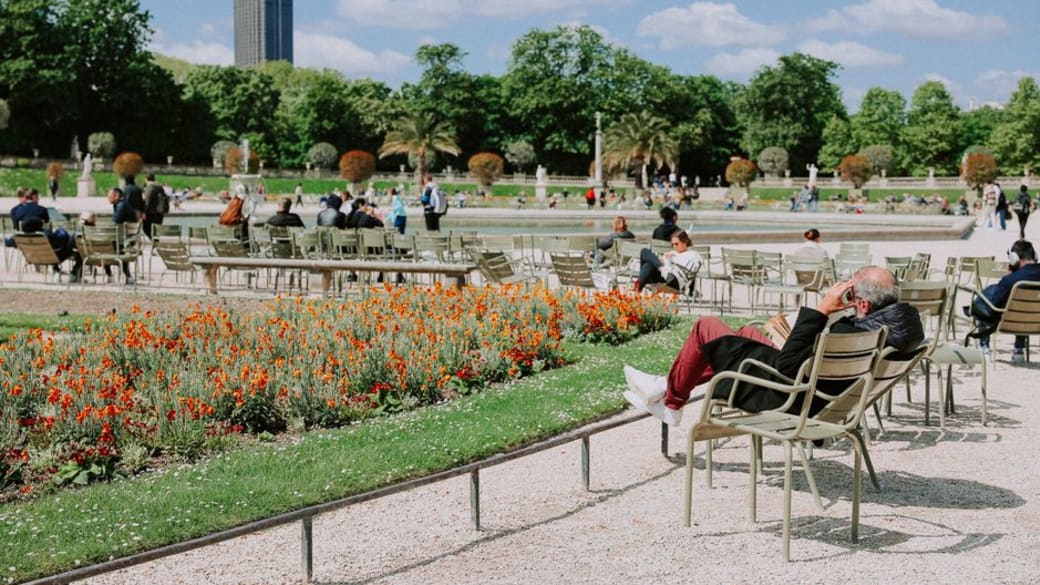
The toy sailboat pond is a long-running tradition: children can rent small wooden sailboats and push them across the water with a pole. The merry-go-round near the main entrance has been operating for well over a century. The gated playground is one of the better-equipped in central Paris, with climbing structures, sandpits, and play equipment suited to a range of ages. The marionette theatre runs Guignol puppet shows, a French tradition dating back to the early 19th century, and the performances are lively enough to hold the attention of children who don’t speak French.
Tuileries Garden
The Tuileries Garden runs between the Louvre and the Place de la Concorde, covering about 28 hectares along the Right Bank. It’s a formal French-style garden, with long straight paths, clipped trees, and large round ponds at either end. The central axis gives it a clear sense of direction, which makes it easy to walk through with children as a route between the Louvre and the Musée de l’Orangerie.
The garden has a playground area and a seasonal funfair that sets up along its northern edge. The ponds attract children who like to watch the model boats, and the wide gravel paths are stroller-friendly. Its position between two major museums makes it a natural midpoint for a day that combines culture with outdoor time.
Parc des Buttes-Chaumont
The Parc des Buttes-Chaumont is in the 19th arrondissement, about 4km northeast of central Paris, and it has a completely different character from the formal gardens of the city center. Built on the site of a former quarry and rubbish dump in the 1860s, the landscape is deliberately romantic and irregular, with steep hills, a lake, and a rocky island at the center topped with a small temple. (Note: A major restoration is expected to start in 2027 and run to around 2031, so expect the island part to be closed to visitors while the ground is stabilized).
The park has a large playground, a puppet theatre, and a carousel. It’s less visited by tourists than the Luxembourg Gardens or the Tuileries, so it feels more like a neighborhood park and less like an attraction.
Parc des Buttes-Chaumont
Jardin des Plantes
Jardin des Plantes
The Jardin des Plantes began in 1626 as a royal medicinal garden and now sits in the 5th arrondissement as a large, walkable green space. Pathways run between flower beds and mature trees, there are plenty of benches, and there’s a carousel for younger children. The Grande Galerie de l’Évolution is inside the grounds, so the garden pairs naturally with that visit.
The Ménagerie, a small zoo on the same site, isn’t something we’d recommend or visit ourselves, but we want your family to have the full picture.
Day Trips from Paris
Palace of Versailles
The Palace of Versailles is about 20km southwest of central Paris and is reachable by RER train from central Paris stations. The palace was the principal residence of the French royal family from 1682 until the Revolution, and its scale reflects that history directly. The Hall of Mirrors, the State Apartments, and the Royal Chapel are the main interior highlights.
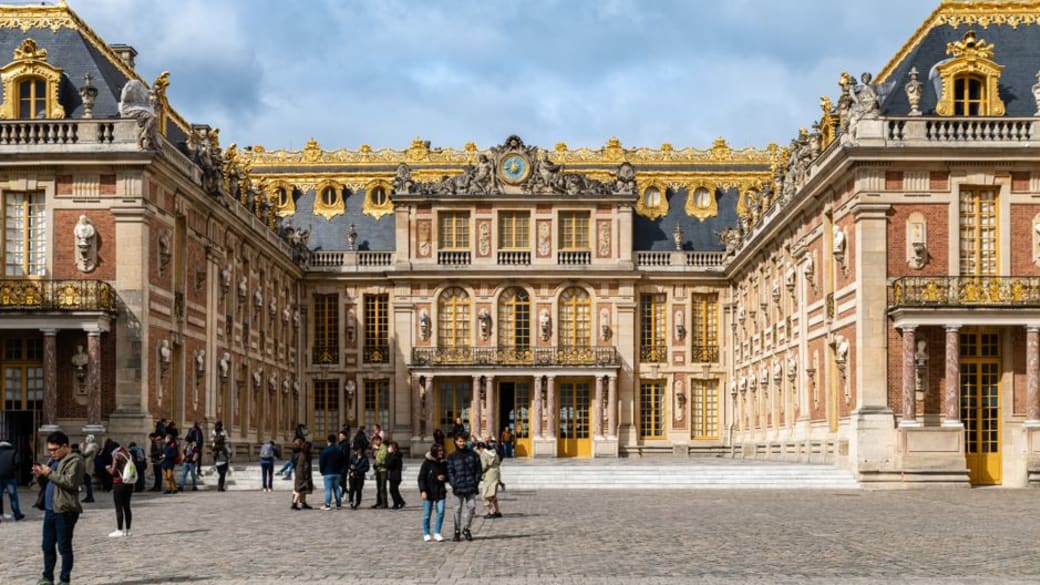
For families, the gardens are often as memorable as the palace itself. They cover around 800 hectares and include formal parterres, fountains, canals, and the Grand Trianon and Petit Trianon palaces at the far end of the estate. The distances mean younger children will need a stroller or a lot of patience. Renting a bike or a golf cart within the grounds is a practical way to cover more of the estate without exhausting your family.
Monet’s Garden at Giverny
Giverny is about 75km northwest of Paris, in Normandy. The journey involves a train to Vernon followed by a bus or shuttle connection to the village (trains to Vernon depart from Gare Saint-Lazare on mainline services). Claude Monet lived and gardened at Giverny from 1883 until his death in 1926, and the property has been maintained and restored to reflect the garden as it appeared during his lifetime.
The garden is divided into two sections: the Clos Normand, a formal flower garden in front of the house, and the water garden, which contains the Japanese bridge and the lily pond that Monet painted repeatedly in his later years. For children who have seen the Water Lilies paintings at the Musée de l’Orangerie, standing at the edge of the actual pond draws a direct line between art and place.
FAQs About Visiting Paris
What Is Paris Best Known For?
Paris is known for its architecture, art, and history, with landmarks including the Eiffel Tower, Notre-Dame Cathedral, and the Louvre among the most recognized in the world. It also has a strong food culture, a well-developed public transport network, and a concentration of world-class museums, making it one of the most visited cities on Earth. For families, the combination of outdoor spaces, cultural institutions, and walkable neighborhoods makes it a city worth returning to more than once.
When Is the Best Time to Visit Paris?
Spring and early autumn are generally the more comfortable seasons for families, with mild temperatures and manageable crowds compared to the peak summer months. July and August bring the largest tourist numbers, which affects queues at major attractions. Winter visits are quieter and can suit families who prioritize museums and indoor attractions over outdoor exploration.
How to Get Around Paris?
The Paris metro is extensive, frequent, and covers most major attractions. The RER suburban rail network connects central Paris to Versailles and Disneyland Paris. For Giverny, trains to Vernon depart from Gare Saint-Lazare on mainline services.
Buses run across the city and are useful for routes the metro doesn’t cover directly. Taxis and ride-share services are widely available, and many central neighborhoods are compact enough to cover on foot.
Is Paris Safe for Tourist Families?
Paris is a safe city for families by most measures, and millions of families visit without incident each year. As with any large city, it’s sensible to be aware of your surroundings in crowded areas, particularly around major tourist sites where pickpocketing can occur. Keeping bags secure and staying aware in busy metro stations are straightforward precautions that apply in many major European cities.
Final Thoughts
Paris landmarks are impressive, the museums are varied enough to suit different ages and interests, and the neighborhoods are worth the kind of slow, curious walking that children are often better at than adults give them credit for. Whether your family spends a short or long time in this capital city, the range of things to do in and around Paris with kids is enough to fuel any long-term family adventure in France. Start with the neighborhoods and parks, add museums that match your children’s interests, and book high-demand attractions in advance.
Where are the best places to visit in Europe?
Europe packs an enormous range into a small space. You can move from Alpine villages to Mediterranean beaches to grand old capitals in a few hours by train, and the borders are often barely noticeable. Reliable public transport, plenty of playgrounds, and kid-friendly museums make it easier than many people expect to travel here as a family. If you’re in Europe or considering a trip there, check out our ever-growing Europe activity guides for family-friendly stops across the continent. (For the road less traveled, also check out our Balkan countries activity guides. Still plenty to do, but often far fewer people!).
DISCLAIMER: This article/page contains affiliate links. This means that if you make a purchase after clicking on one of these links, then we may receive a small commission – at no extra cost to you. See our full disclosure and Privacy Policy for more information. Thank you for supporting our site and helping make it the inspiring location-independent, long-term family travel and worldschooling blog it aims to be!