

London is one of those cities that can keep families entertained and educated no matter how many times you visit. From riverside walks and world-class museums to royal parks and puppet theatres, there’s an infinite depth to what’s on offer in the center of England’s capital city. (By the way, for the purpose of this post, “central London” is loosely translated as anywhere you can get to via the London Underground or bus network).
(This post includes affiliate links for which we may earn a commission at no extra cost to you should you make a purchase. See our full disclosure and Privacy Policy for more information)
Enjoy The River Thames
The Thames isn’t just a backdrop to central London. It’s a route, a landmark, and an experience in its own right. Your family can travel along it, cross it, look down on it from above, and explore the history that lines its banks. River bus services connect many key stops along the Thames, and long stretches of the South Bank are walkable, making the river an enjoyable backdrop to build a day around.
Enjoy The River Thames
The London Eye
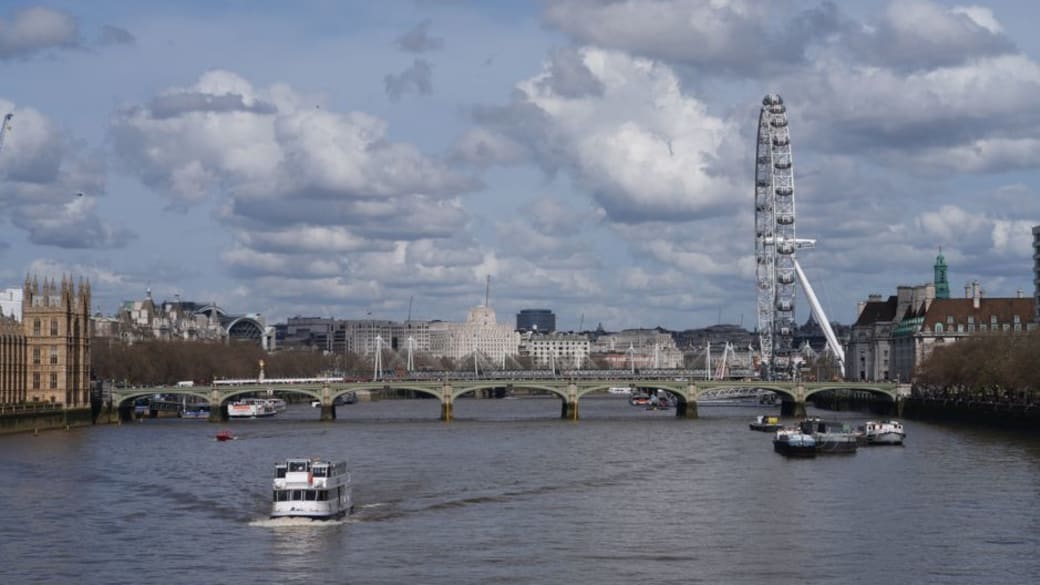
The London Eye sits on the South Bank, directly across the river from Westminster. Each rotation takes around 30 minutes, and the enclosed capsules make it accessible for children of all ages. On a clear day, the views stretch well beyond the city center, which gives kids a useful sense of how London is laid out. It’s a ticketed attraction, so booking ahead is worth considering, particularly during school holidays when queues can be long.
Thames River Cruising
Taking a river cruise is one of the more relaxed ways to cover a lot of ground with children. Services run regularly between central piers, with stops near the Tower of London, Bankside, Embankment, and Westminster. The open-air decks give kids space to move around instead of sitting still, making it a more leisurely way to connect several riverside attractions without relying on the Underground.
Tower of London and Tower Bridge
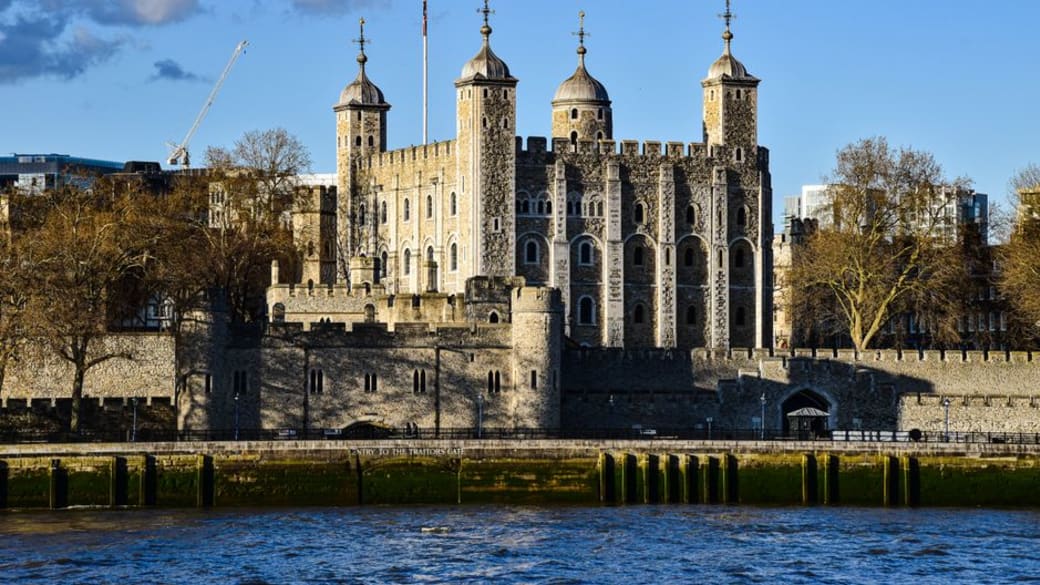
The Tower of London sits on the north bank of the Thames, its walls holding the Crown Jewels alongside the medieval Traitor’s Gate and centuries of history as a fortress, prison, and royal palace. Officially titled Her Majesty’s Royal Palace and Fortress of the Tower of London, it hasn’t served as an actual royal residence since the Tudor era. But the Yeoman Warders, the ceremonial guards nicknamed Beefeaters, still live within its walls with their families today.
The approach to Tower Bridge is adjacent to the Tower, and what sets this famous bridge apart from London’s many other Thames crossings is its dual purpose. Its road crossing, which normally carries cars and people, splits into two at the center. Called bascules, each section can be raised to let tall ships pass; this Victorian mechanism was originally steam-powered and later converted to electric power.
The Tower Bridge Exhibition includes a glass-floored walkway between the towers and the original engine rooms where that historic machinery is on display.
Important and sometimes funny point of interest! Tower Bridge is often confused with London Bridge, a plainer, far less functional, and less memorable crossing a short distance to the west, with no towers or lifting roadway!
South Bank Walk and Riverside Strolling
The South Bank path runs from Westminster Bridge east toward London Bridge, and it’s one of the most child-friendly stretches of pavement in the city. You can walk, run, and stop without worrying about traffic. Street performers, open-air book stalls, and views across to St Paul’s Cathedral and the City make it interesting at a slow pace. It connects the London Eye, Tate Modern, Shakespeare’s Globe, and Borough Market within walking distance, making it a natural spine for a day on foot.
The HMS Belfast

HMS Belfast is a Second World War cruiser moored permanently on the Thames between London Bridge and Tower Bridge. Your family can explore nine decks, including the engine room, gun turrets, and the cramped crew quarters. It’s the kind of attraction that connects well with children who find conventional museums hard going, because there’s a lot of physical space to move through and things to climb on and into. It’s a ticketed attraction run by the Imperial War Museum.
Greenwich
Greenwich sits southeast of central London and is easily reachable by public transport, making it a natural add-on to a Thames-focused day. The London Cable Car (formerly known as the IFS Cloud Cable Car) crosses the river close by, linking the Greenwich Peninsula with the Royal Docks in east London. The few-minute crossing gives kids an aerial view of the water and the O2 arena below, and pairs well with families who already enjoyed the London Eye.
Greenwich itself has plenty to anchor a visit around. The Cutty Sark, a preserved 19th century tea clipper, sits right on the waterfront and is a good stop for kids curious about ships and sailing history. It’s also home to the National Maritime Museum, one of the largest of its kind in the world (more on that below).
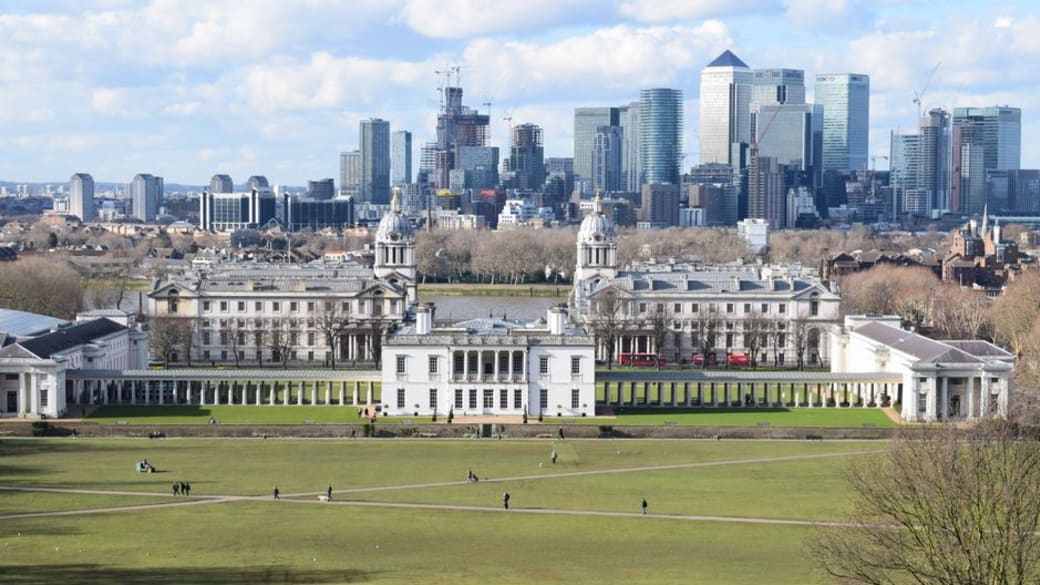
Up the hill in Greenwich Park, the Royal Observatory marks the line from which the world’s time zones are measured, the reason Greenwich Mean Time (GMT) carries the town’s name. It’s a good starting point for explaining to kids why or how it can be tomorrow or yesterday on one side of the planet while it’s still today for you.
A short walk east to Woolwich brings you to the Thames Barrier, London’s flood defence system and a striking bit of engineering for kids who like big machines.
For families flying in, London City Airport is close to Greenwich and offers a more central arrival point than London’s larger international airports, all of which sit well outside the city center.
Central London’s Classic Attractions and Places to Visit
These are the landmarks that most families picture when they think about a first London trip. Knowing where to stand, what to look for, and which experiences are distinct from each other makes a real difference to how much your family gets out of a day in this part of the city.
Buckingham Palace and the Changing of the Guard
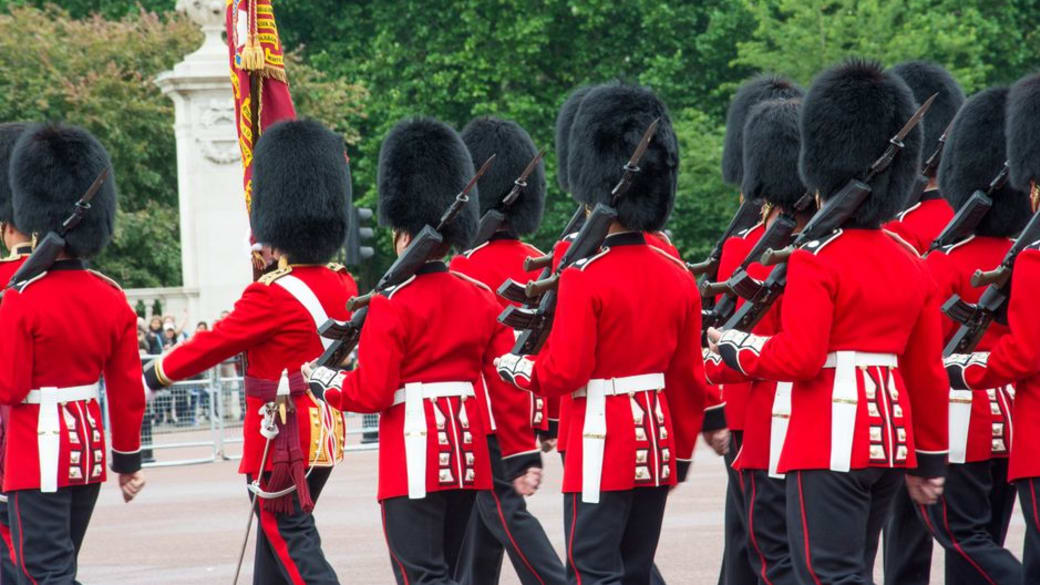
The Changing of the Guard takes place in the forecourt of Buckingham Palace and on the Mall, and it’s a free-to-watch ceremony that draws large crowds, particularly in summer. For families with young children, positioning matters. Arriving early and finding a spot along the railings on the Mall gives a clearer view than trying to see through the palace gates. The ceremony involves the Old Guard being relieved by the New Guard, with a band accompanying the procession. Children who are interested in uniforms, horses, and pageantry tend to engage well; younger toddlers may find the wait harder than the event itself.
The Household Cavalry Museum
The Household Cavalry Museum on Whitehall offers a different experience from the palace ceremony, and it’s worth visiting on its own. A glass partition inside the museum looks directly into the working stables, where staff groom and prepare horses throughout the day.
Children can try on replica uniforms and helmets, which is often a highlight for younger visitors.
The Changing of the King’s Life Guard ceremony also takes place at Horse Guards on Whitehall, not at Buckingham Palace, so your family has two distinct options for watching a mounted guard ceremony in central London.
Kensington Gardens and Diana Memorial Playground
Kensington Gardens sits directly west of Hyde Park, and the two flow into each other without a clear boundary, which is useful to know when you’re planning a day in this part of the city. The Diana Memorial Playground is in the northwest corner of Kensington Gardens and is designed specifically for children, with a large wooden pirate ship as its centerpiece. It’s enclosed and staffed, which makes it manageable for families with younger children.
St Paul’s Cathedral and Westminster Abbey
Both buildings carry enormous historical weight and architectural interest. St Paul’s has a physical quality that children respond to: the dome is one of the largest in the world, and the Whispering Gallery inside it demonstrates acoustics in a way that’s hard to forget. Westminster Abbey is denser with history, housing the graves of monarchs, poets, and scientists, and the audio guide suits older children who can follow a narrative. Both are ticketed attractions to be enjoyed at a slower pace rather than a quick walk-through.

Churchill War Rooms and Wartime London
The Churchill War Rooms are underground, and that physical fact is a large part of what makes them connect with children. The complex is preserved largely as it was left at the end of the Second World War, with maps still pinned to walls and telephones on desks. It doesn’t feel like a conventional museum. It feels like a place where something actually happened, and older children with an understanding of WWII can find it absorbing. The Churchill Museum within the complex covers his life in more depth.
London’s World Famous Museums
London’s well-established museums are a big part of what makes the city so well-suited to kids’ activities. Three of them, the Natural History Museum, the Science Museum, and the Victoria and Albert Museum, share the same South Kensington location, which makes that area a practical base if multi-museum days are your motivation. Otherwise, any one London museum likely has enough to keep kids of all ages interested for hours!
London’s World Famous Museums
Natural History Museum
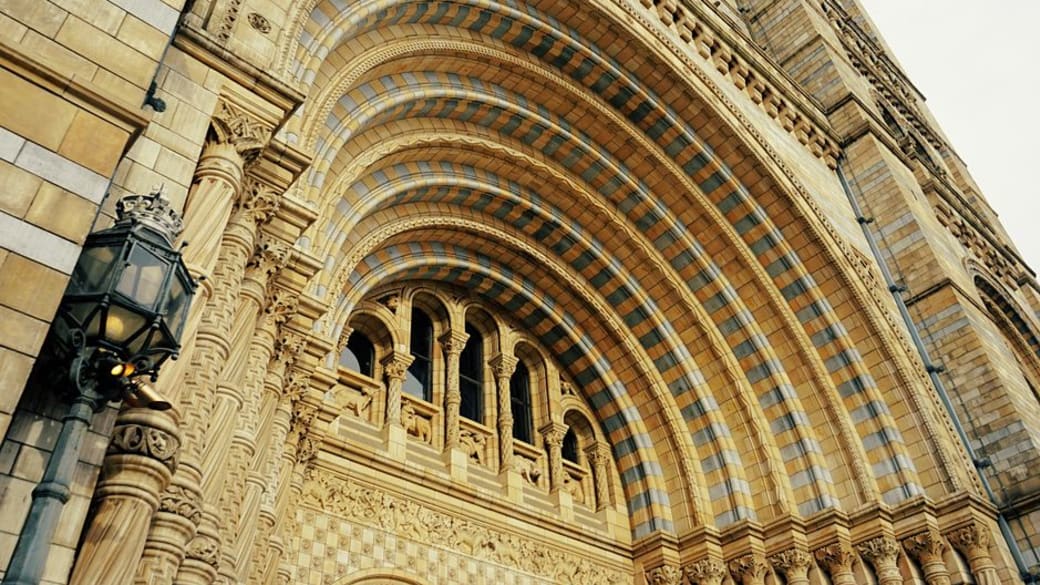
The Natural History Museum’s main hall, with its blue whale skeleton suspended from the ceiling, sets the tone for the whole building. The dinosaur galleries are consistently popular with children, and the Earth galleries, which include a simulated earthquake experience, add a different kind of engagement. The building itself is worth noticing: the terracotta architecture is detailed and interesting at a child’s eye level. It’s a large museum, so having a rough plan of which sections matter most to your family saves time and reduces overwhelm.
Science Museum
The Science Museum sits directly next to the Natural History Museum in South Kensington. The ground floor covers the history of technology and industry, but it’s the interactive galleries that hold children’s attention longest. The Wonderlab gallery is specifically designed for hands-on science exploration and suits a wide age range. There’s also a space exploration section with significant hardware on display, including actual spacecraft. Like the Natural History Museum, it’s large enough that a full day is easy to fill.
Victoria and Albert Museum
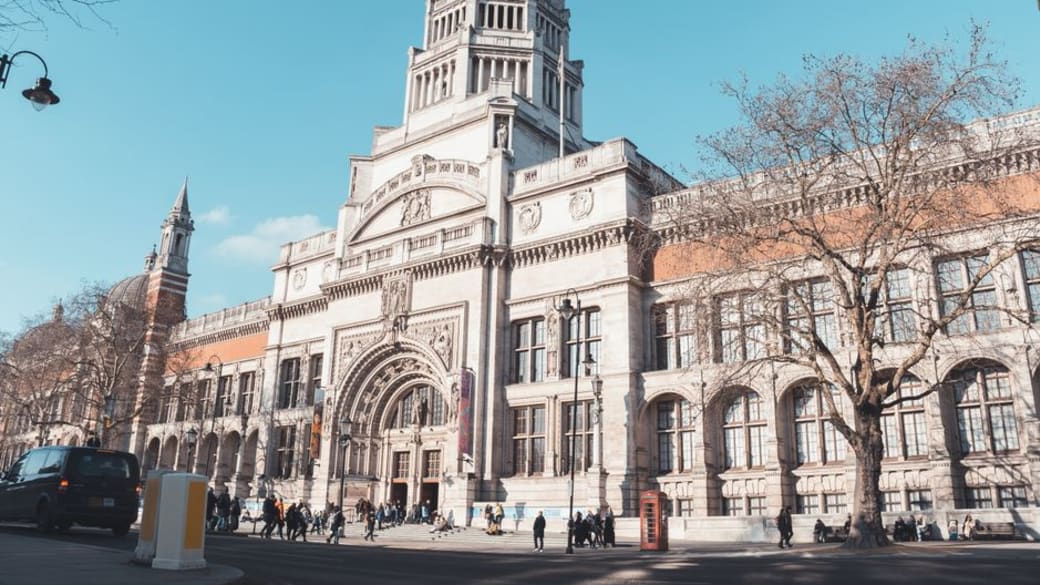
The Victoria and Albert Museum shares the South Kensington cluster with the Natural History Museum and the Science Museum. Its collection covers art, design, fashion, and decorative objects across centuries and cultures. It’s less immediately child-focused than its neighbors, but the scale and variety of the objects, from full-scale architectural casts to intricate jewelry, give children with a visual curiosity a lot to respond to. The museum runs family-specific programming and activity trails that make the collection more accessible for younger visitors.
British Museum
The British Museum is in Bloomsbury, about 2km north of the South Bank. Its collection spans human history across every continent, so it can be overwhelming or offer many points of interest for all ages, depending on energy levels that day! For families, the Egyptian galleries are a reliable starting point: mummies, hieroglyphics, and the Rosetta Stone hold children’s attention in a way that more abstract collections sometimes don’t.
The Great Court, the covered central courtyard, is a good place to regroup and take a break. The museum is significantly large, so trying to cover everything in one visit may not be realistic.
London Transport Museum
The London Transport Museum sits in Covent Garden’s piazza, making it easy to pair with a morning in that part of the city. The collection includes historic buses, trams, and Tube carriages that children can climb into and explore. It covers the history of how London has moved people around since the horse-drawn era, and includes the design history of the Underground map and signage. It’s a ticketed attraction, and the hands-on format suits younger children who find display-only museums harder to engage with.
Imperial War Museum
The Imperial War Museum is in Lambeth, south of the Thames. The atrium contains aircraft, tanks, and large-scale military hardware that make an immediate impression on arrival. The First World War and Second World War galleries are immersive and thoughtfully designed, covering the human experience of conflict rather than just the military hardware. Some sections deal with difficult content, including the Holocaust exhibition, which is not suited to young children. Review the gallery layout before you visit so you can plan a route appropriate for your family’s ages.
National Maritime Museum
The National Maritime Museum in Greenwich is one of the world’s largest maritime museums. Its family galleries are well designed for children, with interactive exhibits covering navigation, exploration, and seafaring history that hold younger visitors’ attention better than a typical museum. It shares its Greenwich site with the Royal Observatory, so the two work naturally as a single outing, and it pairs easily with a walk through Greenwich Park.
London’s Arts and Entertainment
London’s cultural offer for families goes well beyond the museum circuit. Theatre, galleries, and performance spaces are accessible to children here, not as a concession but as a deliberate part of how many of these venues operate. The options range from large West End productions to small puppet theatres, and the right choice depends more on your children’s ages and attention spans than on any ranking of prestige.
Selection of London Arts and Entertainment Places to Visit
Tate Modern and Contemporary Art
Tate Modern occupies a former power station on the South Bank, and the building itself is part of the experience. The Turbine Hall, the vast central space, regularly hosts large-scale installations that children can walk through, around, and sometimes interact with. The permanent collection covers modern and contemporary art from the twentieth century onward, and while not every gallery will hold a child’s attention, the scale and variety mean there’s usually something that does.
National Gallery (and Trafalgar Square)
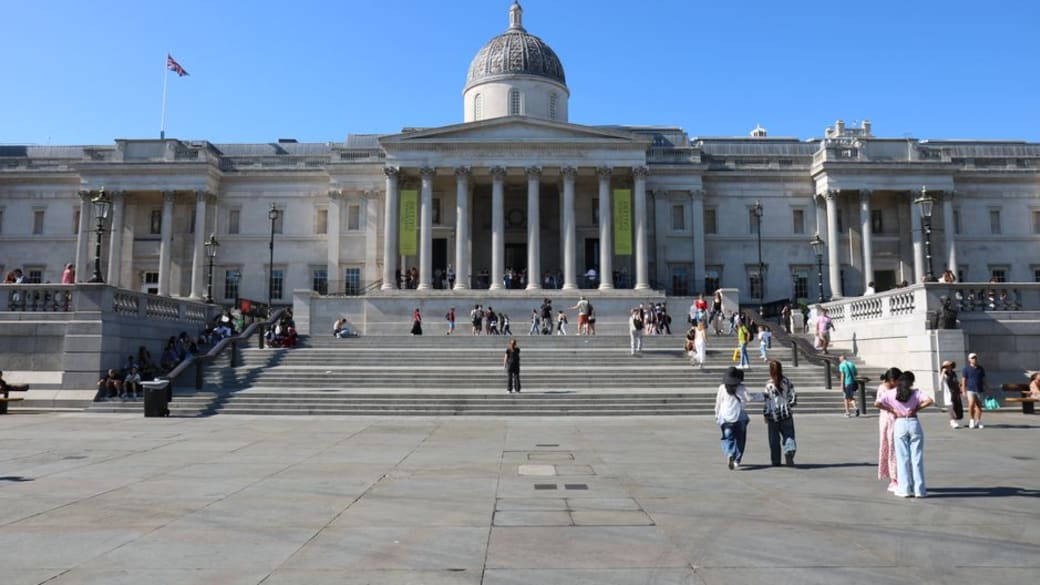
Trafalgar Square is worth arriving at before you go inside the gallery. The square itself gives children space to move: the fountains, the lions at the base of Nelson’s Column, and the Fourth Plinth are all things to look at and interact with before stepping through the doors. The National Gallery’s collection covers Western European painting from the thirteenth to the nineteenth century, and while that sounds dry, the sheer scale and drama of many of the paintings land differently in person than in reproduction. Family trails and activity sheets are available inside, helping younger children engage with specific works rather than drift through.
London’s Family-Friendly West End Theatre Shows and Musicals
The West End theatre district stretches roughly from Piccadilly Circus in the west to Covent Garden in the east, and Theatre Royal Drury Lane, one of London’s oldest and most recognizable playhouses, sits right on that eastern edge on Catherine Street. It’s a useful landmark for getting your bearings before booking anything specific.
The West End runs a steady stream of family-friendly productions, including long-running musicals based on well-known stories and films, as well as popular seasonal productions during school holiday periods. For children who haven’t been to a large theatre before, the experience of a West End show – the scale of the staging, the live orchestra, the costumes – is often as memorable as the production itself.
Children’s Theatres Beyond the West End
For younger children or those who find a large West End theatre overwhelming, London has two dedicated children’s venues worth knowing about. The Little Angel Theatre in Islington has been staging puppet theatre since 1961, and its productions are designed specifically for young audiences.
The Polka Theatre in Wimbledon has been dedicated exclusively to children’s theatre since 1979. Both are smaller-scale, more intimate spaces than a West End venue, and that size difference can matter for children new to live performance or at the younger end of the age range.
The Barbican Centre and Conservatory

The Barbican Centre in the City of London runs a broad programme of music, theatre, film, and visual art, and its family focus is more substantial than its reputation as an adult arts venue might suggest. Within the complex, the Barbican Conservatory is a distinct and quieter space: a large tropical greenhouse filled with plants and fish, open to the public on selected days.
Shakespeare’s Globe Theatre
Shakespeare’s Globe is a reconstruction of the original Elizabethan theatre, built close to its original site on the South Bank. The outdoor standing area in front of the stage, known as the yard, is where the groundlings stood in Shakespeare’s time, and it’s still the most physically engaged way to watch a performance.
For families, the standing format lets children shift position, making a long performance more manageable than a fixed seat. Productions run through the summer season, and the theatre also offers year-round tours of the building for families who want context without committing to a full performance.
London Markets and Neighborhoods Worth Exploring with Kids
Some of the most enjoyable things to do in London with kids don’t involve a ticket or a timed entry. London’s markets and neighborhoods reward slow exploration, and the variety from one area to the next is striking enough that each one feels like a different city. The entries below focus on what makes each area interesting to walk through with children, rather than specific stalls or shops that may not be there when you visit.
London Markets and Neighborhoods
Covent Garden
Covent Garden’s piazza is a natural gathering point, and the street performers who work the central space are highly skilled. The covered market building has a mix of independent traders and established retailers, but families are drawn more by the square’s atmosphere.
The London Transport Museum sits directly in the piazza, which makes it an easy addition to a morning in this part of the city without needing to travel anywhere. The surrounding streets are walkable and relatively compact, which makes Covent Garden a manageable area for families with younger children.
Portobello Road
Portobello Road runs through Notting Hill in west London, and the market that lines it is one of the city’s best-known. The antiques section toward the southern end of the road is dense and interesting to walk through, even if you’re not buying. The surrounding neighborhood, with its painted terraced houses and independent shops, is pleasant to explore on foot. The market is at its busiest on Saturdays, which is worth knowing if your family prefers a quieter pace.
Camden Market and Little Venice
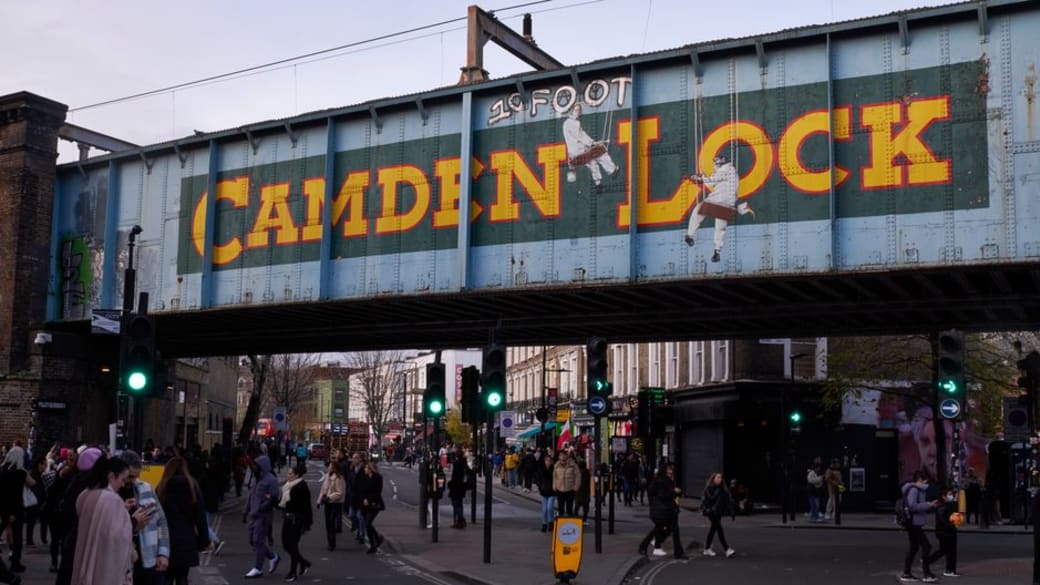
By London standards, Camden Market is pretty colorful and eclectic. The market covers a large area around the canal, with food stalls, clothing, music, and street art all competing for attention. A short distance west along the Regent’s Canal is Little Venice, where the canal widens into a basin, and the atmosphere shifts completely.
The Puppet Theatre Barge, a converted narrowboat that has been staging puppet and marionette shows since the 1980s, traditionally moors at Little Venice during the winter season. (In summer, it moves to other Thames locations, including Richmond, so beware of that seasonal pattern if you plan a visit around it)mm.
Brick Lane, Shoreditch, and Spitalfields
This part of east London has a strong street art culture, and walking through it with children is a different kind of gallery experience. The murals and paste-ups change regularly, which means the area looks different on every visit. Spitalfields Market is covered and open throughout the week, with more independent traders on weekends. The neighborhood has layers of history, from its Huguenot and Jewish heritage to its more recent Bangladeshi community, and that mix shows up in the architecture and the street names as much as in the market stalls.
Family-Friendly London Parks, Gardens, and Outdoor Spaces
London’s parks are not just green gaps between attractions. Several of them are destinations in their own right, with enough space, wildlife, and child-specific features to fill at least a half-day without any other agenda. If the weather’s good, pack yourself a picnic and enjoy one or more of these London Parks.
Family-Friendly London Parks, Gardens, and Outdoor Spaces
Hyde Park
Hyde Park covers about 142 hectares in central London and connects directly to Kensington Gardens to the west, with no clear boundary. The Serpentine lake runs through the park and offers pedalo and rowing boat hire in warmer months. There’s open space for running and cycling, and the park is large enough that it doesn’t feel crowded even when it’s busy.
The Diana Memorial Fountain, a shallow granite channel designed for paddling, is a nice water feature for families with young children on a warm day.
Regent’s Park
Regent’s Park is in north London, roughly 3km from Oxford Street. The park has formal rose gardens, open sports areas, and a boating lake. The Open Air Theatre runs a summer season of productions, including family-friendly programming, and the outdoor setting makes it a different experience from an indoor venue. London Zoo sits within the park’s boundaries. It’s not something we’d recommend or visit ourselves, but we want you to have the full picture if you’re planning your day around this part of the city.
St James’s Park
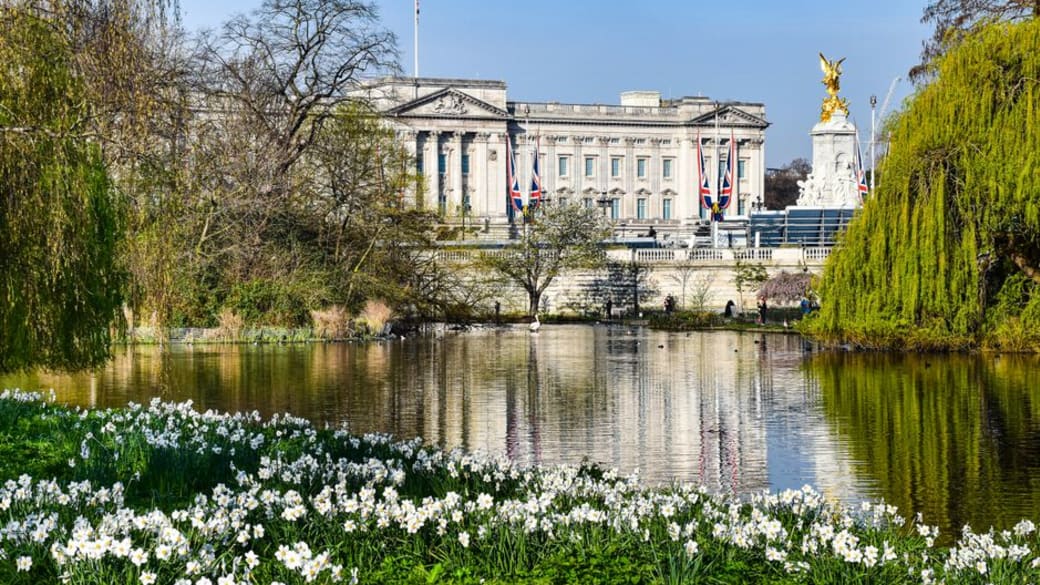
St James’s Park is the most central of London’s Royal Parks, sitting between Buckingham Palace and Whitehall. The lake that runs through it is home to a resident pelican colony, which has been part of the park since the seventeenth century. The park is small enough to cross on foot in a few minutes, making it a natural stop between Westminster attractions rather than a destination in itself.
Royal Botanic Kew Gardens
Kew Gardens is in southwest London, about 13km from central London. Unlike the Royal Parks, it’s a ticketed attraction, and the admission charge reflects the scale and maintenance of what’s inside. The gardens cover around 130 hectares and include glasshouses, treetop walkways, and a children’s play area. The Treetop Walkway gives children a view of the canopy from above, which is a different physical experience from walking at ground level. More of a half- or even a full-day destination than a quick stop.

Richmond Park
Richmond Park is about 16km southwest of central London and is the largest of the Royal Parks. The deer herd that lives within it is the main draw for families, and it’s worth being clear about what kind of experience this is. These aren’t zoo encounters. The deer are wild, and the park is their habitat. Your family will see them grazing, resting, and moving through the landscape in a way that no managed attraction can replicate. During the autumn rut, red deer stags’ behavior is particularly captivating. Keep a respectful distance and follow the park’s guidance on approaching the animals.
Battersea Park
Battersea Park sits on the south bank of the Thames in southwest London, directly across the river from Chelsea. The park has a boating lake, cycling paths, and a riverside promenade with views across to the north bank. The riverside path is flat and wide, which makes it practical for pushchairs and younger children on bikes.
London with Kids – Special Rainy Day Indoor Activities
London’s weather makes a reliable backup plan a sensible part of any family trip. These indoor activities, attractions, and places to visit are worth knowing when the weather doesn’t cooperate.
London with Kids, Special Rainy Day Indoor Activities
Madame Tussauds
Madame Tussauds is on Marylebone Road, close to Baker Street Underground station. Visitors move through a series of themed rooms, each populated with wax figures of celebrities, historical figures, and cultural icons. Children who recognize the figures tend to engage well; those who don’t may find it less interesting.
Hamleys Toy Store
Hamleys on Regent Street is a retail experience that goes beyond shopping. Staff demonstrate toys on the shop floor throughout the day, and the building has multiple floors covering different categories. For children, the demonstrations and the sheer density of things to look at make it engaging even without buying anything.
The London Dungeons
The London Dungeons is a theatrical walkthrough experience on the South Bank, covering dark episodes from London’s history through actors, special effects, and rides. It’s well-produced and scary in places, which is the point. The recommended minimum age is around ten, and the scare factor is real rather than token, so take the age guidance seriously. Children who are sensitive to jump scares or confined spaces may find it more stressful than fun.
The Postal Museum and Mail Rail
The Postal Museum is near Mount Pleasant, a short walk from both King’s Cross and Farringdon stations. The main building has hands-on exhibits and dress-up elements aimed at younger children, covering the history of the postal service in an accessible way. The Mail Rail ride is the standout feature: a roughly 15-minute journey through the tunnels that once carried London’s post underground, now restored for passengers. The carriages are small, and the tunnels are dark, which makes it feel more like an adventure rather than a museum exhibit. It’s a ticketed attraction, and the Mail Rail in particular benefits from booking ahead.
The Paddington Bear Experience
The Paddington Bear Experience is an interactive walkthrough attraction based on the character created by Michael Bond. It’s designed for younger children, roughly ages three to eight, and the format involves moving through themed scenes from the stories. It’s a modest-scale experience rather than a large theme park, and it connects best with families whose children already know and love the books or films.
Afternoon Tea at the Ritz
Afternoon tea at The Ritz is a special-occasion experience, and it’s worth being direct about the cost: this is a premium-priced activity that sits at the higher end of what families might spend on a single meal in London. The setting is formal, the service is traditional, and the food is carefully presented. For children who can manage a formal dining environment, it’s a memorable experience. It’s not suited to very young children or families looking for a relaxed, informal meal.
The Twist Museum
The Twist Museum is an interactive, sensory attraction built around optical illusions, immersive rooms, and hands-on installations. It’s designed to be photographed and explored rather than read or listened to, which makes it well-suited to children who find conventional museums hard to engage with. While it offers enough for a fairly wide age range to enjoy, older children and teenagers tend to get the most out of the more conceptually complex rooms.
Frequently Asked Questions About Visiting Central London
When’s the Best Time to Visit London?
London is a year-round destination, but the timing of your visit can significantly affect the experience. Summer has the longest days and the best chance of good weather, but the latter is far from guaranteed! It also brings school-holiday crowds to every major attraction. Visiting in late spring or early autumn offers reasonable weather and noticeably shorter queues. Winter is quieter and cheaper, but shorter days limit outdoor time, and some seasonal attractions run reduced hours.
What’s the Best Way to Get Around London?
The London Underground is the most practical way to move around the city with children. It’s extensive, frequent, and connects almost every major attraction. Oyster cards and contactless bank cards both work across the Underground, buses, and most rail services within the city, and using either is more straightforward than buying individual tickets. Accessibility varies by station: many older Underground stations don’t have step-free access, so families traveling with pushchairs or buggies should check the Transport for London step-free map before planning a route.
Is London a Safe, Family-Friendly Place to Visit?
London is a large city, and like any large city, it requires the same general awareness you’d apply anywhere. Pickpocketing in crowded tourist areas is the most common issue families encounter, so keeping bags closed and phones out of back pockets is sensible practice. The city has a visible police presence in central areas, public transport is well-used at most hours, and the major tourist districts are busy enough that families are rarely in isolated situations.
Final Thoughts
London rewards families who plan loosely and stay curious. The river gives you a natural route through the city, the museums give you depth on rainy days, and the parks give you space to breathe between the bigger attractions. Whether you’re mapping out things to do in central London with kids for the first time or returning with older children who are ready for more, the city has enough range to keep every age group engaged for a lifetime. If you only have time for a short stay, start with one or two anchor attractions, build your days around the neighborhoods they sit in, and let the rest unfold from there.
DISCLAIMER: This article/page contains affiliate links. This means that if you make a purchase after clicking on one of these links, then we may receive a small commission – at no extra cost to you. See our full disclosure and Privacy Policy for more information. Thank you for supporting our site and helping make it the inspiring location-independent, long-term family travel and worldschooling blog it aims to be!