

Dublin has a way of making family travel feel manageable without feeling small. The city is compact, the people are welcoming, and there’s a mix of history, culture, and outdoor space that keeps children of different ages interested.
What Are the Best Things to Do in Dublin with Kids?
What makes Dublin family-friendly is its diversity. Younger children get a lot from the parks, interactive museums, and cultural venues designed specifically for kids. Older children and teenagers engage more with the history, particularly the darker chapters at Kilmainham Gaol or the stories told at EPIC: The Irish Emigration Museum. The city doesn’t ask your family to choose between culture and play. Most days, you can do both.
(This post includes affiliate links for which we may earn a commission at no extra cost to you should you make a purchase. See our full disclosure and Privacy Policy for more information)
Most of the major historic sites sit within a relatively tight area on the south side of the River Liffey, which means your family can cover a lot of ground on foot without needing to plan transport between every stop. Trinity College, Dublin Castle, St Patrick’s Cathedral, and the Guinness Storehouse are all within about 1 to 2 kilometers of each other, making it easy to combine visits on the same day.
Classic Dublin Historic Sites and Places to Visit
Dublin’s historic core is dense with stories, and most of the major landmarks are close enough to visit in sequence. The sites below range from medieval cathedrals to a Victorian-era prison, so there’s something here for families with a wide range of ages and interests.
Guinness Storehouse
The Guinness Storehouse is one of the most visited attractions in Ireland, and while it’s built around the history of a brewery, it’s a reasonable family experience for older children and teenagers. The building itself is striking, a seven-story atrium shaped like a giant pint glass, and the exhibits cover the history of Guinness, the science of brewing, and the brand’s advertising legacy in a way that’s engaging. The rooftop Gravity Bar offers panoramic views over the city. This is primarily an adult-oriented attraction, so it suits families with children who are old enough to engage with the history and the visual storytelling rather than younger kids looking for hands-on play.
Trinity College and the Book of Kells
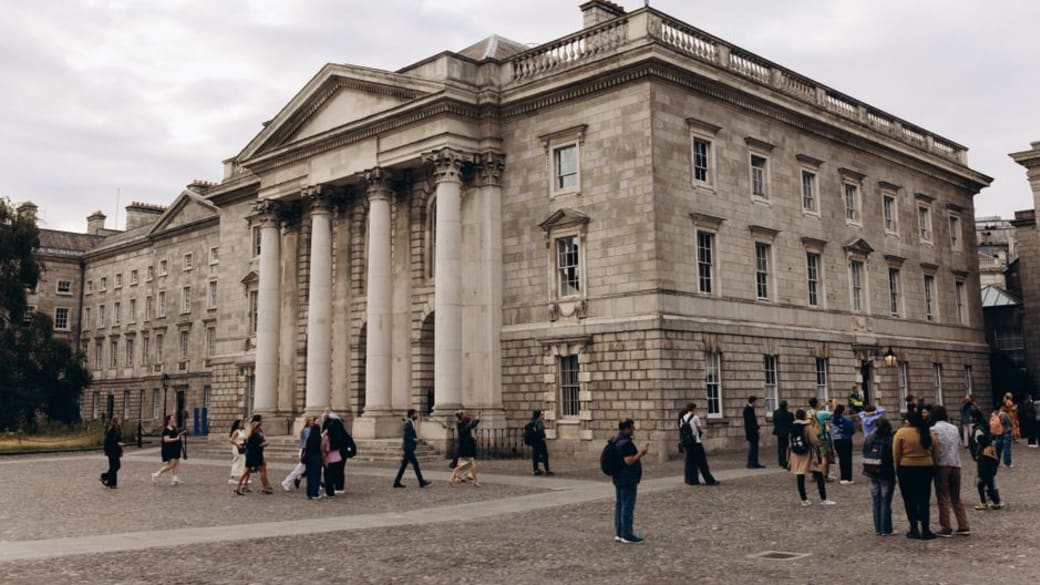
Trinity College sits right in the heart of Dublin, and walking through its cobbled Front Square gives your family a real sense of the city’s academic history. The college was founded in 1592 and its grounds are open to visitors. The main draw for most families is the Book of Kells, an illuminated manuscript created by Celtic monks around 800 AD. It’s housed in the Old Library, alongside the Long Room, a barrel-vaulted hall lined with around 200,000 of the library’s oldest books. Children who are curious about medieval art and history find it impressive. Younger kids may need context to appreciate what they’re looking at, so a brief explanation before you go helps.
Dublin Castle and Christ Church Cathedral
Dublin Castle and Christ Church Cathedral sit close together in the older part of the city, making them a natural pairing for a half-day visit. Dublin Castle has been at the center of Irish political life for over 800 years, and guided tours take visitors through the State Apartments and the medieval undercroft, where the original Viking and Norman foundations are visible beneath the current structure. Christ Church Cathedral, about 500 meters away, dates to the 11th century and contains the reputed tomb of Strongbow, the Norman lord whose invasion shaped medieval Ireland.
St Patrick’s Cathedral
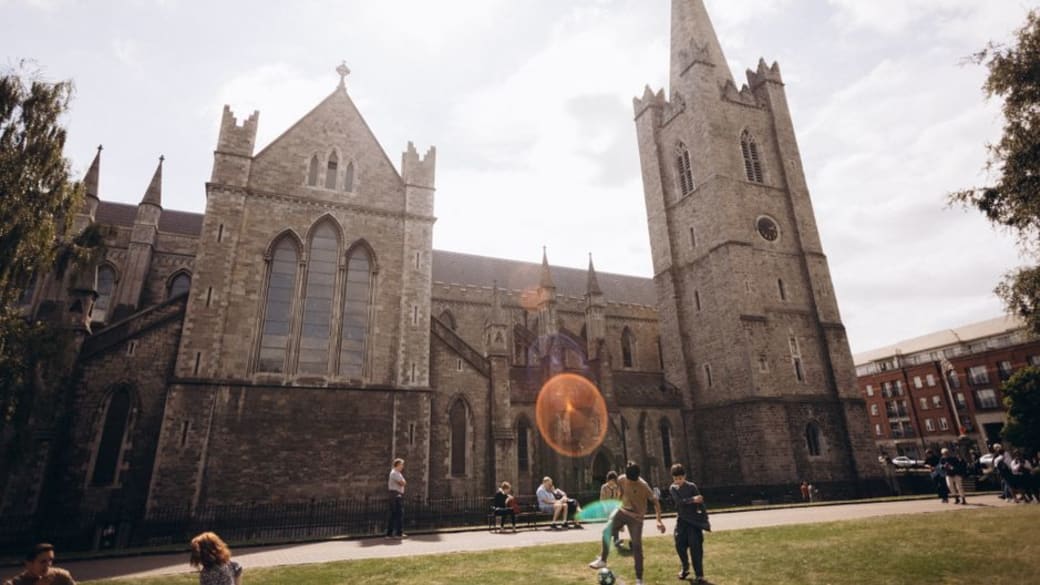
St Patrick’s Cathedral is the largest church in Ireland and sits about 400 meters south of Christ Church Cathedral. It was founded in 1191 and has been a place of worship, scholarship, and public life ever since. Jonathan Swift, the author of Gulliver’s Travels, served as Dean here and is buried in the cathedral, which gives children a concrete literary connection to the building. The interior is large and atmospheric, with medieval stonework, historic flags, and memorials that span centuries. It’s a calm, accessible visit that doesn’t require much prior knowledge to appreciate.
Glasnevin Cemetery
Glasnevin Cemetery is Ireland’s national cemetery and the resting place of many of the country’s most significant historical figures, including Daniel O’Connell, Michael Collins, and Éamon de Valera. It’s not a typical tourist stop, but for families with older children who have an interest in Irish history, the guided tours are informative. The cemetery museum on site tells the story of Irish history through the lives of those buried there, which gives the visit a narrative structure that makes it more accessible. It’s located about 3 kilometers north of the city center.
Kilmainham Gaol
Kilmainham Gaol is one of the most powerful historic sites in Dublin. The prison operated from 1796 to 1924 and held many of the leaders of Ireland’s independence movement, including those executed after the 1916 Easter Rising. Visits are guided, which means the experience is structured and the stories are told with real context. The Victorian wing, with its glass ceiling and rows of cell doors, is visually striking in a way that stays with you. This is a site that suits older children and teenagers more than young kids. The subject matter is serious, and the tours don’t shy away from the difficult history, which is exactly what makes them worth doing.
Dublin’s Must-Visit Museums and Cultural Institutions
Dublin’s museum and cultural scene covers a wide range of interests, from ancient Irish artifacts to interactive storytelling about emigration and mythology. The venues below are spread across the city, though several cluster near the historic core, making it easy to combine visits.
EPIC: The Irish Emigration Museum
EPIC: The Irish Emigration Museum is located in the vaults of a 19th-century building on Custom House Quay, on the north bank of the Liffey. It tells the story of Irish emigration across ten million people and forty countries, using interactive exhibits, personal stories, and multimedia displays across 20 galleries. It’s one of the more engaging museum experiences in the city for families, because the format is designed to draw visitors in rather than just present information. Children who are old enough to read and engage with screens will get a lot from it. Younger kids can move through the space, but the content is pitched at an older audience.
National Museum of Ireland and National Gallery of Ireland
These two institutions sit close to each other on the south side of the city, near Merrion Square. The National Museum of Ireland’s Archaeology branch houses some of the country’s most significant collections, including Iron Age gold artifacts, Viking finds from Dublin’s own excavations, and the famous bog bodies. It’s the kind of place where children who are curious about ancient history can spend a long time without running out of things to look at.
The National Gallery of Ireland holds a substantial collection of Irish and European art spanning several centuries. Both venues are government-funded institutions with permanent collections that give your family a solid grounding in Irish culture and history.
Irish Museum of Modern Art
The Irish Museum of Modern Art is housed in the Royal Hospital Kilmainham, a 17th-century building about 2 kilometers west of the city center. The building itself is worth seeing, and the surrounding formal gardens give younger children space to move around between gallery visits.
Dublin City Gallery The Hugh Lane
Dublin City Gallery The Hugh Lane is located on Parnell Square on the north side of the city and holds a significant collection of modern and contemporary Irish art, including the reconstructed studio of Francis Bacon.
Dublinia: Dublin’s Viking and Medieval Museum
Dublinia is physically connected to Christ Church Cathedral by a covered bridge, and combination tickets covering both attractions are available.
The museum focuses on Dublin’s Viking and medieval history through reconstructed environments, hands-on exhibits, and costumed interpretation. Children can try on replica armor, handle replica artifacts, and walk through recreated Viking and medieval streetscapes. It’s one of the more child-friendly history experiences in the city, and it suits kids aged roughly 5 and up particularly well.
The connection to Christ Church Cathedral makes it easy to visit both in the same outing.
National Leprechaun Museum
The National Leprechaun Museum is located near the north bank of the Liffey and focuses on Irish mythology and folklore through an immersive, storytelling-led format. Daytime tours are designed for families and use oversized furniture, optical illusions, and guided narrative to bring Irish folk stories to life.
A separate adults-only evening tour also runs, so it’s important to book the correct session when planning your visit. The museum suits younger children particularly well, roughly ages 4 to 10, though the storytelling format keeps older kids engaged too.
Chester Beatty Library and Marsh’s Library
These two historic libraries sit at opposite ends of the same historic quarter.
Chester Beatty Library is located beside Dublin Castle and houses a remarkable collection of manuscripts, prints, and decorative arts from across Asia, the Middle East, and Europe, assembled by the American-born mining magnate Sir Alfred Chester Beatty. The collection spans thousands of years and dozens of cultures, and the building is well-designed for browsing.
Marsh’s Library, beside St Patrick’s Cathedral, is Ireland’s oldest public library, built in 1707 and largely unchanged since. Its caged reading alcoves and centuries-old books make it an atmospheric stop for older children with an interest in history.
Both libraries are government-supported institutions and are worth visiting as a pair if your family is spending time in the historic quarter.
Dublin Parks and Playgrounds
Dublin has more green space than many European capitals of similar size, and the parks below range from compact Georgian squares in the city centre to sprawling green space on the edges of town. Each one gives your family a proper break from sightseeing, not just a patch of grass to pass through.
Phoenix Park
Phoenix Park is one of the largest enclosed city parks in Europe, covering around 707 hectares, about 3 kilometers west of the city center. It’s home to the official residence of the Irish President, Áras an Uachtaráin, as well as the American Ambassador’s residence and Dublin Zoo. (Although we don’t recommend or visit zoos ourselves, we want you to have the full picture).
The park itself has wide open spaces, cycling paths, and woodland trails that suit families looking for a good space for a half-day or more outdoors. A dedicated playground near Infirmary Rd gives the visit a clear stopping point too, with equipment for a wide age range and plenty of bench seating for parents keeping watch.
St Anne’s Park
St Anne’s Park in Clontarf gives your family a full day of options on the north side of the city, from a well equipped playground to walking trails through woodland and a rose garden worth the detour even outside peak bloom. The park also runs a family friendly rose festival each year with live music and activities, though it’s worth checking what’s on before you go. It sits a short DART or bus ride from the city centre.
Herbert Park
Herbert Park in Ballsbridge sits close enough to the city centre to slot into a half day without much travel time. Alongside its playground, the park has a duck pond, tennis and football facilities, and a Sunday food market that gives parents something to browse while kids run around.
Marlay Park Playground
Marlay Park in Rathfarnham holds one of the larger playgrounds on the south side of Dublin, with separate areas for younger and older children and picnic tables scattered through the surrounding parkland. A small food market and cafe operate nearby, and public toilets on site make it a practical stop for families spending a few hours rather than passing through. It sits close to the Wicklow Mountains foothills, a reasonable stopping point on the way to or from Glendalough.
National Botanic Gardens
The National Botanic Gardens are located in Glasnevin, about 3 kilometers north of the city center, and cover around 19.5 hectares of cultivated gardens, glasshouses, and woodland. The Erasmus Children’s Garden within the grounds is designed specifically for younger visitors, with sensory planting, water features, and activities that encourage children to engage with the natural world through touch, smell, and observation.
The Victorian glasshouses are impressive structures in their own right, and the overall scale of the gardens gives families plenty of space to spread out. It’s a good option for a slower-paced day when your family needs something quieter than the city center.
St Stephen’s Green and Merrion Square
St Stephen’s Green is a 22-acre park right in the heart of the city, surrounded by Georgian architecture and accessible from Grafton Street. It has a duck pond, open lawns, and a children’s playground, which makes it a practical stop for families who need a break from sightseeing.
Merrion Square, about 700 meters east, is a quieter Georgian park with a colorful statue of Oscar Wilde on one corner and a children’s playground on the west side. Both parks are flat, well-maintained, and easy to reach on foot from most central attractions.
Outdoor Activities, Walks and Coastal Experiences
Beyond the parks, Dublin’s outdoor options stretch from a stroll along the river to a full day out on the coast. The walks below cover the city center and its surroundings, and each one works as either a standalone outing or a way to link up other stops on your list.
Temple Bar and Grafton Street
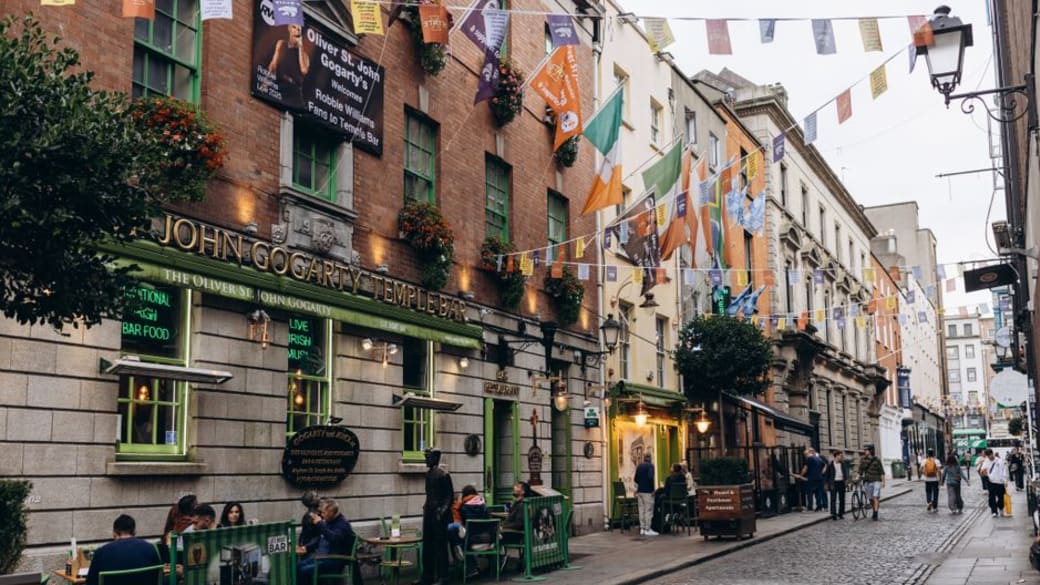
Temple Bar is Dublin’s cultural quarter, a compact area of cobbled streets on the south bank of the Liffey between the Ha’penny Bridge and Dublin Castle. It’s lively and atmospheric, with street performers, public art, and a weekend market in Meeting House Square. Grafton Street, about 500 meters south, is the city’s main pedestrian shopping street and connects St Stephen’s Green to the top of the city center. Walking between the two gives your family a good feel for central Dublin, and the area is flat and easy to navigate with younger children.
Ha’penny Bridge and the River Liffey Walk
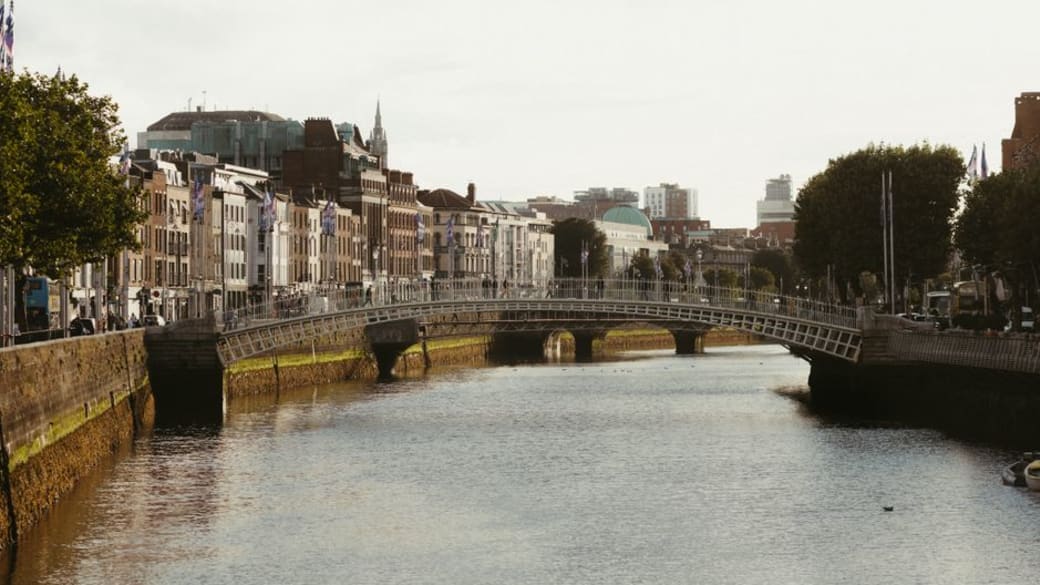
The Ha’penny Bridge is one of Dublin’s most recognizable landmarks, a cast-iron pedestrian bridge built in 1816 that crosses the Liffey near Temple Bar. Walking across it and continuing along the river in either direction gives your family a good sense of the city’s geography. The north and south quays are lined with public art, historic buildings, and views back toward the city center. It’s a low-effort walk that connects several other attractions and acts as a linking route between the north and south sides of the city.
Poolbeg Lighthouse Walk
The Poolbeg Lighthouse Walk follows the South Bull Wall, a granite sea wall that stretches about 4 kilometers out into Dublin Bay from the Ringsend area, roughly 4 kilometers southeast of the city center. The walk ends at the red-and-white striped Poolbeg Lighthouse. It’s a flat, exposed walk with wide views of the bay and the city skyline, and it’s popular with families on clear days.
The wall is narrow in places and fully exposed to wind and weather, so it’s best suited to children who are steady on their feet. The walk is much more enjoyable in calm weather, so it’s worth checking the forecast before you go. Nearby Sean Moore Park makes a good stop before or after the walk, with a lighthouse shaped climbing frame, a zip wire, and a trampoline, plus picnic tables and glimpses of Sandymount Beach.
Indoor and Rainy-Day Activities for Kids
Dublin’s weather is famously unpredictable, so having a solid list of indoor options matters. The venues below cover a range of ages and interests, and each one is worth planning around rather than just falling back on.
Central Library
Central Library, inside the Ilac Centre just off Henry Street, gives your family a free, no pressure stop right in the middle of the shopping district. It holds a wide general collection alongside audiobooks and music, and it stays open into the evening most days of the week, a useful late afternoon fallback between other stops in the city centre.
The Ark: Dublin’s Cultural Centre for Children
The Ark is a purpose-built cultural center for children aged 2 to 12, located in Temple Bar. It runs a rotating programme of theatre, music, workshops, and exhibitions, all created specifically for young audiences. The building has a small outdoor amphitheater as well as indoor performance and gallery spaces. What sets it apart from a general museum visit is that the programming is designed to be participatory, so children aren’t just observing but actively involved. It’s worth checking what’s on during your visit, as the programme changes regularly and some events book up in advance.
Explorium: Ireland’s National Science and Sport Centre
Explorium: Ireland’s National Science and Sport Centre is located in Sandyford, accessible from the city center via the Luas Green Line. The venue is split into two distinct areas. The Junior Explorium is designed for younger children and focuses on sensory play, early science concepts, and imaginative exploration. The main section is pitched at older children and covers science, technology, and sport through hands-on exhibits and physical challenges. The Luas connection makes it straightforward to reach without a car, and the split between age groups means your family can find the right section regardless of how old your kids are.
National Aquatic Centre
The National Aquatic Centre in Blanchardstown gives your family a full water park experience under one roof, with an Olympic standard 50 metre pool alongside slides, a wave pool, and a lazy river built for younger swimmers. It sits about 30 minutes from the city centre and works well as a full morning or afternoon out when Dublin’s weather turns. Structured swimming lessons run for younger children too, worth checking if your visit lines up with a session.
Day Trips and Excursions from Dublin
Dublin’s location on the east coast of Ireland puts several worthwhile day trips within easy reach. Both options below are accessible by public transport, which makes them practical even without a car.
Howth: Coastal Village and Cliff Walks
Howth is a fishing village on a peninsula about 15 kilometers northeast of Dublin city center, reachable by DART train from the city. The village has a working harbor, a fish market, and a cliff walk that loops around the headland with views across Dublin Bay and out to Ireland’s Eye, a small uninhabited island just offshore. The cliff walk covers around 6 kilometers in its full loop, with shorter sections available for families with younger children. The terrain is uneven in places, so sturdy footwear helps. It’s a good option for a half-day or full day out, combining a coastal walk with time at the harbor.
Glendalough: Ancient Monastic Valley
Glendalough is a glacial valley in County Wicklow, about 50 kilometers south of Dublin, containing the ruins of a 6th-century monastic settlement founded by St Kevin. The site includes a round tower, stone churches, and two lakes set within the Wicklow Mountains National Park. Walking trails range from short, flat routes around the lower lake to longer hikes into the surrounding hills. The monastic ruins are accessible and well-preserved, and the combination of history and landscape gives the visit a different character from anything available in the city. Bus services run from Dublin city center to Glendalough, making it reachable without a car.
Frequently Asked Questions About Dublin
When Is the Best Time to Visit Dublin?
Late spring and early summer, roughly May to June, offer the most reliable combination of mild weather and longer daylight hours without the peak-season crowds of July and August. School holiday periods, particularly mid-July through August, bring more visitors to popular sites, so booking ahead for attractions like Kilmainham Gaol and the Book of Kells is worth doing during those months. Autumn is quieter and can be a good option for families with flexibility outside the school calendar.
How to Get Around Dublin
Getting around Dublin is straightforward. Buses cover most of the city, while taxis and ride-shares are readily available. For traveling further out, the public transport network links up seamlessly: the Luas tram connects the city center to places like Sandyford (home to Explorium, Ireland’s National Science and Sport Centre), while the DART coastal train makes day trips to seaside towns like Howth simple.
Is Dublin Family-Friendly?
Dublin is a practical city for families. The central attractions are walkable, public transport covers the wider city well, and the range of kids activities in Dublin spans history, science, outdoor space, and dedicated children’s culture. Families with children of different ages will find options that suit each of them, from the hands-on exhibits at Dublinia to the open spaces of Phoenix Park.
Final Thoughts
Dublin doesn’t demand a lot of planning, but a little goes a long way. The historic core is compact enough to cover on foot, the public transport network handles the rest, and the mix of things to do in Dublin with kids covers enough ground to keep your family busy across several days. Start with the historic quarter, build in a day trip to Howth or Glendalough, and leave room for a rainy afternoon at The Ark or Explorium: Ireland’s National Science and Sport Centre. Check current availability for guided experiences like Kilmainham Gaol before you go, and let the city do the rest.
DISCLAIMER: This article/page contains affiliate links. This means that if you make a purchase after clicking on one of these links, then we may receive a small commission – at no extra cost to you. See our full disclosure and Privacy Policy for more information. Thank you for supporting our site and helping make it the inspiring location-independent, long-term family travel and worldschooling blog it aims to be!