

Bath has a way of surprising families. You come expecting Roman ruins and Georgian architecture, and you leave having floated over the city in a hot air balloon, fed pygmy goats on a working farm, and watched your kids piece together 10,000 years of history without checking their phones once. Whether you’re planning a weekend or a longer stay, here’s everything you need to know about things to do in Bath with kids.
(This post includes affiliate links for which we may earn a commission at no extra cost to you should you make a purchase. See our full disclosure and Privacy Policy for more information)
Bath’s Landmark Places to Visit
Bath holds a rare double UNESCO World Heritage inscription, one of only a handful of European cities with two separate listings. The historic city itself was inscribed in 1987, and in 2021 it was inscribed again as part of the Great Spa Towns of Europe, a shared listing across eleven historic spa towns in seven countries. (Only a small number of European cities, hold this same double distinction).
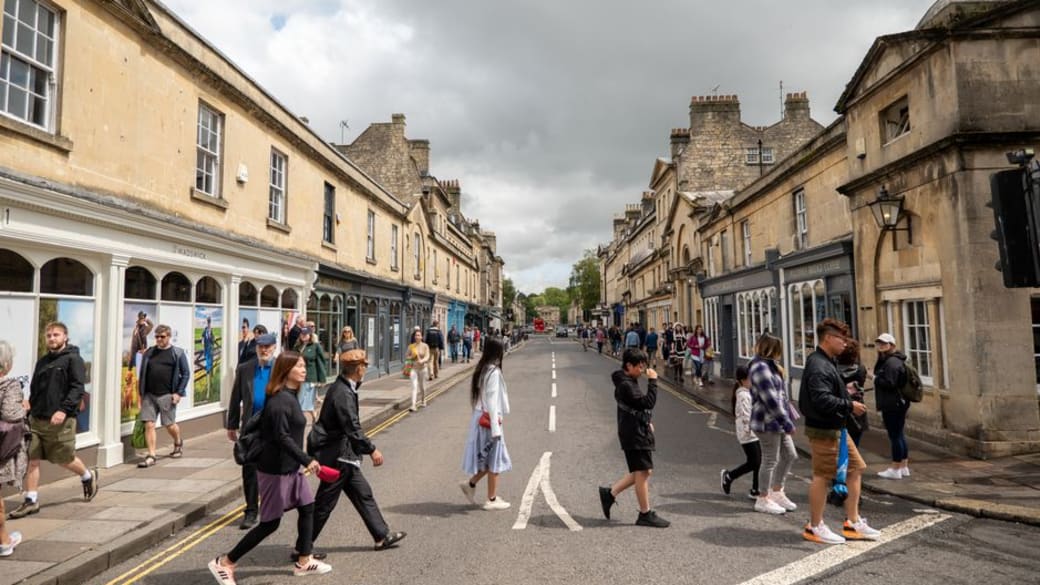
Bath’s historic core is compact enough that your family can cover a lot of ground on foot. The streets themselves tell a story, but the landmarks below add real texture. None of these are the kind of places where kids trail behind bored while adults read plaques. Each one has something that pulls younger visitors in.
The Roman Baths
The Roman Baths sit at the heart of the city, and they hold up well for kids with no particular interest in ancient history. The audio guide is narrated by a Roman soldier and a Georgian socialite, which keeps the experience moving rather than feeling like a school lesson. Children can see the original Roman engineering up close, including the lead pipes and the sacred spring that still flows today. The Great Bath itself, with its steaming green water and surrounding columns, is the kind of thing that sticks in a child’s memory long after the visit.
Bath Abbey
Bath Abbey sits next to the Roman Baths and is worth stepping inside, even with restless kids. The tower tours take visitors up through the bell-ringing chamber and the roof, which gives a completely different view of the city than anything else on offer. The fan vaulting inside the nave is striking, and older children who are interested in architecture or history will find plenty to look at. It’s a short stop that earns its place in a full day out.

The Royal Crescent and The Circus
The Royal Crescent and The Circus are two of Bath’s most photographed streets and can be enjoyed as a walking stop rather than a ticketed attraction. The Royal Crescent is a sweeping arc of 30 Georgian townhouses facing a wide lawn, while The Circus, a few minutes’ walk away, is a circular arrangement of three curved terraces that feels almost theatrical. Kids often respond to its geometry more than its history, which is a perfectly good reason to visit.
No. 1 Royal Crescent Museum
No. 1 Royal Crescent Museum is the end-of-terrace house restored to show exactly how a wealthy Georgian family would have lived. The rooms are dressed with period furniture, textiles, and objects, and the detail is specific enough to spark real curiosity in older children. It’s a good counterpoint to the Roman Baths because it covers a completely different era of Bath’s story, giving your family a sense of what the city looked like from the inside, not just the outside.
Unique Experiences and Hidden Gems
Some of the most memorable kids’ activities in Bath sit outside the main sightseeing circuit. These are the experiences that families often talk about and remember from the trip.
Ghost Tours of Bath
Bath has a long history of ghost tours, and several operators run evening walks through the city’s older parts. Some lean into theatrical storytelling, while others are more atmospheric and unsettling. Check the content and age guidance of the specific tour before booking, particularly if you’re bringing younger or more sensitive children.
Bridgerton Filming Locations
Several streets and buildings in Bath were used as filming locations for the Bridgerton series, and the overlap with the city’s Georgian architecture makes the connection feel natural, not forced. The Royal Crescent, Trim Street, and the area around Brock Street all featured in the production. For families with teenagers who follow the show, walking these locations adds a layer to what might otherwise feel like a standard sightseeing route.
Hot Air Balloon Rides Over Bath
Hot air balloon flights over Bath launch from the city and offer views of the Georgian rooftops, surrounding hills, and Avon Valley that are impossible to replicate from the ground. Flights depend on the weather, so it helps to stay flexible with your schedule. Operators set their own minimum age and weight requirements, so check the specific conditions before booking if you’re traveling with younger children.
Hop-On Hop-Off Bus Tour
The hop-on hop-off bus tour covers the main landmarks and gives your family a practical way to get oriented when you arrive. The open-top deck offers an alternative for family members who find walking tours difficult to sustain, and the commentary gives context without requiring anyone to stand still. It’s also a useful option on days when your family wants to cover more ground than is comfortable on foot.
Free Walking Tour with the Mayor’s Guides
The Mayor’s Corps of Honorary Guides has been running free walking tours of Bath for decades. The guides are volunteers with a solid knowledge of the city, and the tours cover the history, architecture, and stories behind the streets in a way that’s accessible to families. Tours depart from outside the Roman Baths, and no booking is required. For families who want a live introduction to the city without the cost of a ticketed experience, this is a strong starting point.
Guildhall Market and Bath Farmers Market
Guildhall Market is a covered market in the center of Bath with a mix of independent traders, food stalls, and specialty sellers. It’s a good stop for a mid-morning browse, and the variety of stalls gives children something to look at even if shopping isn’t the main agenda.
The Bath Farmers Market runs on Saturdays near Green Park Station and brings together local producers selling food, plants, and crafts.
Both markets suit families who want a break from structured sightseeing without straying far from the city center.
Child-Friendly Indoor Activities
When the weather turns, or your family needs a change of pace from outdoor sightseeing, Bath has a solid range of indoor options. Beyond the museums, the venues below focus on doing rather than just looking, which makes a real difference for younger visitors.
Bath Sports and Leisure Centre
Bath Sports and Leisure Centre packs a lot into one building, which makes it a reliable option for families with children of different ages and energy levels. The five-story soft play area suits younger children, while the Better Extreme trampoline park, with a foam pit, a dodgeball court, and a wipeout zone, suits older kids and teenagers. The eight-lane ten-pin bowling alley is a good option for mixed-age groups, and the swimming facilities include a leisure pool with a flume and a separate teaching pool for younger or less confident swimmers. It’s the kind of place where a half-day disappears quickly.
Central Library
Bath’s Central Library sits inside The Podium in the middle of the city, making it an easy stop to fold into a day of sightseeing without much extra walking. It’s free to browse, and the children’s section gives younger visitors a place to sit down with a book when they need a break from being on their feet. It won’t fill an entire day, but it’s a useful option to have in your back pocket if the weather turns or the group needs twenty quiet minutes.
Outdoor Activities
Bath’s outdoor options go well beyond the parks. The city sits in a river valley surrounded by hills, and that geography opens up experiences that range from gentle riverside walks to working farm visits. The entries below suit families with children of different ages and fitness levels.
River Avon Boat Tours and Row Boat Hire
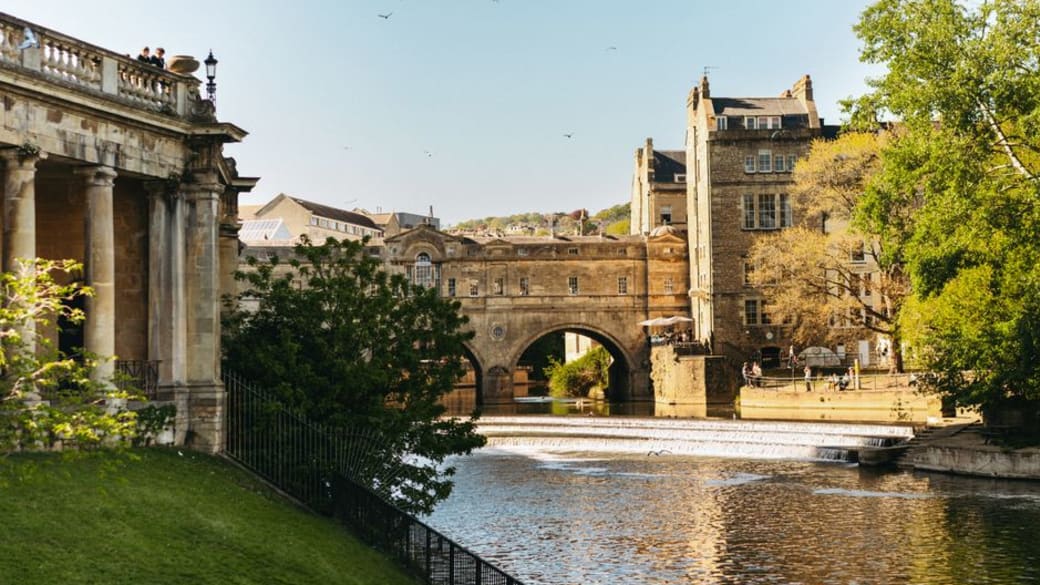
The River Avon runs through the center of Bath, and getting out onto the water gives a completely different perspective on the city’s bridges and Georgian terraces. Boat tours run along the river and are a relaxed option for families who want to cover ground without walking. Row boat hire is available for families who want to set their own pace, and the stretch of river near Pulteney Weir is calm enough for children to feel comfortable on the water.
Bath Skyline Walks and Hilltop Viewpoints
The National Trust’s Bath Skyline Walk is a circular route that runs along the hills above the city. The walk starts at Bathwick Hill, goes east to Sham Castle and through Bathwick and Bathampton Woods, crosses Claverton Down, then on Stage 9 it swings south through Monument Field toward Smallcombe Wood, before looping back north to the start. The full route covers around six miles, but families can join and leave at various points, which makes it adaptable for younger children or those who tire quickly.
Alexandra Park sits above the city to the south and offers clear views across the rooftops and surrounding countryside without a long walk.
Both options give your family a sense of Bath’s setting that’s hard to appreciate from street level.
Two Tunnels Greenway Cycling Route
The Two Tunnels Greenway follows a disused railway line south of the city, taking riders through Combe Down Tunnel and Devonshire Tunnel on a flat, traffic-free path that’s well suited to families. Combe Down Tunnel runs for well over a kilometer, making it one of the longest tunnels open to cyclists in Britain, and a light and sound installation activates as you ride through, so there’s no need to bring your own lights. The full route covers about 3.8 miles between Twerton and Midford, and families can join partway rather than riding the whole stretch, which keeps it manageable for younger or less confident riders. Bike hire is available near the Bath end of the path for families who haven’t brought their own.
Bath City Farm
Bath City Farm is a 37-acre working community charity farm in Twerton, about 1.6 miles from the Abbey and city center as the crow flies, and closer to 2 miles by road. It operates as a working farm rather than a visitor attraction built around animals. The farm is home to miniature Shetland ponies, Dexter cattle, pygmy goats, Soay and Wiltshire Horn sheep, and chickens and ducks.
Nature trails run across the site, and there’s also a history trail with a replica World War II air raid shelter. This offers a good counterpoint to the city’s more formal attractions.
Parks and Green Spaces
Bath’s parks are well-maintained and spread across the city, which means your family is rarely far from open space. Ideal breathing room between structured activities, or as a destination in their own right on a slower day.
Parade Gardens
Parade Gardens runs along the River Avon in the city center, with views across to Pulteney Bridge and Bath Abbey. The mix of statues, a bandstand, and shaded seating makes it an easy stop between other sightseeing without needing to plan around it. It’s a good spot for a packed lunch if your family wants to eat outdoors rather than find a cafe table.
Victoria Park
Royal Victoria Park is Bath’s largest public park, just west of the Royal Crescent. The large children’s playground includes climbing frames and a zip line, and the duck ponds nearby give younger children something to focus on at a slower pace. The nine-acre botanical gardens within the park are worth a walk-through even with children who aren’t particularly interested in plants, because the variety and scale of the planting is impressive. A mini-golf course rounds out the options for families who want structured fun without leaving the park.
Hedgemead Park
Hedgemead Park sits on a hillside above the city center and offers a quieter alternative to the busier parks closer to the main sights. The elevated position means good views over Bath, and there’s a play area for younger children along with plenty of space to sit and rest. The paths are steep in places, so it suits families comfortable with a bit of a climb rather than those pushing a stroller.
Alice Park
Alice Park sits a little further out from the historic center in the Gloucester Road area, and it’s worth the short trip for families with younger children. The playground includes a sandpit and climbing frame alongside swings and a slide, and the open green space gives kids room to run that city-center streets don’t offer.
Sydney Gardens and Henrietta Park
Sydney Gardens and Henrietta Park sit a five-minute walk apart in Bathwick, both within easy reach of the Holburne Museum, so it’s worth treating them as one outing rather than two separate stops.
Sydney Gardens is the larger of the two, with a more open feel and a canal path along one side, making it a good option for a short break between stops in the northeastern part of the city.
Henrietta Park is smaller and quieter, with mature trees, a remembrance garden with a small pond, and plenty of benches, making it the calmer pick if your family needs to slow down rather than keep moving.
Combined or separate, they’re compact enough to fit into an afternoon without taking over the whole day. A nice easy add-on for families staying in the Bathwick area.
Prior Park Landscape Garden
Prior Park Landscape Garden is a National Trust property about a mile south of the city center. Designed in the 18th century, the garden includes a Palladian bridge, one of only four of its kind in the world. The landscape is hilly, so it suits families with children who are comfortable walking on uneven ground.
Art, Culture & Museums
Bath’s historical cultural venues are not the kind of places that ask children to be quiet and stay back from the exhibits. Several of them have made a deliberate effort to bring younger visitors into the experience, and it shows. The entries below are worth including in a family itinerary even if your kids don’t consider themselves museum people.
The Egg (Theatre Royal Bath)
The Egg is Theatre Royal Bath’s dedicated children’s and family theatre, located on Sawclose in the city center. It sits inside a former Victorian church hall and has a (relatively small) seating capacity, giving performances an intimacy that larger venues can’t always match.
Museum of East Asian Art
The Museum of East Asian Art sits just off The Circus and gives your family a different collection to explore after a morning of Georgian architecture. The interactive room and a Lego trail give younger visitors something hands-on rather than just glass cases to look at. The building is small enough that even a shorter attention span can make it through comfortably, and the artifacts on display, from ceramics to bronzes, offer a good contrast to the Roman and Georgian history covered elsewhere in the city.
Jane Austen Centre
The Jane Austen Centre on Gay Street covers Austen’s time living in Bath and her complicated feelings about the city. For older children and teenagers who have read any of her novels, or who have seen the film adaptations, the context here adds something real. The costumed guides and the Regency-era dress-up options give younger kids a way in even if they haven’t encountered Austen’s work yet. It’s a small venue, so you’ll likely include it as part of a morning rather than a standalone half-day.
The Holburne Museum
The Holburne Museum sits at the end of Great Pulteney Street and houses a collection that includes paintings, silverware, porcelain, and decorative arts. The museum runs family-focused activities and trails that give younger visitors a reason to look closely at the collection rather than rush through it. The building itself is worth seeing, but if attention spans wane, you’re already in Sydney Gardens, with Henrietta Park close by as a backup for children to stretch their legs between indoor stops.
Bath Assembly Rooms
Bath Assembly Rooms on Bennett Street is currently closed for a major National Trust renovation project, with a new visitor experience expected to open in 2027. The Grade I listed building was once the social heart of Georgian Bath, hosting balls, concerts, and card games, and its Georgian facade is still visible from the street even while the interior work continues. Worth checking the National Trust’s site closer to your travel dates in case the reopening timeline shifts.
Fashion Museum Bath
Fashion Museum Bath moved to the Old Post Office on New Bond Street after outgrowing its former home, and it holds a collection spanning the 18th century through recent decades. Past displays have included interactive elements that let visitors try on period-inspired pieces, which kids usually remember most. It sits close enough to the other Circus area attractions to fold into the same afternoon.
Herschel Museum of Astronomy
The Herschel Museum of Astronomy on New King Street is the former home of William Herschel, who discovered the planet Uranus in 1781. For children, the most engaging part is the Star Vault children’s activity area, which brings the night sky to life in a hands-on way. Space Lego and craft activities are available for younger visitors, and a children’s audio-visual guide is narrated by Caroline Herschel, William’s sister and a significant astronomer in her own right. The house itself is small and intimate, which makes it feel more like a discovery than a formal museum visit.
American Museum & Gardens
The American Museum and Gardens sits a short drive from the city center at Claverton Manor and pairs an indoor museum with landscaped grounds your family can wander afterward. The house features restored period rooms spanning several centuries of American history, and its programming has expanded well beyond a standard house museum. There’s a play area for kids alongside indoor and outdoor snack spaces, so a visit here works as a half day rather than a quick stop.
Day Trips and Excursions from Bath
Bath’s location in the southwest of England puts several worthwhile destinations within easy reach. The options below are all realistically achievable as day trips, and each one adds something different to a family itinerary.
Day Trip to Stonehenge
Stonehenge is around 30 miles east of Bath, making it a straightforward day trip by car or by public transport. The visitor center provides context before you reach the stones, and the audio guide available at the site suits children well. The stones themselves are roped off, so your family views them from a path that circles the monument rather than walking among them. The site’s scale and the open landscape around it make the experience feel significant in a way photographs don’t fully prepare you for.
Cheddar Gorge and Caves
Cheddar Gorge is around 20 miles southwest of Bath and is worth the trip for the caves alone. Gough’s Cave is the most visited cave in the system, and the stalactite and stalagmite formations inside are on a scale that impresses children. This is also where Cheddar Man’s 10,000-year-old skeleton was discovered, adding a layer of human history that older children find compelling. The gorge itself, with its limestone cliffs rising above the road, is striking from the moment you arrive.
FAQs About Visiting Bath
When is the Best Time to Visit Bath
Late spring and early autumn usually offer the most comfortable conditions for families, with milder weather and slightly fewer crowds than peak summer. Bath is a year-round destination, and its indoor attractions make a winter visit entirely workable.
How to Get to Bath by Train
Bath Spa station is well-connected to London Paddington, Bristol, and Cardiff, with regular services running throughout the day. The station sits in the center of the city, so your family can walk to most attractions from the moment you arrive.
How to Get Around Bath
Most of the city’s main attractions are within a comfortable walk of each other, and the compact center makes Bath one of the easier UK cities to navigate on foot. Taxis and ride-shares are available for longer distances, and local bus services connect the center to areas like Twerton, where Bath City Farm is located.
Final Thoughts
The Roman Baths and the Georgian streets give the trip its backbone, but it’s the boat on the river, the farm in Twerton, or the view from the balloon that are likely to be what your family talks about on the way home. Start with the historic center, build in at least one outdoor experience, and check what’s on at The Egg before you arrive. For a full picture of things to do in Bath, bookmark this guide and come back to it as your plans take shape.
DISCLAIMER: This article/page contains affiliate links. This means that if you make a purchase after clicking on one of these links, then we may receive a small commission – at no extra cost to you. See our full disclosure and Privacy Policy for more information. Thank you for supporting our site and helping make it the inspiring location-independent, long-term family travel and worldschooling blog it aims to be!