

Ho Chi Minh City offers something to spark curiosity at every turn, from centuries-old pagodas to river cruises that drift past the city skyline at dusk. It moves fast, feeds well, and has more going on than many families can cover in a single trip. If you’re planning a visit with kids in tow, here’s everything you need to know about things to do in Ho Chi Minh City.
(This post may include affiliate links for which we may earn a commission at no extra cost to you should you make a purchase. See our full disclosure and Privacy Policy for more information)
Classic Places to Visit in Ho Chi Minh City
The city’s most-visited landmarks are clustered close enough together that your family can cover several in a single day on foot. That said, each one offers something different, and it’s worth knowing what you’re walking into before you go.
War Remnants Museum
The War Remnants Museum documents the Vietnam War through photographs, military equipment, and firsthand accounts. It’s a sobering and carefully curated collection, and for older children and teenagers, it offers real historical context that no textbook quite matches.
One floor contains graphic photographic content related to the effects of chemical warfare and civilian casualties. This section is not suitable for younger children, and many families choose to skip it entirely or visit without younger members of the travel party. There’s no firm age threshold that applies to every child, but a rough consensus among families who’ve visited puts the comfortable range somewhere around 12 and up for the full museum.
Another floor includes a dedicated children’s area focused on international children’s drawings and messages of peace, which is a more accessible option for younger visitors. The outdoor grounds display military aircraft, tanks, and artillery, which many children find engaging as a more concrete, physical introduction to the history.
War Remnants Museum
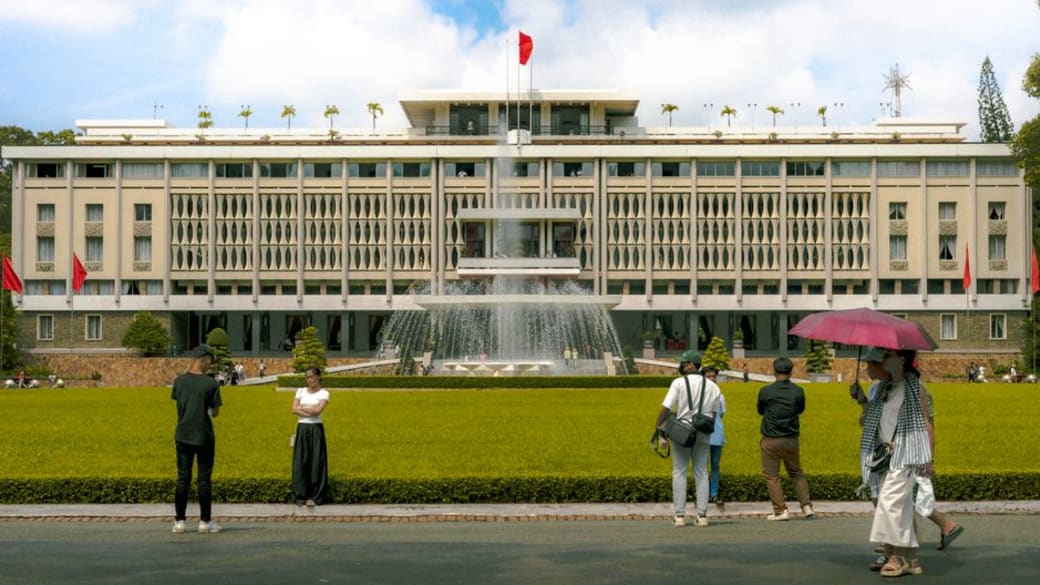
Independence Palace (Reunification Palace)
Independence Palace (Reunification Palace)
Independence Palace, also known as Reunification Palace, is the former seat of the South Vietnamese government and the site where the Vietnam War effectively ended in April 1975. The building has been preserved largely as it was on that day, which gives it an unusual quality: it feels less like a museum and more like a time capsule.
Your family can walk through the reception rooms, war command bunkers beneath the building, and the rooftop helipad. The underground bunker section is particularly interesting for older children who’ve already built some context around the war. The building is less than 1km from the War Remnants Museum, making it a natural pairing for a half-day of history.
Saigon Central Post Office and Notre-Dame Cathedral
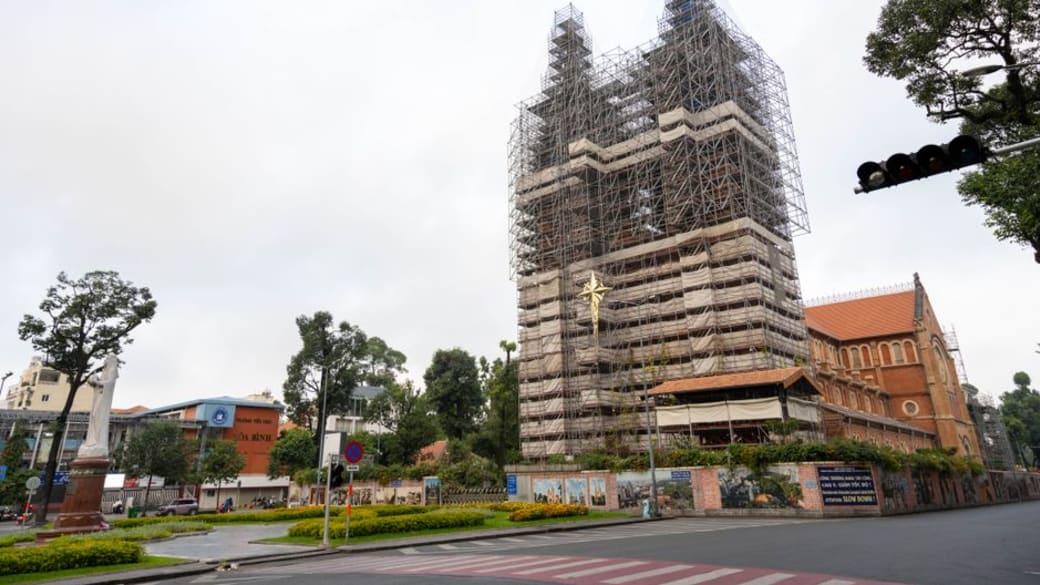
These two landmarks sit directly across from each other in the heart of District 1, making them easy to visit together. The Saigon Central Post Office is a working post office housed in a grand colonial-era building designed with iron arches and a vaulted ceiling. It’s a functioning space, not a preserved exhibit, and that’s part of what makes it interesting.
Notre-Dame Cathedral, built in the late 19th century using materials imported from France, is one of the city’s most photographed buildings. Note: Exterior access may vary due to ongoing restoration – check before visiting in case it affects your plans.
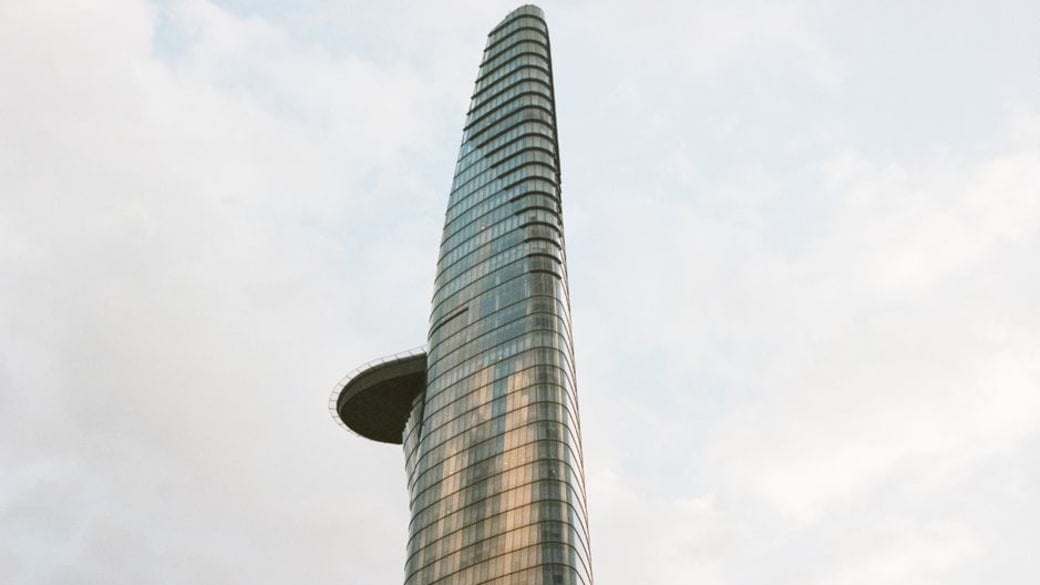
Bitexco Financial Tower and Saigon Skydeck
The Bitexco Financial Tower is one of the most recognizable buildings on the Ho Chi Minh City skyline, partly because of the helipad that juts out from the 52nd floor like a leaf. The Saigon Skydeck observation deck sits on the 49th floor and gives your family a clear view across the city’s districts, the Saigon River, and on clear days, well beyond the urban edge.
It’s a good orientation stop early in a trip, particularly for children who respond well to seeing a place from above before exploring it at street level. The tower is in District 1, within easy walking distance of Nguyen Hue Walking Street.
Jade Emperor Pagoda
Built in the early 20th century by the Cantonese community, the Jade Emperor Pagoda is one of the city’s most atmospheric religious sites. The interior is dense with incense smoke, carved wooden figures, and ceremonial detail that reflects a blend of Taoist and Buddhist traditions.
It’s a genuinely active place of worship, so your family should expect to move quietly and respectfully through the space. Dress modestly, and be mindful that worshippers are present throughout the day.
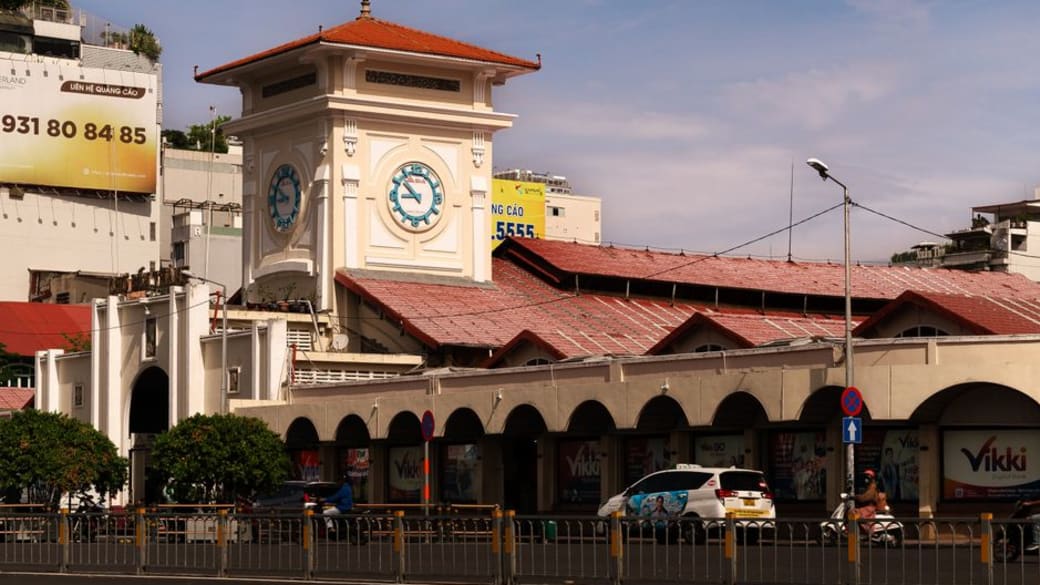
Ben Thanh Market
Ben Thanh Market is one of the city’s oldest landmarks, and its distinctive clock tower has served as a reference point since the early 20th century. Inside, the market is divided into sections covering clothing, souvenirs, fresh produce, and street food.
It’s busy, it’s loud, and it’s worth at least one visit for the atmosphere alone. Your family will find a wide range of food stalls inside and around the perimeter, with options to suit different budgets and appetites. Bargaining is expected at many non-food stalls, which can be a useful cultural lesson for older children.
Ho Chi Minh with Kids: Interesting Buildings
Beyond the major landmarks, Ho Chi Minh City has buildings that tell quieter stories about the city’s history, culture, and daily life. These are the kinds of places that give your family a different perspective on how the city actually works.
Cholon: Saigon’s Chinatown
Cholon is Vietnam’s largest Chinatown and one of the oldest in Southeast Asia. Located in District 5, roughly 5km from the city center, it’s a neighborhood rather than a single attraction, and it rewards a slow walk more than a rushed visit.
The area is home to several notable temples, including Thien Hau Temple, which is dedicated to the goddess of the sea. The streets around the central market are busy with wholesale trade, and the architecture reflects generations of Chinese-Vietnamese cultural exchange. It’s a good area to explore with older children who can handle a more unstructured, neighborhood-style visit.
Ho Chi Minh City Book Street
Book Street, known locally as Duong Sach, runs along Dinh Le Street in District 1 and is lined with bookshops, stationery stores, and small cafes. It’s a short street, but it has a distinct character that sets it apart from the busier commercial areas nearby.
Most of the books are in Vietnamese, but the street is a pleasant place to walk, and the architecture along the stretch is well maintained. It’s a low-key stop that fits naturally into a morning in District 1, particularly if your family is already visiting the nearby post office or walking street.
Ho Chi Minh City Book Street
The Cafe Apartment Building and Nguyen Hue Walking Street
The Cafe Apartment Building and Nguyen Hue Walking Street
The Cafe Apartment Building on Nguyen Hue Walking Street is a mid-century residential block that small independent businesses have gradually taken over across its many floors. Each level has its own character, and the balconies overlook the walking street below.
It’s a good place to get a feel for Vietnamese coffee culture. Vietnamese coffee is typically brewed through a small metal drip filter called a phin, and it’s served strong. The most common versions are ca phe sua da, iced coffee with sweetened condensed milk, and ca phe trung, or egg coffee, a Hanoi-origin drink that has spread south and features a whipped egg yolk and sugar mixture on top of espresso. Roadside plastic-stool cafes are a fixture of daily life across the city, and the Cafe Apartment Building offers a more comfortable introduction to the same culture for families who want to sit down and take it in.
Nguyen Hue Walking Street itself is a broad pedestrian boulevard that runs from the river to the People’s Committee Building. It’s one of the more relaxed stretches of central District 1 and is particularly pleasant in the early evening.
People’s Committee Building and Ho Chi Minh Statue
The People’s Committee Building is a French colonial-era structure that now houses the city’s administrative offices. It’s not open to the public, but the exterior is well-preserved and the plaza in front of it, which includes a large statue of Ho Chi Minh, is a popular gathering point.
The statue and building sit at the top of Nguyen Hue Walking Street, making them a natural endpoint for a walk along the boulevard. The area is well lit in the evening and is a common spot for local families to gather, giving it a relaxed, everyday atmosphere that contrasts with the more formal historical sites nearby.
People’s Committee Building
Ho Chi Minh Statue
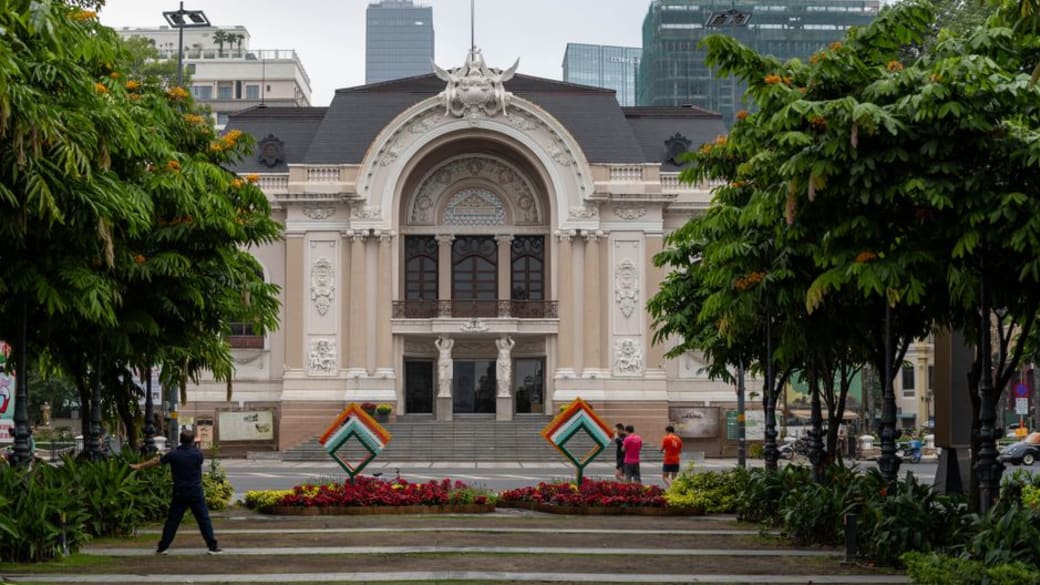
Saigon Opera House
The Saigon Opera House, also known as the Municipal Theatre, is a French colonial building completed in the late 1890s and still used as a performance venue today.
Performances vary by season, and the program includes a mix of traditional Vietnamese arts, contemporary productions, and visiting shows. If your family wants to attend a performance, check the current program in advance. Even without going inside, the building is worth a look as part of a walk through the central district.
Historic Ho Chi Minh: Museums and Cultural Attractions
Ho Chi Minh City has a strong museum culture, and several institutions go well beyond the war narrative many visitors expect. This section covers the venues that give families a broader picture of the city’s history, art, and cultural identity.
Ho Chi Minh City Museum of History
Ho Chi Minh City Museum of Fine Arts
Museum of Ho Chi Minh City
Ho Chi Minh City Museum of History
The Museum of History covers Vietnamese history from prehistoric times through to the end of the French colonial period. The collection includes Cham sculpture, Khmer artifacts, and objects from the various dynasties that shaped the region.
It’s a well-organized museum that suits families with children aged roughly 8 and up who are interested in history beyond the 20th century. The building itself is a colonial-era structure with a distinctive pagoda-style roof, and the surrounding botanical garden provides a natural break if your family needs one mid-visit.
Ho Chi Minh City Museum of Fine Arts
The Museum of Fine Arts is housed in a French colonial building in District 1 and holds a collection that spans lacquerware, oil paintings, sculpture, and contemporary Vietnamese art. The building alone is worth the visit: its tiled floors, shuttered windows, and open courtyards give it a character that many of the city’s newer venues don’t have.
The collection spans three floors, and the range of styles and periods means there’s usually something to catch the eye, no matter your age. It’s a quieter venue than many of the city’s major attractions, which can make it a welcome change of pace mid-trip.
Museum of Ho Chi Minh City
The Museum of Ho Chi Minh City, located in a colonial-era building in District 1, focuses on the city’s history from its earliest settlements through reunification. The collection includes maps, photographs, documents, and objects that trace how the city grew and changed over centuries.
It has a small collection of military hardware, including helicopters and artillery, which often draws children’s attention. The building’s architecture is also notable: it was originally built as a commercial museum in the late 19th century and has had several different functions since.
Southern Women’s Museum
The Southern Women’s Museum in District 3 documents the role of women in southern Vietnam across history, with particular focus on their contributions during the resistance wars and in everyday social and economic life. For families traveling with older children or teenagers, it offers a perspective on Vietnamese history that the larger war museums don’t cover in the same depth. The museum is a short distance from the War Remnants Museum, making it a natural addition to a day in District 3.
Golden Dragon Water Puppet Theatre
Water puppetry is a traditional Vietnamese art form that originated in the Red River Delta region of northern Vietnam over a thousand years ago. Performances take place on a waist-deep pool of water, with puppeteers standing behind a bamboo screen and controlling the figures through submerged rods and strings. The puppets depict scenes from rural life, folklore, and mythology, accompanied by live traditional music.
The Golden Dragon Water Puppet Theatre in District 1 is one of Ho Chi Minh City’s main venues for this art form. Shows run regularly throughout the week, and the performances are short enough to hold attention without becoming a long sit. Entry is priced at the lower end of the city’s cultural attractions, making it accessible for families across a range of budgets. It’s a performance format specific to Vietnam, and seeing it live is a different experience from watching a recording.
Indoor Activities
Jump Arena Starmart Go Vap
KizCiti Saigon
Beehive Premium Kids Cafe
Jump Arena Starmart Go Vap
Jump Arena Starmart Go Vap is an indoor trampoline and games center in Go Vap District, north of the central districts. Families who’ve been there describe a wide mix of games and sports, so it suits older children with plenty of energy to burn. Grip socks are required, so pack a pair or plan to buy some on site. It’s a trip out of District 1, which makes it a good fit for a day when the weather has already ruled out the outdoors.
KizCiti Saigon: A Miniature City for Kids
KizCiti Saigon is a role-play city for children, located at Khanh Hoi Park, 48 Hoang Dieu Street, District 4. The concept is a scaled-down city where children take on different career roles, from doctors and firefighters to chefs and journalists, and earn and spend a play currency as they move between activity zones.
The experience is designed for children roughly between the ages of 3 and 12, with different zones suited to different age groups within that range. It’s a fully indoor venue, which makes it a practical option on hot afternoons or during the rainy season.
Beehive Premium Kids Cafe
Beehive Premium Kids Cafe is a bee-themed indoor play space in District 5, the same district as Cholon. It’s aimed at younger children, roughly ages 2 to 6, with wooden toys, a ball pit, a wooden bead pit, dress-up costumes, books, and building sets rather than big slides. Parents get a seating area with a view of the play space, and since it’s fully indoors, it’s a reliable way to get your
Outdoor Activities
Suoi Tien Theme Park
Suoi Tien Theme Park sits roughly 20km from central Ho Chi Minh City and is one of the larger theme parks in southern Vietnam. What sets it apart from a standard amusement park is its Vietnamese mythology theme: the grounds are filled with large-scale statues, temples, and decorative structures drawn from Buddhist and folk traditions, giving the whole place a character specific to Vietnamese culture.
The park offers a range of rides for different ages, from gentler attractions for younger children to more intense options for older kids and adults. A separate water park zone called Tien Dong Beach operates within the grounds but requires a separate ticket. The cultural and religious statuary throughout the park is worth noticing, even if your family is primarily there for the rides. It’s a full-day destination, and the distance from the city center means it’s best planned as a standalone outing rather than combined with other central attractions.
Suoi Tien Theme Park
Dam Sen Water Park
Dam Sen Water Park
Dam Sen Water Park is located in District 11, roughly 7km from central Ho Chi Minh City. The park has a wide range of water slides, wave pools, and leisure areas, and it’s a well-established venue that draws both local families and visitors.
A practical note: some of the larger slides have minimum heights, so not every attraction will be accessible to younger or smaller children. Factor this in when planning the day, especially if your family includes a mix of ages and heights.
Saigon River Cruise
The Saigon River runs through the eastern edge of the city, and river cruises depart regularly from piers in District 1. A cruise gives your family a different view of the city: the skyline from the water looks quite different from street level, and the river itself is an active working waterway with cargo vessels, fishing boats, and ferries moving alongside tourist craft.
Cruises range from short daytime trips to longer dinner cruises in the evening. The evening options tend to offer the most visually interesting experience as the city lights up after dark. Departure points are generally well-signposted near the central riverfront area, and options suit a range of budgets.
Parks and Playgrounds
Tao Dan Park
Tao Dan Park is a large green space in District 1, roughly 10 hectares, and one of the more accessible parks in the central city. It’s a popular spot for morning exercise, and the shaded paths make it a reasonable place to walk during the hotter parts of the day.
The park has open lawns, a small bird garden, and exercise equipment along some paths. It’s not a destination in itself, but it’s a useful breathing space in a dense urban itinerary. It sits close to Reunification Palace, making it a natural stop before or after that visit.
Tao Dan Park
Saigon Riverfront Park
Saigon Riverfront Park
Saigon Riverfront Park sits on the Thu Thiem side of the river, directly across from District 1. The wide pedestrian promenade looks back at the skyline, including Bitexco Financial Tower, and families who’ve visited describe the walkway as spacious and safe for a stroll. Late afternoon into the evening suits it best, when the sun sets behind the skyline and the city lights come on after dark. Weekends draw bigger crowds, so weekdays are quieter.
Day Trips From Ho Chi Minh City
The city’s surrounding region has several destinations worth a dedicated day out. Each one requires some transport planning, and the distances vary enough that it’s worth considering which trips suit your family’s pace and interests before committing.
Cu Chi Tunnels: What to Expect
The Cu Chi Tunnels are an extensive underground network used by Viet Cong forces during the Vietnam War, located roughly 40km northwest of central Ho Chi Minh City. The tunnel system stretches for hundreds of kilometers, and the sections open to visitors have been widened from their original dimensions to allow easier access.
That said, the tunnels are still tight, dark, and humid, and some families find the crawl claustrophobic even in the widened tourist sections. Entering the tunnels is entirely optional: your family can tour the above-ground exhibits, see the tunnel entrances, and learn the history without going underground. If you do enter, staircase exits are available at intervals along the route, so you’re not committed to completing the full crawl once you start.
Cu Chi Tunnels [Ben Dinh and Ben Duoc]
There’s no firm minimum age for the tunnels, and the right call depends on your child’s comfort with confined, dark spaces rather than any fixed rule. One practical note: the on-site shooting range, where visitors can fire period weapons, is restricted to visitors aged 18 and over. It’s worth knowing this in advance, so your family isn’t caught off guard by the activity or the noise near that area of the site.
Mekong Delta Day Trip
The Mekong Delta begins roughly 60km southwest of Ho Chi Minh City, and day trips from the city typically focus on areas around My Tho or Ben Tre. The delta is a working agricultural landscape of river channels, floating markets, fruit orchards, and small villages, and a day trip gives your family a clear contrast to the city’s urban pace.
Most organized day trips include boat travel on the river channels, which is a practical and enjoyable way to move through the landscape. Organized tour operators offer transport from the city, and the short drive makes it a manageable day trip without an overnight stay. It’s a good option for families who want to see a different side of southern Vietnam without committing to a multi-day itinerary.
My Tho, Mekong Delta
Can Gio Mangrove Biosphere Reserve
Can Gio is a coastal district roughly 50km south of central Ho Chi Minh City, and the mangrove forest there has been recognized as a UNESCO Biosphere Reserve. The forest was largely destroyed during the war and has been substantially replanted since the 1980s, adding another layer of ecological interest.
The reserve is home to a range of wildlife including macaques, monitor lizards, and bird species. This is passive wildlife viewing in a natural setting, not a zoo or a managed animal encounter, and the animals move freely through the forest and waterways. Getting there involves a ferry crossing, and the journey from the city is part of the experience. It’s a quieter, more nature-focused day trip than Cu Chi or the Mekong Delta, and it suits families who prefer a slower pace.
FAQs About Visiting Ho Chi Minh City
What are the Best things to do in Ho Chi Minh City with Kids?
Ho Chi Minh City has enough to keep your family engaged across a full week and then some. The history is accessible without being overwhelming, the outdoor and indoor options balance each other well across different weather conditions, and the day trips add depth to what the city itself offers. Start with the central District 1 landmarks to get your bearings, build in at least one day trip, and leave room for the slower moments: a river cruise at dusk, a walk through Cholon, a coffee on a balcony overlooking the walking street. For a full picture of things to do in Ho Chi Minh City, use this guide as your starting point and check current schedules and entry requirements directly with each venue before you go.
What Is Ho Chi Minh City Best Known For?
Ho Chi Minh City is best known for its role in the Vietnam War, its French colonial architecture, and its street food culture. It’s also Vietnam’s economic center, which gives it a pace and energy distinct from the country’s other major cities.
When Is the Best Time to Visit Ho Chi Minh City?
The city has two main seasons: a dry season that runs roughly from December to April, and a wet season from May through November. The dry season is generally the more comfortable time to visit, with lower humidity and less rainfall, though the city is worth visiting year-round and the wet season brings its own rhythm to daily life.
How to Get Around Ho Chi Minh City?
Taxis and ride-share apps are widely available across the city and are often the most practical option for families with young children or luggage. Many central attractions in District 1 are within walking distance of each other, and the city’s districts are well connected by road.
Is Ho Chi Minh City Safe for Families?
Ho Chi Minh City is generally considered safe for family travel, and many families visit each year without incident. The main practical considerations are traffic, which is dense and fast-moving, and petty theft in busy tourist areas, so keeping bags secure and crossing roads carefully are sensible habits to build from day one.
Where are the best places to visit in Southeast Asia?
Southeast Asia is a patchwork of countries linked by cheap flights, overland routes and ferries. Thailand, Vietnam, Cambodia, Malaysia, Indonesia and the Philippines each bring their own food, beaches, cities and temples, so it is easy to build a trip around whatever your family enjoys most. Costs stay friendly for long stays, which is a big reason so many worldschooling and slow travel families base themselves here. If you’re in the region or considering a trip there, check out our Southeast Asia activity guides for family-friendly stops across the whole region.
DISCLAIMER: This article/page may contain affiliate links. This means that if you make a purchase after clicking on one of these links, then we may receive a small commission – at no extra cost to you. See our full disclosure and Privacy Policy for more information. Thank you for supporting our site and helping make it the inspiring, location-independent, long-term family travel and worldschooling blog it aims to be!