

Edinburgh has a way of getting under your skin, and it does the same for kids. From a castle that looks like it belongs in a fairy tale to underground streets hidden for centuries, the city layers history, drama, and outdoor adventure in a way that keeps children engaged without parents having to work too hard.
What Are the Best Things to Do in Edinburgh with Kids?
Edinburgh’s best things to do with kids span more ground than a single top ten list can hold, which is why this guide splits them out properly. For rainy or cold days, Dynamic Earth, Camera Obscura, and Royal Commonwealth Pool and Clambers give your family a full day’s worth of indoor options, backed up by two of Scotland’s national museums and the easy-to-miss Scottish Storytelling Centre. When the weather cooperates, Arthur’s Seat, Calton Hill, and Portobello Beach cover the outdoor side, while Princes Street Gardens Playground and The Meadows give younger kids somewhere to simply run. History-minded families can use the Royal Mile as a natural spine, connecting the Castle, Holyroodhouse, and St Giles Cathedral, and kids drawn to the city’s darker reputation can explore Greyfriars Kirkyard, Real Mary King’s Close, and the Edinburgh Vaults. Harry Potter fans get their own thread woven through Victoria Street and Greyfriars, and if your trip lands in August, the Fringe and the Military Tattoo add a layer most visitors never plan around. Whatever your family’s pace, Edinburgh’s compact core means you’re rarely more than a short walk from the next thing on this list.
(This post includes affiliate links for which we may earn a commission at no extra cost to you should you make a purchase. See our full disclosure and Privacy Policy for more information)
Edinburgh’s Top Indoor Activities for Kids
Dynamic Earth
Dynamic Earth sits at the foot of Arthur’s Seat, and its tent-like white roof signals that something a bit different is going on inside. The attraction takes visitors through the story of Earth’s formation, from the Big Bang through to the present day, using immersive environments that include a simulated polar ice cap, a tropical rainforest, and a planetarium-style dome. It’s the kind of place where kids who aren’t particularly interested in science still find themselves absorbed, because the experience is physical and sensory rather than text-heavy. Younger children respond well to the dramatic weather effects and changing environments, while older kids engage more with the geological and climate content.
Camera Obscura and World of Illusions
Camera Obscura sits at the top of the Royal Mile, just below Edinburgh Castle, and it’s been drawing visitors since the 1850s. The original camera obscura itself, a Victorian optical device that projects a live, moving image of the city onto a viewing table, is still the centerpiece, and it’s impressive in a way that no screen can replicate. Around it, the building has expanded into five floors of optical illusions, mirror mazes, and hands-on exhibits that keep children occupied for longer than most families expect. It suits a wide age range, though younger children may need some reassurance in the more disorienting rooms. The rooftop terrace also offers one of the better views of the city without the queue that Edinburgh Castle commands.
The Scottish Storytelling Centre
The Scottish Storytelling Centre sits on the Royal Mile and runs regular events and drop-in sessions for kids, rooted in Scotland’s long oral storytelling tradition. It’s easy to walk past among the bigger attractions nearby, and families who do find it are often surprised by how much their kids enjoy it. It’s a good low-key stop to break up a day of castles and monuments with something quieter.
Royal Commonwealth Pool and Clambers
The Royal Commonwealth Pool sits on Dalkeith Road, close to Holyrood Park and the southern end of the Royal Mile. It’s a council-run leisure center with a full-size swimming pool, and Clambers, an indoor play area attached to the building, splits its space into zones for babies, toddlers, and older kids. It’s a solid option once everyone’s legs are done for the day, or when Edinburgh’s weather turns, and you need somewhere dry and warm. For families based near Holyroodhouse, it’s close enough to slot into the same day without much extra travel.
Edinburgh Central Library
Edinburgh Central Library sits on George IV Bridge, just off the Royal Mile. It’s a working public library with a substantial local history and genealogy collection, so it isn’t built around kids specifically, but the reading rooms are calm, and the location sits right on the walking route between bigger stops. Think of it as a short, quiet pause rather than a full outing in its own right.
Murrayfield Ice Arena
Murrayfield Ice Arena sits west of the city center and is home turf for Edinburgh’s ice hockey team, with public skating sessions running alongside the fixtures. Kids can lace up and skate on their own, or just watch a match from the stands. It’s a different kind of energy burn from a day of castle walking, and it suits a cold day when outdoor sightseeing has lost its appeal.
Best Museums and Cultural Attractions in Edinburgh
Museum of Childhood
The Museum of Childhood on the Royal Mile is one of those places that has something for everyone in the family. Children see it as a room full of toys, games, and curiosities. Adults often find themselves stopping in front of exhibits that connect directly to their own childhood.
The collection spans several centuries of childhood experience, from Victorian-era dolls and tin soldiers to mid-century board games and early video consoles. It’s a compact visit, which makes it a good option when energy levels are flagging or the weather has turned.
National Museum of Scotland
The National Museum of Scotland on Chambers Street is the kind of place that can absorb a full day without anyone running out of things to look at. The building itself blends Victorian grandeur with a modern extension, and the scale of the collections means your family can move between Scottish history, world cultures, science, and technology without leaving the building. For children, the technology galleries and the natural history sections tend to generate the most engagement, but the Scottish history floors, which trace the country from its geological origins through to the present day, give real context to everything else you’ll see in the city. Dolly the sheep, the world’s first cloned mammal, is on permanent display here, which tends to prompt a conversation worth having.
National Portrait Gallery
The Scottish National Portrait Gallery on Queen Street uses portraiture to tell Scotland’s story through the people who shaped it. For older children who’ve been engaging with Scottish history during the trip, the gallery adds faces to names they’ve already encountered. The building’s interior, with its elaborate frieze of historical figures running around the main hall, is striking enough to hold attention even before you reach the paintings.
Scottish National Gallery
The Scottish National Gallery sits in the heart of the city on The Mound, between the Old Town and the New Town, and holds one of the strongest collections of European painting in the UK outside London. For families, it’s a more selective visit than the National Museum of Scotland. The collection is deep rather than broad, and younger children may find the pace slower. That said, the gallery runs regular family-focused programming, and the building itself, a neoclassical structure with high ceilings and natural light, is worth seeing.
Edinburgh’s Famous Historic Sites and Places to Visit
Edinburgh’s historic core is compact enough to cover on foot, which makes it well-suited to families who want to move at their own pace. The sites in this section define the city’s skyline and story, and most are within walking distance of each other along a single route.
Edinburgh Castle
Edinburgh Castle sits on volcanic rock above the city and has served as a fortress, royal residence, and military garrison at various points in its history. For families, the most engaging parts of the visit are the Scottish Crown Jewels, the Stone of Destiny, and the One O’Clock Gun, a cannon that has been fired at 1pm since 1861. The castle is large enough to take a full half-day, and the cobbled paths and uneven terrain mean it’s manageable but not effortless with a pushchair. Queues at the main gate can be significant during peak season, so arriving early makes a real difference. Booking tickets in advance is strongly recommended.

The Royal Mile
The Royal Mile runs from Edinburgh Castle at the top to the Palace of Holyroodhouse at the bottom, connecting most of the city’s major historic sites in a single walkable stretch of about 1.6km. For families, it works well as a spine for a full day out, with Camera Obscura, the Museum of Childhood, St Giles Cathedral, and the Scottish Storytelling Centre all sitting directly on or just off the route. The street itself is busy with visitors, street performers, and market stalls, which keeps children engaged between the bigger stops. The gradient is worth noting: the walk from the castle down to Holyroodhouse is manageable with a pushchair, but the uphill return is a different matter. Planning the day to finish at the bottom, near Holyroodhouse and Holyrood Park, avoids the uphill return.

St Giles Cathedral
St Giles Cathedral stands at the heart of the Royal Mile and has been a place of worship on this site for around 900 years. The interior is striking, with stained-glass windows and the ornate Thistle Chapel, the spiritual home of Scotland’s highest order of chivalry.
Palace of Holyroodhouse
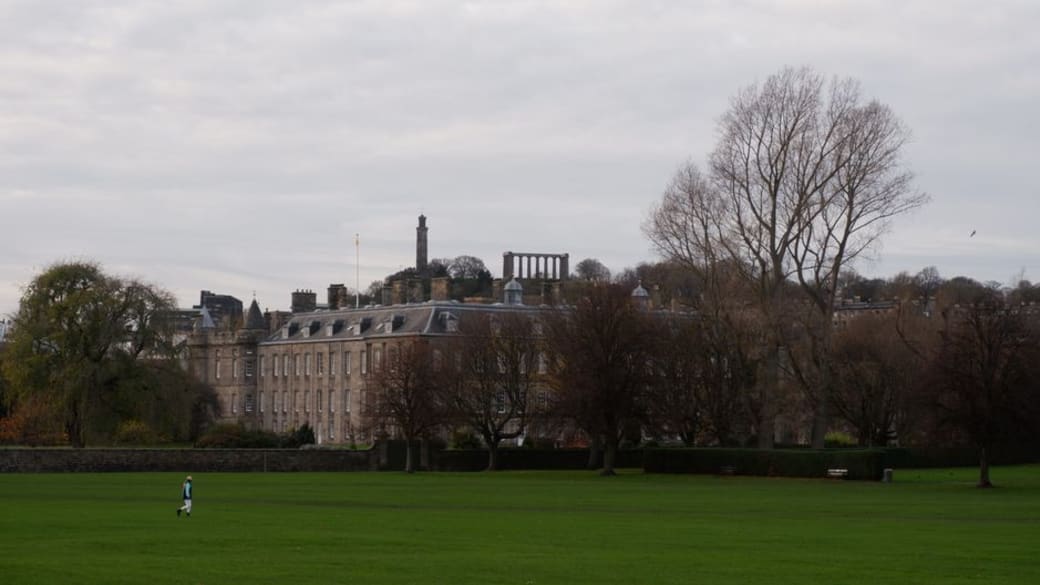
The Palace of Holyroodhouse sits at the opposite end of the Royal Mile from the castle and is the official residence of the British monarch in Scotland. The palace is open to visitors when the royal family is not in residence, and the audio guide suits older children who can follow a narrative through the rooms. The connection to Mary Queen of Scots is strong here, and the story of her secretary David Rizzio’s murder in her private chambers is the kind of historical detail that tends to stick with children long after the visit. The ruins of Holyrood Abbey, which sit within the palace grounds, add an extra layer of atmosphere. Check current opening arrangements before visiting, as the palace closes during royal residency periods.
Scott Monument
The Scott Monument in Princes Street Gardens is a different kind of experience. The Gothic tower, built in honor of novelist Sir Walter Scott, is one of the largest monuments to a writer anywhere in the world. Families who want to climb it should know the internal staircase is narrow and steep, with over 280 steps, and the upper levels aren’t suitable for young children or anyone uncomfortable with heights. The view from the top is worth it for those who make it.
Edinburgh’s Spooky, Hidden, and Off-the-Beaten-Path Experiences
Edinburgh’s darker side is part of what makes it so compelling. The city has centuries of history beneath its streets, and some of the most memorable kids’ activities in Edinburgh involve going underground, hearing stories not in the textbooks, and exploring corners of the city most visitors walk straight past.
Greyfriars Kirkyard and Greyfriars Bobby
Greyfriars Kirkyard is one of Edinburgh’s oldest burial grounds, and it carries a reputation as one of the most haunted places in the city. For families, the tone of a visit depends entirely on your children’s ages. In daylight, the kirkyard feels atmospheric rather than frightening, and the stories attached to it, including the famous tale of Greyfriars Bobby, give younger children something to hold onto. Bobby was a Skye Terrier who reportedly stayed near his owner’s grave for years after the man’s death, and a small bronze statue of him stands just outside the kirkyard entrance. It’s a story that resonates with children of almost any age. The kirkyard also connects directly to the Harry Potter thread, with the Riddell gravestone drawing fans who want to see it for themselves.
Real Mary King’s Close and the Edinburgh Vaults
These are two separate experiences, but they share a common thread: both take you beneath the city’s surface into spaces sealed off and forgotten for generations. Both experiences involve confined spaces and some atmospheric lighting, so they’re better suited to children who are comfortable in enclosed environments.
Real Mary King’s Close is a network of underground streets and rooms beneath the Royal Mile, built in the 17th century. Guided tours take small groups through the preserved spaces, and the storytelling holds the attention of older children and adults alike.
The Edinburgh Vaults, located beneath the South Bridge arches, have a darker reputation and are more commonly associated with ghost tours.
Ghost Tours and Spooky Experiences
Edinburgh’s ghost tour industry is well established, and multiple operators run evening tours through the Old Town, the vaults, and the kirkyard. The quality and tone vary, so it’s worth reading recent reviews before booking. Most tours are designed for adults and older teenagers, with content that includes historical accounts of plague, crime, and execution. Some operators offer less intense versions suitable for families with children aged 8 to 12, but it’s worth asking directly before booking. Evening tours can run late, which matters for families with younger children. If your kids are curious about Edinburgh’s spooky reputation but not quite ready for a full ghost tour, a daytime visit to Greyfriars Kirkyard covers much of the same ground with less intensity.
Surgeons’ Hall Museums
Surgeons’ Hall Museums, on Nicolson Street, is run by the Royal College of Surgeons of Edinburgh and covers the history of surgery and medicine through its anatomy and pathology collections. The museum’s exhibits connect directly to Edinburgh’s own history of body snatching, when Burke and Hare sold corpses to the city’s anatomy schools in the early 1800s, a story that also turns up on several of Edinburgh’s ghost tours. It suits older children with a strong stomach rather than younger ones, but it’s specific enough to stick in a kid’s memory long after the visit.
Craigmillar Castle
Craigmillar Castle, about 4km southeast of the city centre, is a well-preserved medieval ruin managed by Historic Environment Scotland, and it sees a fraction of the visitors Edinburgh Castle attracts. Mary, Queen of Scots stayed here twice, and it was at Craigmillar in 1566 that a group of her nobles signed the so-called Craigmillar Bond, the pact behind the murder of her husband, Lord Darnley, the following year- the same plot line your family will have already brushed up against at Holyroodhouse. With fewer crowds, kids can explore the tower house and courtyard more freely, and the setting gives a real sense of what a working castle actually looked like.
Edinburgh’s Outdoor Activities
Edinburgh is a city where the outdoors is never far away. From volcanic hills to coastal beaches, the range of outdoor things to do in Edinburgh with kids is broader than most visitors expect, and much of it sits within easy reach of the city center.
Portobello Beach
Portobello Beach sits about 5km east of the city center and is Edinburgh’s main seaside stretch. The beach is sandy, the promenade is wide, and the atmosphere is relaxed in a way that the city center rarely is. Water temperatures in the North Sea are cold year-round, so swimming is more of a brave-family activity than a given, but paddling, building sandcastles, and walking the prom are reliable options in decent weather.
Arthur’s Seat and Holyrood Park
Arthur’s Seat is an ancient volcano that rises to 251 meters above sea level, sitting within Holyrood Park just over 1km from the Royal Mile. The summit walk is achievable for children who are reasonably confident on their feet, but it involves uneven terrain, some steep sections, and exposure to wind and weather that can change quickly. It’s not a pushchair route. For families with younger children, the lower paths around the park offer a gentler experience with the same dramatic landscape. The views from the summit, across the city, the Firth of Forth, and on a clear day toward the Highlands, are the kind that children remember. Dress in layers regardless of the forecast.

Water of Leith Walkway: Stockbridge to Dean Village
The Water of Leith Walkway follows the river through the city for around 12km in total, but families don’t need to walk the whole thing. The stretch between Stockbridge and Dean Village is the most popular with visitors, offering a quiet, tree-lined path that feels surprisingly removed from the urban surroundings. It’s pushchair-friendly along most of this section and gives a completely different perspective on the city.
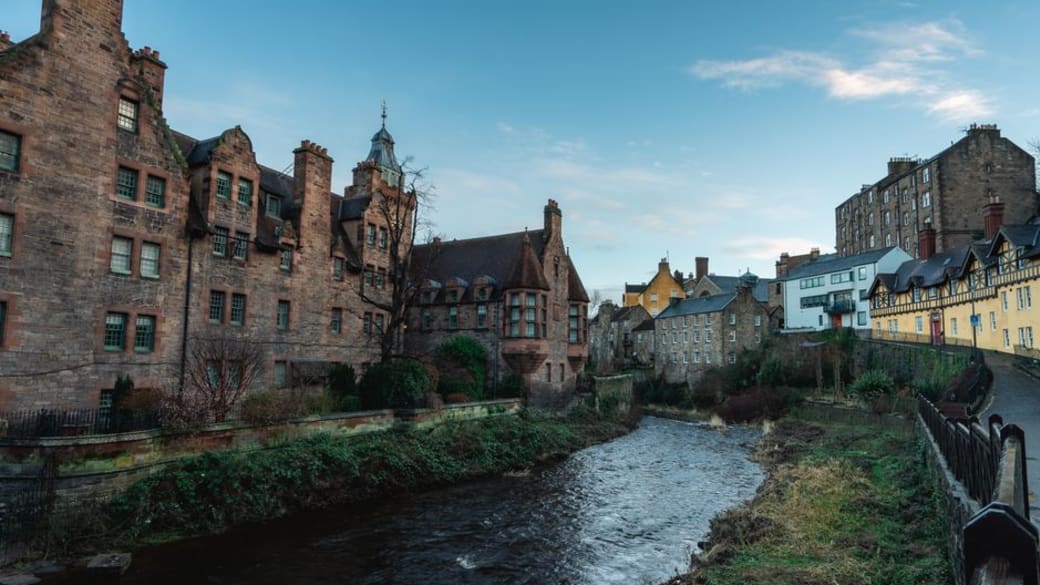
Dean Village sits in the Water of Leith valley, about 1km northwest of Princes Street, and feels like a different city entirely. The old mill buildings and the stone bridge over the river make it a quiet, photogenic stop that children often find interesting because it looks nothing like the rest of Edinburgh.
Calton Hill
Calton Hill rises to the east of the New Town and offers one of the most accessible elevated viewpoints in the city. The climb is short, around 100 meters of elevation gain, and the paths are wide enough to manage with an older child’s pushchair, though it’s not effortless.

At the top, a collection of monuments, including the unfinished National Monument, modeled on the Parthenon, and the Nelson Monument, gives the hill a slightly surreal quality that children often find more interesting than a standard viewpoint. The panoramic view takes in the castle, Arthur’s Seat, the Firth of Forth, and the New Town below. It’s a good option in the late afternoon, when the light is low, and the city looks its best.
Edinburgh Parks and Playgrounds
Royal Botanic Garden Edinburgh
The Royal Botanic Garden Edinburgh covers around 28 hectares just north of the city center, about 1.5km from Princes Street. The grounds are well-maintained and largely flat, which makes them pushchair-friendly in a way that much of Edinburgh is not. The glasshouses contain plant collections from around the world, including a tropical house that provides a warm contrast to a cool Edinburgh day. For families, the gardens offer a slower pace after a few days of historic sites and steep streets. Children who’ve been walking a lot tend to respond well to the open space and the freedom to move without crowds.
Princes Street Gardens Park and Playground
Princes Street Gardens Playground sits inside Princes Street Gardens, right below Edinburgh Castle, with the castle rock forming the backdrop while kids play. It’s a conveniently placed stop, useful for letting kids run loose between the Royal Mile and the New Town without much extra walking. It gets busy on sunny days, so it works best as a short break rather than a planned destination.
The Meadows
The Meadows is a large park about 1.5km south of the Royal Mile, where the city’s university crowd and local families share the same green space. At its southern edge, where it meets Bruntsfield Links, there’s a well-used play area with a sand pit, a zip line, and enough open grass nearby for a picnic or a ball game. It’s the kind of place worth building a slower afternoon around after a few days of castles and steep streets.
Family-Friendly Edinburgh Neighborhoods to Explore
Understanding Edinburgh’s neighborhoods makes it much easier to plan your days without unnecessary backtracking. Each area has its own character, and knowing what to expect helps your family move through the city with more confidence.
The Old Town: Grassmarket and Victoria Street
The Old Town holds most of Edinburgh’s historic weight, but it’s worth thinking of it as several distinct pockets connected by the Royal Mile.
Grassmarket is a wide, open square at the foot of the castle rock, historically used as a market and, less cheerfully, as a public execution site. Today it’s a lively space with a mix of independent businesses and a regular market. It’s a good place to pause and let children run around after a morning of historic sites.
Victoria Street curves down from the George IV Bridge in a way that makes it one of the most photographed streets in the city. The colorful shopfronts and the curved upper terrace give it a theatrical quality, and for Harry Potter fans in your family, the Diagon Alley connection makes it a worthwhile stop rather than just a pretty detour.
The New Town and Stockbridge
Built in the 18th century as a planned expansion of the city, the New Town has wide streets, Georgian terraces, and formal gardens that give it a very different feel from the Old Town’s medieval tangle. For families, it’s a comfortable base for exploring, with Princes Street Gardens running along its southern edge and the Scottish National Portrait Gallery sitting within easy walking distance.
Stockbridge sits just north of the New Town and has a neighborhood feel that’s noticeably more relaxed than the tourist-heavy Royal Mile. The Sunday market along Saunders Street is a good family outing, and the Water of Leith runs through the area, connecting it to the walkway described earlier. It’s the kind of neighborhood where a slow morning wander feels like a nice break rather than a gap between attractions.
Leith: Edinburgh’s Waterfront Neighborhood
Leith is Edinburgh’s port district, sitting about 3km north of the city center, and it has a character that’s distinct from the rest of the city. The waterfront has been significantly redeveloped over recent decades, and the area around Ocean Terminal and the Shore offers a mix of open space, independent businesses, and a working-port atmosphere.
The Royal Yacht Britannia, moored at Ocean Terminal, is one of the most consistently recommended family experiences in Edinburgh. The former royal yacht served the British royal family for over 40 years before being decommissioned in 1997, and the self-guided audio tour takes visitors through the state rooms, crew quarters, and engine room. For children, the contrast between the formal royal spaces and the surprisingly modest crew areas often sparks real curiosity. It’s a substantial visit that suits a range of ages, and the on-board detail is specific enough to hold attention throughout.
The Shore, Leith’s historic waterfront street, runs along the Water of Leith as it meets the docks and gives a sense of what the area looked like before the modern development. It’s a pleasant stretch to walk with children, and the combination of the waterfront, the Britannia, and the neighborhood’s relaxed pace makes Leith a worthwhile half-day away from the Old Town.
Iconic Edinburgh Festivals and Events
Edinburgh’s two most internationally recognized events transform the city in ways that matter for families visiting during those periods. Both are worth understanding before you decide whether to plan around them or avoid them.
Edinburgh Festival Fringe
The Edinburgh Festival Fringe takes place across most of August and is the world’s largest arts festival by number of performances. Thousands of shows run simultaneously across hundreds of venues throughout the city, covering comedy, theatre, dance, circus, and spoken word. For families, the Fringe offers a wide range of child-friendly programming, and the free outdoor performances on the Royal Mile are easy to access without planning.
In practice, visiting during the Fringe means the city is extremely busy. The streets around the Old Town and the main festival venues are crowded throughout the day and into the evening. For families who enjoy a lively, spontaneous atmosphere and don’t mind navigating crowds with children, the Fringe is an extraordinary backdrop to a trip. For families with very young children or those who prefer a calmer pace, visiting outside August gives a very different experience of the city.
Royal Edinburgh Military Tattoo
The Royal Edinburgh Military Tattoo runs on the esplanade of Edinburgh Castle across most of August, overlapping with the Fringe. The show brings together military bands, display teams, and performers from around the world for an outdoor spectacle set against the castle’s floodlit facade. The combination of music, precision drill, and the castle backdrop is visually striking and tends to land with children who might not otherwise sit through a performance.
The practical considerations are significant. The esplanade is exposed and Edinburgh evenings in August can be cold and wet, so dressing in warm layers is likely a good call. The show runs in the evening, which means a late finish for younger children. Tickets sell out well in advance, and the event draws very large crowds into the city center before and after each performance. For families who plan ahead and prepare for the conditions, it’s a memorable evening. For those with very young children or early bedtimes, it may be better appreciated in a few years.
Frequently Asked Questions About Edinburgh
What Makes Edinburgh a Unique Travel Destination
Edinburgh is a city where the medieval and the modern sit directly alongside each other, and where the landscape- a volcanic ridge, a river valley, a coastal edge- is as much a part of the experience as the history. What makes it particularly well-suited to families is that the city’s stories are physical and accessible: you can walk the street where the plague dead were sealed underground, climb the hill where a volcano once stood, and stand in the room where a queen’s secretary was murdered. That kind of tangible history is rare, and children respond to it differently than they do to a museum display.
Where Can I Find Edinburgh’s Harry Potter Sights
Edinburgh has a real claim to the Harry Potter story that goes beyond marketing. J.K. Rowling wrote significant portions of the early books in the city, and several locations connect directly to the series. Victoria Street in the Old Town, with its curved row of colorful shopfronts, is widely cited as an influence on Diagon Alley. Greyfriars Kirkyard contains a gravestone bearing the name Thomas Riddell, which many fans believe contributed to the name Tom Riddle. For families with Harry Potter fans, weaving these sights into a walking day adds a layer of storytelling to what would otherwise be a standard historic tour.
When’s the Best Time to Visit Edinburgh
Spring and early autumn offer the most comfortable balance of weather, crowd levels, and daylight. August brings the Fringe and the Tattoo, which add energy and programming but also significantly higher prices and crowds. Winter is cold and the days are short, but the city is quieter, and the Christmas market in Princes Street Gardens draws families from across Scotland. Summer, outside of August, is generally the most straightforward time for first-time visitors.
How to Get Around Edinburgh
The city center is walkable for most of the major attractions, though the terrain is hilly and uneven in the Old Town, which is worth factoring in if you’re traveling with a pushchair or young children who tire quickly. Buses cover the city well and connect the center to neighborhoods like Leith and Portobello Beach. Taxis and ride-shares are easy to find. Edinburgh Airport sits about 13km west of the city center, and a tram line connects the airport directly to the city center, making arrival straightforward for families with luggage.
Final Thoughts
Edinburgh offers families plenty to enjoy. The historic core is compact and walkable, the outdoor spaces are dramatic, and the mix of national museums, paid attractions, and neighborhood exploration means you can shape the trip around your family’s pace and budget. Start with the Royal Mile as your anchor, build outward from there into the neighborhoods and parks, and leave at least one afternoon for something unexpected.
DISCLAIMER: This article/page contains affiliate links. This means that if you make a purchase after clicking on one of these links, then we may receive a small commission – at no extra cost to you. See our full disclosure and Privacy Policy for more information. Thank you for supporting our site and helping make it the inspiring location-independent, long-term family travel and worldschooling blog it aims to be!