

Adelaide has a way of surprising families who arrive expecting a quiet city and leave with a list of reasons to come back. From free-entry museums and coastal walks to aerial obstacle courses and world-class festivals, there’s a lot more going on here than the city’s modest reputation suggests. Read on for a full guide to things to do in Adelaide that covers everything from the cultural precinct to day trips worth planning around.
(This post may include affiliate links for which we may earn a commission at no extra cost to you should you make a purchase. See our full disclosure and Privacy Policy for more information)
Adelaide’s Cultural Precinct and Landmarks
The heart of Adelaide is walkable, compact, and well-suited to families who want to mix culture with street-level wandering. North Terrace alone could fill a morning, and the surrounding streets add texture to any visit.
Adelaide Central Market
The Adelaide Central Market sits just south of the city center and has been running for well over 150 years. It’s a covered market with a mix of fresh produce, specialty food stalls, and a lively atmosphere that gives your family a real sense of how the city eats. It’s not a tourist attraction in the traditional sense; it’s where locals shop, and that’s exactly what makes it worth a visit.
Adelaide Central Market
North Terrace Cultural Precinct
North Terrace is the spine of Adelaide’s cultural life. The South Australian Museum, the Art Gallery of South Australia, the State Library, and the University of Adelaide all sit along this single boulevard, within easy walking distance of each other. For families, this stretch is one of the most practical in any Australian city: multiple institutions, permanent collections, and enough variety to suit different ages and interests across a single day.
Art Gallery of South Australia
The Art Gallery of South Australia holds one of the country’s most significant collections, spanning Australian, European, Asian, and Pacific art. The permanent collection gallery’s layout is manageable for families who don’t want to commit to a full museum marathon. Dedicated education programs and family-focused activities usually run alongside the main collection, though it’s worth checking what’s on before your visit.

South Australian Museum
The South Australian Museum sits on North Terrace between the State Library and the Art Gallery of South Australia, so it slots easily into a precinct day. The Australian Aboriginal Cultures Gallery spans two floors and holds more than 3,000 items, including boomerangs, shields, bark paintings, and some of the only intact bark canoes still known to exist. The museum describes it as a celebration of the world’s oldest continuous living culture, and older children will get more from it as they have time to read and ask questions.
Fossils are the other big draw. The Opal Fossils Gallery is built around the opalized skeleton of a six-meter Addyman Plesiosaur, found in an opal mine at Andamooka in 1968, and it also holds the largest ammonite ever found in Australia, which was first mistaken for a truck tire. The Megafauna display covers Diprotodon, a giant marsupial plant eater, along with Procoptodon, a giant leaf-eating kangaroo, and Wonambi, a six-meter snake. The Ediacara gallery shows fossils from the Flinders Ranges that gave the Ediacaran Period its name. In the Discovery Centre, children can touch a real fossil, use a microscope and watch a working beehive.
The Ancient Egypt Gallery, set up in 1939 and little changed since, holds more than 650 artifacts, most of them original pieces rather than replicas. The Pacific Cultures and South Australian Biodiversity galleries round out the collection.
South Australian Museum
Aboriginal Cultural Tours
Several operators in and around Adelaide offer guided experiences focused on Kaurna culture, the Aboriginal people of the Adelaide Plains. These tours vary in format, from walking tours through the city to experiences in natural settings outside the center, but the better ones are led by Kaurna guides and grounded in living culture rather than historical display. If your family wants to understand the country you’re traveling through, this kind of experience offers something a museum exhibit alone can’t replicate. Look for community-led tours and check current availability directly with operators.
Adelaide Street Art
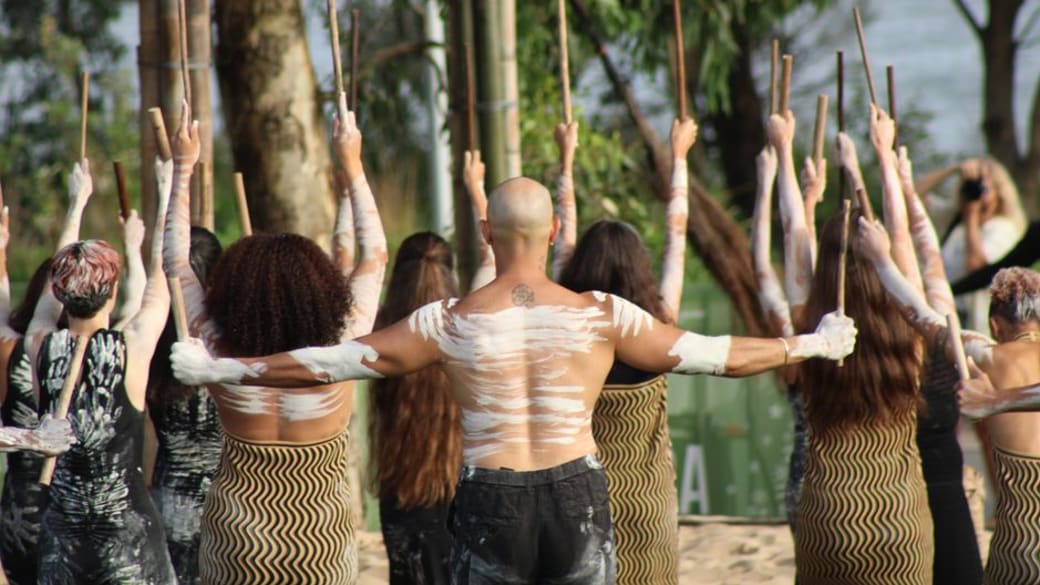
Adelaide has a well-established street art culture, particularly in the laneways around the CBD and in suburbs like Bowden and Port Adelaide. It’s not a formal attraction, which is part of the appeal. Walking through Peel Street or the laneways off Rundle Street gives your family a different view of the city, one that changes over time as new works appear. It’s a good way to fill the gaps between bigger stops without it feeling like a detour.
Rundle Mall Pigs
The four bronze pig sculptures in Rundle Mall are a small but popular stop for families with younger children. The pigs, named Horatio, Oliver, Augusta, and Truffles, are scattered along the pedestrian mall and have become one of Adelaide’s most photographed landmarks. They’re low to the ground, easy to find, and make for a quick photo moment. It’s a two-minute stop, not a destination, but it’s worth knowing where they are.
Adelaide’s Swimming Beaches and Coastal Walks
Glenelg Beach
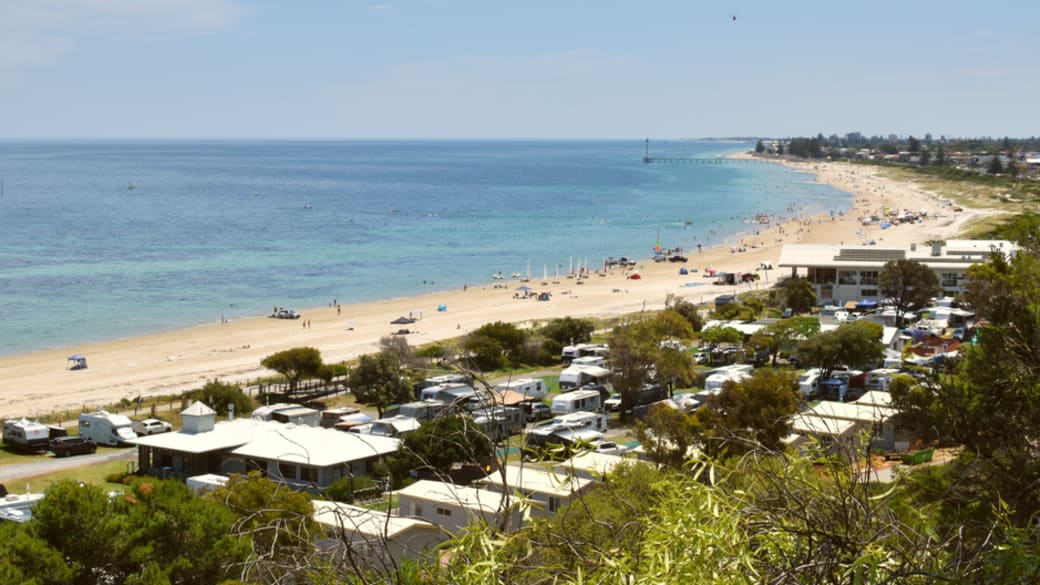
Arguably Adelaide’s most accessible beach, Glenelg is about 11km from the city center and connected by a tram line that runs directly from the CBD. The wide, sandy foreshore has a mix of open green space and facilities, and the main street behind the beach offers plenty of options for food and supplies. It’s the kind of beach that works without needing much planning.
Glenelg Foreshore Playspace
The Glenelg Foreshore Playspace sits on the seaward side of the Glenelg Town Hall in Moseley Square, at the end of the tram line and right next to the beach. It has timber logs for climbing and balancing, water and sand play, a wide slide, a climbing dome, a tunnel and in-ground trampolines. The Bay Discovery Centre is inside the Town Hall behind it, so a hot afternoon at Glenelg has an indoor backup close by.
Glenelg Foreshore Playspace
Bay Discovery Centre
Hallett Cove Boardwalk
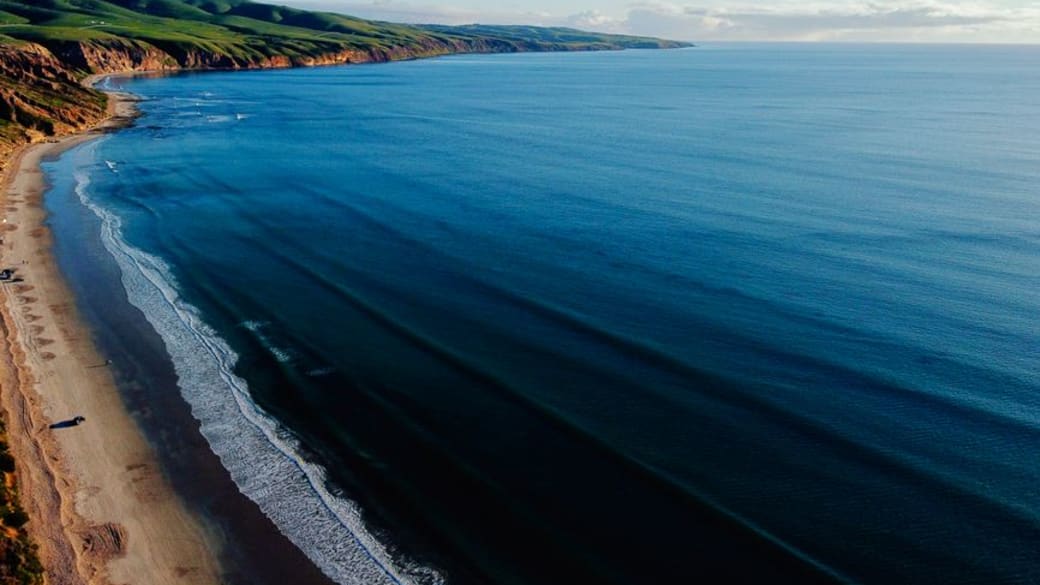
Hallett Cove Conservation Park sits about 25km south of the city center and protects a stretch of coastline with significant geological features, including glacial formations dating back around 280 million years. A boardwalk system runs through the park, making the terrain accessible for families who want to explore without needing serious hiking gear. The views across the gulf are wide and open, and the place’s geological story is interesting for older children curious about how landscapes form. It’s a different kind of coastal experience from Glenelg, quieter and more focused on the natural environment.
Adelaide Parks and Green Spaces
Adelaide is one of Australia’s best-parked cities. Colonel Light’s original city plan included a ring of parklands around the entire CBD, and that green belt is still intact today. Beyond the city itself, the Hills and surrounding conservation areas add further options for families who want more than a flat walk.
Adelaide Botanic Garden
Belair National Park
Morialta Conservation Park
Adelaide Botanic Garden
The Adelaide Botanic Garden sits at the eastern end of North Terrace, making it an easy add-on to a cultural precinct visit. The grounds cover around 51 hectares and include a range of themed gardens, glasshouses, and open lawn areas. The layout is relaxed enough that younger children can move freely without it feeling stressful, and the mature tree canopy keeps much of the garden shaded during warmer months.
Belair National Park
Belair National Park is about 13km from the city center and is one of Australia’s oldest national parks, established in 1891. The park offers a mix of walking trails, open grass areas, and facilities, making it a practical choice for a family half-day out. The terrain is hilly in places, but gentler options suit families with younger children. Wildlife sightings, including kangaroos and echidnas, are reasonably common in the park’s quieter areas.
Morialta Conservation Park
Morialta Conservation Park sits about 10km northeast of the city center and is known for its three waterfalls and rocky gorge terrain. The trails range from a short walk to the First Falls, which is manageable for most ages, to longer routes that require more fitness and sure footing. The gorge setting is dramatic in a way that’s hard to find this close to a city center, and the First Falls trail in particular is a solid option for families who want a proper outdoor experience without committing to a full-day hike.
Himeji Gardens
Himeji Gardens is a Japanese garden in the southern parklands, gifted to Adelaide by its sister city Himeji in Japan. It’s a small, carefully designed space with a koi pond, stone lanterns, and traditional plantings. The atmosphere is noticeably quieter than the rest of the parklands, which makes it a good stop if your family needs a change of pace mid-day. It’s not a large space, but it’s well-maintained and worth the short detour if you’re already in the area.
Himeji Gardens
Marshmallow Park Playspace
Marshmallow Park Playspace
Marshmallow Park Playspace sits in the southern parklands just off Glen Osmond Road, a short walk from Himeji Gardens, so the two pair up easily. A large Moreton Bay fig anchors the fenced playspace, and the water play area is the main draw on a hot day, with pumps and channels of rock and sand that children can work together. Pack a change of clothes. Alongside the swings, slides and climbing frames are cubby structures inspired by Aboriginal wurlies.
Other Adelaide Playgrounds
Tusmore Park
Tusmore Park is a council park about 4km east of the city center, with First Creek running through mature shade trees and open lawns. The toddler wading pool has water play features and a creek-style section, and it runs through the warmer months, which makes it a handy cool-down on hot days. There are no lifeguards, so adults need to stay close; the pool is fenced, but the playground and creek are not.
Tusmore Park
St Kilda Adventure Playground, South Australia
St Kilda Adventure Playground
St Kilda Adventure Playground is in the seaside locality of St Kilda on Adelaide’s northern coast, about 21km from the city center, and it’s not the Melbourne suburb of the same name. Salisbury Council runs the four-hectare site, which has a huge castle with slides and a drawbridge, a flying fox, a large volcano with multiple slides, swings and a basketball court, plus a smaller playground for younger children. It opened in 1982 and has been upgraded since. A car is the practical way to get there, and shade is limited, so bring hats and something to sit on for the metal slides.
Outdoor Adelaide Activities
Adelaide’s outdoor activity options go well beyond parks and beaches. Structured experiences suit families looking for more physical engagement, from stadium climbs to aerial obstacle courses.
Adelaide Oval and RoofClimb Experience
Adelaide Oval sits just across the River Torrens from the city center, on the edge of the northern parklands. The ground was established for cricket in 1871 and has hosted Test matches since 1884, so even a family that doesn’t follow the game will find some history here. The hand-operated scoreboard dates to 1911 and is heritage-listed, and the grassy northern hill and its Moreton Bay fig trees were kept through the redevelopment that finished in 2014. Inside the Riverbank Stand, the Bradman Collection holds memorabilia from Sir Donald Bradman, from bats and trophies to film footage, and it’s included on stadium tours. In winter, the ground switches to Australian rules football.
The RoofClimb Adelaide experience is a separate, bookable activity that takes small groups up and across the stadium roof, with views across the city, the parklands, and the hills beyond. Age and height requirements apply, so check these before booking if you’re planning to bring younger children. The stadium also offers guided tours for families who want the story of the ground without the climb.
Adelaide Oval
Hike the Morialta Conservation Park
As covered in the parks section, Morialta’s trail network suits a range of fitness levels. The walk to First Falls is short and well defined, suitable for children comfortable on uneven ground. The route to Second and Third Falls is progressively more demanding, with steeper sections and some scrambling required. The gorge walls and seasonal waterfall flow make the terrain feel wild, even though the city is only a short distance away.
Walk and Kayak the River Torrens
The River Torrens Linear Park runs for around 30km through Adelaide, from the hills to the coast, with a shared path that follows the river for much of its length. The section through the city center is flat, well-maintained, and easy to navigate with children. Kayak hire is available along the river, with several operators offering equipment for self-guided paddling on the calmer stretches. It’s a relaxed way to see a different side of the city, and the combination of walking and paddling suits families who want variety without a lot of logistics.
Bonython Park Playspace
Bonython Park, also known by its Kaurna name Tulya Wardli, sits beside the River Torrens about 2 km northwest of the city center. The playspace has two 25-meter flying fox lines, a giant mouse wheel, a wheelchair-accessible carousel and a big water play area with pumps, gates and a watermill. The playspace isn’t fenced and sits close to the river and the Linear Park path, so keep an eye on little ones near the water.
TreeClimb Adelaide
TreeClimb Adelaide is an aerial obstacle course and zipline park located in the city center, set among the trees of the Adelaide parklands. The course has many, many obstacles spread across different heights and difficulty levels. There’s a dedicated Kids Course and a Grand Course designed for older children and adults who want a more challenging experience. Different members of your family can tackle different courses at the same time. Booking ahead is advisable, particularly during school holidays.
TreeClimb Adelaide
Indoor Adelaide Activities
On a hot Adelaide summer day, having a solid indoor option ready makes a real difference. The city has a handful of purpose-built indoor activity venues, so hopefully you’ll find something for your kids ages listed below.
Adelaide Aquatic Centre
The Adelaide Aquatic Centre in the North Adelaide parklands was rebuilt and reopened in early 2026, about 3km north of the city center. It has indoor and outdoor pools, including a learn-to-swim pool, a lagoon-style outdoor pool and a splash zone for younger children, along with waterslides. The indoor pools are available in any weather, which is ideal on a scorching summer afternoon. Changing facilities include private family change rooms and a sensory room, and Bush Magic Playground is right beside it.
Adelaide Aquatic Centre
Bush Magic Playground
Bush Magic Playground
Bush Magic Playground sits beside the Adelaide Aquatic Centre in the North Adelaide parklands, about 2km from Adelaide Oval. It’s fully fenced, which helps with toddlers who like to bolt, and it has a small maze, a sandpit with interactive equipment, low monkey bars, slides and swings. Toilets are close by at the Aquatic Centre, and picnic tables sit under trees just outside the fence. It suits toddlers and preschoolers best.
Bounce Adelaide
Bounce Adelaide is an indoor trampoline park with interconnected trampolines, rock climbing walls, and Ninja Warrior-style obstacle challenges spread across a large warehouse-style space. A dedicated Kids Zone for younger children keeps the smaller ones away from the more intense activity areas. The obstacle challenges suit older children and teenagers who want something more demanding than a standard trampoline session.
The Ice Arena
The Ice Arena in Thebarton has offered public skating since 1981, about 2km west of the city center and right across from the Thebarton tram stop. There’s more than one rink, and a smaller rink with support bars and skating aids gives beginners somewhere to build confidence, with skate hire on site. On a scorching summer afternoon, it’s an easy way to spend an hour or two somewhere cold.
Hijinx Hotel Rundle Place
Hijinx Hotel Rundle Place is on Level 1 of Rundle Place, just off Rundle Mall. The quirky New York hotel theme runs through ten challenge rooms, with giant Scrabble tiles, ball pits and light-up floors, and teams play through timed sets of five rooms to score points. The challenges are designed for players aged five and over with a responsible adult, and bowling and an arcade sit right next door, so it’s easy to build a full indoor afternoon around it. The venue also has a bar and a food menu.
Hijinx Hotel Rundle Place
Paradigm Zone
Paradigm Zone
Paradigm Zone is a two-level games arcade at 58 Gawler Place, also a short walk from Rundle Mall. It has more than 100 machines, including claw machines, racing and rhythm games, VR games, an interactive light-up floor and private karaoke booths. It doesn’t serve alcohol, and children under 12 need to be with a parent or guardian, which makes it a workable stop for a family with older kids or teens.
Libraries and Discovery Centres
Adelaide’s summers run hot and dry, and a few learning-focused stops give your family a break from the sun. All three of these are run by government bodies.
State Library of South Australia
The State Library of South Australia spreads across three buildings on North Terrace, right beside the South Australian Museum. The Mortlock Wing is the one to step into even if your family isn’t after books. Its heritage-listed chamber opened in 1884, with a three-level high chamber, wrought-iron balconies, and a glass-domed roof that lets in natural light; the ground-floor exhibition bays show items from the state’s collections. The modern Spence Wing links the buildings together and also houses the City of Adelaide’s public City Library, so a working library sits alongside the historic rooms.
State Library of South Australia
Australian Space Discovery Centre
Australian Space Discovery Centre
The Australian Space Discovery Centre sits at the eastern end of North Terrace inside the McEwin Building at Lot Fourteen, close to the Adelaide Botanic Garden. The Australian Space Agency runs it, and it uses hands-on displays to cover rockets, satellites, space debris, and Australia’s role in the space industry. It’s compact, so treat it as a stop on a North Terrace day rather than a full outing.
Bay Discovery Centre
The Bay Discovery Centre is a social history museum inside the historic Glenelg Town Hall on Moseley Square, at the end of the Glenelg tram line. Its galleries cover the Kaurna people of the Adelaide Plains, South Australia’s settlement and how beach culture developed, including an authentic wooden bathing box. An upstairs mezzanine gallery has interactive displays that children can touch, hear, and see. The City of Holdfast Bay runs it, and it’s a handy indoor stop when the Glenelg sun gets strong.
Adelaide’s Festivals
Adelaide has a festival calendar that’s unusually strong for a city of its size. Two events in particular are worth planning a trip around if your family’s timing allows.
Adelaide Fringe Festival
The Adelaide Fringe Festival is one of, if not the largest, arts festivals in the Southern Hemisphere and runs annually in late summer. Traditionally, the program spans hundreds of shows across dozens of venues, from large theatres to pop-up spaces in parks and laneways. Usually, a significant portion of the program is low-cost, with a range of shows specifically programmed for children alongside the adult content. But of course this can’t be guaranteed.
The city feels noticeably different during Fringe, with street performers, outdoor installations, and evening activity that extends well beyond the usual. Check the program in advance to find family-appropriate shows, as the full lineup is large and varied.
WOMADelaide
WOMADelaide is a world music and dance festival held annually in Botanic Park, just east of the city center. The format is relaxed and outdoor, with multiple stages running simultaneously across the park’s open lawns. The atmosphere is family-friendly, with a mix of ages in the crowd and plenty of open space for children to move around. The music program draws artists from around the world, and the food and market stalls alongside the performances reflect that international character. It typically runs over a long weekend in late summer or early autumn.
Day Trips from Adelaide
Adelaide’s location makes it one of Australia’s best-positioned cities for day trips. The Hills, the Fleurieu Peninsula, and Kangaroo Island are all within reach, and each offers something distinct enough to justify the drive.
Adelaide Hills and Hahndorf Village
The Adelaide Hills begin less than 30km from the city center, and the landscape changes noticeably almost immediately. The Hills region has a cooler, greener character than the city, with small towns, orchards, and winding roads through native bush.
Hahndorf was settled in 1839 by Prussian Lutheran families escaping religious persecution, and it’s Australia’s oldest surviving German settlement, about 28 km southeast of the city center. The settlers arrived on the Zebra, captained by Dirk Hahn, and named the village after him. That German heritage still shows in the buildings, bakeries, and smallgoods shops along the main street. It’s a compact village that’s easy to walk in an hour or two, with artisan shops and galleries along the main road.
Hahndorf
Mount Lofty Summit
Mount Lofty Summit is the highest point of the Mount Lofty Ranges, sitting at around 727 meters above sea level and approximately 16km from the Adelaide city center. The summit lookout offers panoramic views across Adelaide’s skyline to the coast, and on a clear day the view is wide enough to take in the full spread of the metropolitan area. A visitor information center sits at the summit, along with short walking trails through native bushland that are manageable for most ages. The summit is also the endpoint of the longer Waterfall Gully hike, a more demanding route; if you’re driving up rather than hiking, the short summit trails offer a separate, much gentler experience.
Fleurieu Peninsula and McLaren Vale
The Fleurieu Peninsula extends south of Adelaide, with the coastline of Gulf St Vincent on one side and the Southern Ocean on the other. McLaren Vale sits in the northern part of the peninsula, about 40km from the city center, and is known primarily as a wine region, though the landscape of vineyards and rolling hills is appealing regardless of whether wine is the draw. The coastal towns further south, including Normanville and Yankalilla, have quieter, less developed beaches than Glenelg. The peninsula suits families who want a mix of scenery, open space, and a slower pace than the city.
Kangaroo Island
Seal Bay Conservation Park
Kangaroo Island sits off the Fleurieu Peninsula coast and is accessible by ferry from Cape Jervis, which is around 110km from Adelaide. The island is one of the better places in Australia to see wildlife in natural settings. Kangaroos, wallabies, sea lions, and koalas are all present in the wild, and the island’s national parks and conservation areas protect large stretches of undisturbed habitat.
These aren’t zoo encounters. The animals are wild, and the settings are natural. Seal Bay Conservation Park, for example, allows visitors to walk near a colony of Australian sea lions on the beach, with ranger-guided access that keeps the experience low-impact. That kind of passive wildlife viewing in a natural environment is something worth seeking out.
A day trip to Kangaroo Island is possible but long; many families choose to stay overnight to make the most of the distance. The island has a range of accommodation options to suit different budgets.
FAQs About Visiting Adelaide
What Is Adelaide Best Known For?
Adelaide is known for its festival culture, its food and wine scene, and its unusually livable city layout. The ring of parklands around the CBD, the proximity of the Hills and coast, and the concentration of cultural institutions on North Terrace all contribute to a city that’s easy to navigate and offers a wide range of experiences.
When Is the Best Time to Visit Adelaide?
Adelaide has a Mediterranean climate, with hot, dry summers and mild, wetter winters. Late summer and early autumn bring the festival season, including the Adelaide Fringe and WOMADelaide, which makes that period particularly appealing for families who want to combine outdoor activity with cultural events. Spring is also a good option, with mild temperatures and the Botanic Garden at its best.
How to Get Around Adelaide?
The city center is compact and walkable, and the tram network connects the CBD directly to Glenelg. Buses cover the broader metropolitan area, and the train network reaches suburbs and some Hills towns. For day trips to the Hills, the Fleurieu Peninsula, or Kangaroo Island, a hire car gives your family the most flexibility, as public transport options thin out considerably beyond the city.
Is Adelaide Safe for Families?
Adelaide is generally considered a safe city for families, with a low-key atmosphere in the city center and well-maintained public spaces. Standard city awareness applies, particularly in the evening, but the overall environment is relaxed and family-friendly across most of the areas covered in this guide.
Final Thoughts
Adelaide’s cultural precinct alone can fill a full day without spending much; the coastal and Hills options are within easy reach, and the festival calendar gives the city a different energy at certain times of year. Whether you’re planning a long weekend or a longer stay, start with North Terrace and the River Torrens corridor, then build outward. For a full picture of things to do in Adelaide with kids, bookmark this guide and check back as you plan each part of your trip.
Where are the best places to visit in Australia?
Australia is a country the size of a continent, so where you go shapes the whole trip. Queensland brings the tropical north and the Great Barrier Reef; Sydney and Melbourne bring big-city energy and coastline; Tasmania offers cool wilderness; and the Red Center is pure outback. Distances are long, so most families choose one or two areas and settle in rather than trying to cover everything. If you’re in Australia or considering a trip there, check out our Australia activity guides for family-friendly stops across the country, and our Western Australia guides if you’re heading west.
DISCLAIMER: This article/page may contain affiliate links. This means that if you make a purchase after clicking on one of these links, then we may receive a small commission – at no extra cost to you. See our full disclosure and Privacy Policy for more information. Thank you for supporting our site and helping make it the inspiring, location-independent, long-term family travel and worldschooling blog it aims to be!