

Glasgow is Scotland’s largest city, and it has a way of surprising families who arrive expecting a grey industrial city and find something warmer and more varied instead. A strong mix of civic museums, riverside walks, Victorian parks, and hands-on attractions gives you plenty to do, however long you choose to stay.
What Are the Best Things to Do in Glasgow with Kids?
Glasgow’s city center is compact enough to get around mostly on foot, and several of its best-known areas, the West End, Merchant City, and the River Clyde waterfront, each hold their own cluster of family attractions. Basing yourselves in one area for a morning is often enough to cover two or three stops without needing the car.
The city’s weather is famously unpredictable, so a good family visit leans on both sides. Parks and waterfront walks make the most of a dry morning, and a strong lineup of covered museums and hands-on play spaces keep things moving when the rain sets in.
(This post includes affiliate links for which we may earn a commission at no extra cost to you should you make a purchase. See our full disclosure and Privacy Policy for more information)
Indoor and Hands-On Play
Glasgow Science Centre and Glasgow Tower
The Glasgow Science Centre sits on the south bank of the River Clyde, roughly 2km west of the city center. It’s one of the most consistently engaging kids’ activities Glasgow offers, especially for children who like to touch, test, and experiment rather than just look.
The main building holds several floors of interactive exhibits covering science, technology, and the human body. Most exhibits are designed for children to operate directly, which keeps younger visitors engaged in ways passive displays often don’t. There’s also a planetarium on site, and the Glasgow Tower, a separate structure that rotates to face into the wind, is the world’s tallest fully rotating freestanding structure.
The Science Centre is a solid half-day at minimum, and many families find it fills a full day with younger children.
The Tall Ship Soft Play
The Tall Ship Glenlee is moored on the River Clyde at Pointhouse Quay, right beside the Riverside Museum. The soft play area on board is aimed at younger children and sits within the ship itself, which gives it a setting that’s more interesting than a standard indoor play space.
Because The Tall Ship Glenlee and the Riverside Museum share the same waterfront location, combining both in a single outing is straightforward. The museum covers transport history with a strong visual and interactive approach, and the ship adds a physical, hands-on element that younger children respond well to. Together, they make for a well-rounded morning or afternoon on the Clyde waterfront.
Kelvin Hall Play and Climb
Kelvin Hall sits in the West End, directly across Argyle Street from the Kelvingrove Art Gallery and Museum. The indoor play and climbing facilities make it a natural pairing with Kelvingrove, especially if your family has younger children who need to burn energy between museum visits.
The climbing and play provision at Kelvin Hall is designed for children rather than adults, with structures suited to a range of ages. It’s a covered, indoor space, which makes it a reliable option when the weather turns. Its proximity to Kelvingrove means your family can split the day between the two without traveling between them.
The Mitchell Library
The Mitchell Library sits about 1.5km west of the city center on North Street, and it’s one of Europe’s largest public reference libraries. The domed reading room and grand staircase are worth a look even if your kids aren’t big readers, and it makes a natural between-attractions break if your family is already in the city center.
Tollcross International Swimming Centre
Tollcross International Swimming Centre sits in the East End, about 5km from the city center, and it was built for competition swimming ahead of the 2014 Commonwealth Games. The pools include a diving pool alongside the main competition pool, and public swim sessions run through the week for people outside the club and squad programs. It’s a solid backup for a wet or cold day, and it gives active kids somewhere to burn off energy before (or after) some more passive activities and attraction…
Museums and Art Galleries
Gallery of Modern Art
The Gallery of Modern Art, known locally as GoMA, sits at the heart of the city center on Royal Exchange Square. The building is hard to miss: a grand neoclassical structure with a famous equestrian statue outside that has become a Glasgow landmark in its own right.
Inside, the collection focuses on contemporary and modern art across several floors. It’s not a venue built specifically for children, but the scale of the works and the variety of media- painting, sculpture, installation- give curious kids plenty to respond to.
Glasgow Police Museum
The Glasgow Police Museum is on Bell Street in the Merchant City area, and it’s the kind of place that doesn’t announce itself loudly but holds children’s attention well once you’re inside. Glasgow established Britain’s first professional police force in 1800, and the museum tells that story through uniforms, equipment, and case histories that span more than two centuries.
What makes it particularly good for kids is the hands-on element. Children can try on period uniforms and work through a Junior Detective Lego trail, which ends with a printed certificate. It’s a small venue, but the combination of real history and something active to do gives it more staying power than its size might suggest. If your family is spending time in Merchant City, it’s worth building into the day.
The Burrell Collection
The Burrell Collection is housed in Pollok Country Park, about 5km south of the city center. Sir William Burrell was a Glasgow shipping magnate who spent decades collecting art and objects from across the world, and the collection he donated to the city is genuinely eclectic: medieval tapestries, Chinese ceramics, Egyptian antiquities, and European paintings all sit alongside each other.
For families, the collection’s breadth is part of the appeal. There’s enough variety that most children will find something that catches their attention, whether that’s a suit of armor, an ancient carved figure, or a stained glass panel. The building was redesigned and reopened after a major refurbishment, and the way it uses natural light throughout makes it a pleasant space to spend time in, regardless of the weather outside.
Kelvingrove Art Gallery and Museum
Kelvingrove is one of those civic museums that earns its reputation through sheer range. The building is a red sandstone landmark in the West End, and inside it holds everything from a Spitfire suspended from the ceiling to Egyptian mummies, natural history displays, and a strong collection of Scottish and European art.
The two-floor layout lets your family move between galleries without a fixed route, which suits children who lose interest quickly if they feel they’re being marched through a set sequence. The museum sits directly across from Kelvin Hall, making the two a natural pairing for a West End day out.
Riverside Museum
The Riverside Museum sits on the north bank of the River Clyde at Pointhouse Quay, about 3km west of the city center. It covers Glasgow’s transport history in a way that’s more visually engaging than that description might suggest: full-size locomotives, vintage trams, old motorcycles, and a recreated 1900s Glasgow street are all part of the permanent collection.
The museum building itself, designed by Zaha Hadid, has an unusual zigzag roofline that children tend to notice before they’ve even walked through the door. The Tall Ship Glenlee is moored directly outside, so combining both in a single visit is straightforward and makes good use of the waterfront location.
Historic Glasgow Must-See Places to Visit
Tenement House
The Tenement House on Buccleuch Street in Garnethill, about 1km north of the city center, is a National Trust for Scotland property that preserves a Glasgow tenement flat almost exactly as it was left in the mid-twentieth century. The flat belonged to Agnes Toward, who lived there from 1911 until 1965 and kept almost everything she owned.
For children old enough to grasp how people lived differently in the past, it’s a surprisingly affecting visit. The rooms are small, the objects are ordinary, and that ordinariness is the point. It’s not a grand historic house; it’s a working-class Glasgow home frozen in time, and that specificity makes it more memorable than many larger heritage sites.
University of Glasgow and The Hunterian
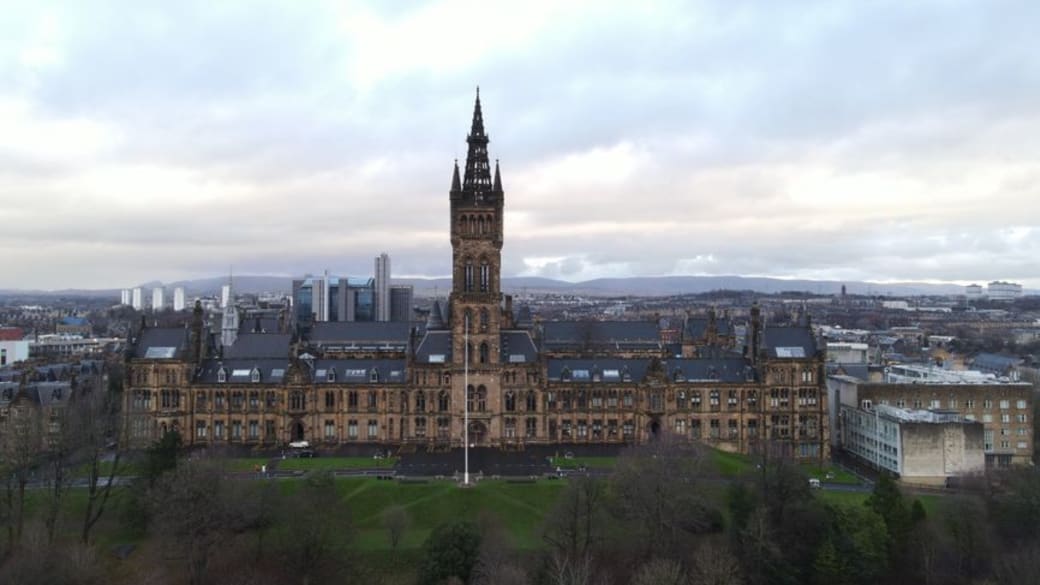
The University of Glasgow’s main campus in the West End is a Gothic Revival landmark that looks, from certain angles, like it was designed to appear in a fantasy film. The campus is open to visitors, and walking through the cloisters and quadrangles gives children a strong sense of the city’s Victorian ambition.
The Hunterian Museum sits within the university and is Scotland’s oldest public museum. Its collections span natural history, archaeology, and science, with highlights including a Roman distance slab from the Antonine Wall and an extensive coin collection. Within the Hunterian complex, the Mackintosh House is the most significant single collection of Charles Rennie Mackintosh’s work anywhere in the world. The reconstructed interiors of his Glasgow home are displayed in sequence, giving a clear picture of how Mackintosh approached domestic space as a complete design problem rather than a series of separate decisions.
The Charles Rennie Mackintosh Trail and The Lighthouse
Charles Rennie Mackintosh is Glasgow’s most internationally recognized architect and designer, and the city has a mapped trail connecting his key buildings. The Lighthouse on Mitchell Street in the city center is a good starting point. It was Mackintosh’s first public commission, originally built as the offices of the Glasgow Herald newspaper in 1895, and it now functions as Scotland’s Centre for Design and Architecture.
The trail extends across the city and includes buildings in the West End, the city center, and beyond. For families with older children who have some interest in art or architecture, following even part of the trail on foot gives the city a different kind of structure. Note that the Mackintosh House, the largest collection of his interior work, is held within the Hunterian at the University of Glasgow rather than at The Lighthouse.
Glasgow Cathedral, Provand’s Lordship and the Necropolis
Glasgow Cathedral
Glasgow Cathedral is the oldest building in the city and one of the few medieval cathedrals in Scotland to have survived the Reformation largely intact. It stands on Cathedral Square in the east end of the city center, and the lower church, built over the tomb of St Mungo, Glasgow’s patron saint, is the building’s most atmospheric part.
The scale of the interior, particularly the forest of columns in the lower church, tends to impress children even if the religious history doesn’t land immediately.
Glasgow Necropolis
The Necropolis rises directly behind the Cathedral, reached by crossing the Bridge of Sighs over the Molendinar Burn. It’s a Victorian garden cemetery covering a hill, with elaborate monuments, obelisks, and mausoleums spread across the slope.
It’s an unusual recommendation for families, but the Necropolis is more interesting than morbid, and its Victorian funerary architecture is unlike anything else in Glasgow.
Provand’s Lordship
Provand’s Lordship stands directly across the road from the Cathedral and is Glasgow’s oldest house, dating to 1471. The interior is furnished to reflect life in a medieval Glasgow townhouse, with period furniture and objects throughout.
It’s a small venue and a short visit, but the combination of Provand’s Lordship, the Cathedral, and the Necropolis means your family can cover three distinct historic layers of the city in a single morning on foot, without needing transport between any of them.
Outdoor Activities and Waterfront Walks

River Clyde Walk and the Waterfront
The River Clyde is the river Glasgow grew up around, and the waterfront path along its banks is one of the most accessible outdoor routes in the city. The Clyde Walkway runs along both banks through the city center and extends westward toward the Riverside Museum and The Tall Ship Glenlee at Pointhouse Quay.
The path is largely flat and well-surfaced, which makes it manageable with prams and scooters. Walking west from the city center, the route passes under several of Glasgow’s distinctive bridges before opening out toward the wider waterfront around the Science Centre and the Riverside Museum. It’s a practical way to connect several of the city’s major attractions on foot rather than by car or public transport, and the river itself gives children something to look at and respond to as you move.
Forth and Clyde Canal
The Forth and Clyde Canal is a separate waterway from the River Clyde and runs along the north side of the city, through areas including Maryhill and Port Dundas. Built between 1768 and 1790 to connect Scotland’s east and west coasts, the canal’s towpath is now a traffic-free walking and cycling route.
The canal path is flat, well-maintained, and wide enough for side-by-side walking, which makes it well-suited to families with younger children. The water is calm, and the surroundings are quieter than the city center waterfront, giving it a different character from the Clyde walk. The western end of the canal meets the River Clyde at Bowling, well outside the city, but the urban stretches through Maryhill are accessible and interesting in their own right.
Parks, Gardens, and Green Spaces
Baltic Street Adventure Playground
Baltic Street Adventure Playground sits in Bridgeton, about 3km east of the city center, and it takes a different approach to play than the manicured parks nearby. Kids climb, build, and dig with ropes, tires, and timber rather than fixed equipment, and there’s a mud kitchen for the ones who don’t mind getting messy. It’s staffed, and opening hours are limited across the week, so check the current schedule before building a visit around it.
Glasgow Green
Glasgow Green is the city’s oldest public park, on the north bank of the River Clyde east of the city center. It’s a large, flat green space with a long history as a public gathering place, and it connects directly to the Clyde Walkway along the riverbank.
The Glasgow Green Play Village is one of the city’s more thoughtfully designed play spaces. It’s a fenced, sandy layout divided into two distinct zones: a toddler area with lower-level equipment suited to under-fives, and a larger zone for older children with more challenging climbing structures, a zip line, and water play features. The separation between the two zones makes it easier to manage a visit with children of different ages at the same time.
Queen’s Park
Queen’s Park sits in the Southside of Glasgow, about 4km south of the city center. It’s a Victorian park with a mix of formal gardens, open grass, and a boating pond, spread across a hill that gives good views north toward the city skyline.
The park has a well-established play area and enough open space for children to run freely. It’s a neighborhood park in the best sense: well-used, well-maintained, and not set up primarily for tourists, which gives it a relaxed, local feel that’s easy to spend a couple of hours in.
Rouken Glen Park
Rouken Glen Park is in Thornliebank on the southern edge of the city, roughly 9km from the city center. It’s a large, varied park with a boating pond, a waterfall, woodland trails, and a well-equipped adventure play area that’s among the best in the Glasgow area.
The play area is substantial enough to keep children occupied for a full morning, and the surrounding park gives families space to walk and picnic without feeling hemmed in. The waterfall and glen section of the park has a wilder, more natural feel than the formal parks closer to the city center, which gives it a slightly different character worth the extra distance.
Pollok Country Park
Pollok Country Park covers around 146 hectares of woodland, meadow, and formal gardens in the Southside, about 5km from the city center. It’s Glasgow’s largest park and includes the Burrell Collection, so a visit can combine a proper outdoor walk with a museum stop.
The park has waymarked trails through the woodland, a walled garden, and a herd of Highland cattle that children tend to find more interesting than any exhibit. The trails are mostly flat and accessible, and the park’s scale means it absorbs visitors well, even on busy days.
Fossil Grove at Victoria Park
Fossil Grove is inside Victoria Park in the Whiteinch area of the West End, about 5km from the city center. What makes it different from a general park visit is the covered building at its heart, which protects a set of fossilized tree stumps preserved in situ, exactly where they were found during park construction in 1887.
The fossils are around 330 million years old and are among the best-preserved examples of their kind in the world. For children interested in prehistory or natural history, seeing fossils still in the ground where they grew, rather than displayed in a museum case, tends to make a stronger impression than the same information delivered through a label on a wall.
Glasgow Botanic Gardens and Kelvingrove Park
The Glasgow Botanic Gardens and Kelvingrove Park are two separate green spaces in the West End, but they’re connected by the Kelvin Walkway, a signposted, traffic-free path that runs alongside the River Kelvin between the two. The path is flat and well-surfaced, making it straightforward with prams and scooters, and it turns what might otherwise be two separate park visits into a single connected outing.
The Botanic Gardens are anchored by the Kibble Palace, a large Victorian glasshouse with tropical plants and a distinctive iron-and-glass structure that children find visually striking. Kelvingrove Park, at the other end of the walkway, sits beside the Kelvingrove Art Gallery and Museum, so your family can move from the park directly into the museum without backtracking.
Glasgow Neighborhoods Worth Exploring
The West End and Ashton Lane
The West End holds the highest concentration of things to do in Glasgow with kids in a single walkable area. Kelvingrove Art Gallery and Museum, Kelvin Hall, the Botanic Gardens, the University of Glasgow, and the Hunterian are all within a comfortable walk of each other, making the West End a natural base for a full day or more.
Right in the middle of all that, Ashton Lane is worth a detour of its own. It’s a cobbled lane off Byres Road that runs between the backs of the main street’s buildings, narrow, atmospheric, and physically interesting in a way kids notice, with fairy lights strung overhead and an enclosed feel that sets it apart from the wider city. You can fold it into the same day without adding much distance, it’s a short walk from the university campus and just as close to the Botanic Gardens.
Merchant City and the City Center Mural Trail
Merchant City is a neighborhood immediately east of the city center, built on the wealth of Glasgow’s eighteenth-century tobacco and textile trade. The architecture is grand, and the streets are wide, but what makes it particularly good for families is the City Center Mural Trail, a self-guided walking route connecting large-scale public artworks painted directly onto buildings across the city center and Merchant City.
The murals are outdoors, spread across multiple streets, and give your family something specific to look for as you move through the city. The trail requires no booking. For children who find museum visits tiring, having a physical goal, finding the next mural, gives a walk through the city a different kind of purpose. The Glasgow Police Museum on Bell Street is also within Merchant City, making it easy to combine both in a single outing.
The Hidden Lane, Finnieston
The Hidden Lane is exactly what it sounds like: a narrow lane tucked behind Argyle Street in Finnieston, lined with independent studios, workshops, and creative spaces. It’s not a tourist attraction in the conventional sense, but it has a character that’s different from the rest of the city.
Walking through it with children shows how creative industries embed themselves in unexpected urban spaces. The lane is short, but the density of independent makers and the physical quirks of the space – painted walls, mismatched doors, handmade signs – make it worth a detour if your family is already in Finnieston. It’s about 1km from the Glasgow Science Centre, so it fits naturally into a day on the western edge of the city center.
Frequently Asked Questions About Glasgow
When’s the Best Time to Visit Glasgow?
Late spring through early autumn, roughly May to September, offers the best chance of dry weather and longer daylight hours, making parks and waterfront walks more practical. Glasgow’s indoor attractions are worth visiting year-round, so a winter trip is entirely workable if your family is comfortable with the cold and the shorter days.
What’s the Best Way to Get Around Glasgow?
Glasgow has a subway system, the Clockwork Orange, that loops around the city center and West End, and buses cover the wider city well. Taxis and ride-shares are easy to find across the city. Many of the key attractions in the West End and city center are within walking distance of each other, so your family can cover a lot of ground on foot once you’re in the right neighborhood.
Is Glasgow a Safe, Family-Friendly Place to Visit?
Glasgow is a well-visited city with a strong tourism infrastructure, and families travel there without issue. Like any large city, it’s worth being aware of your surroundings in quieter areas at night, but the main tourist neighborhoods, the West End, Merchant City, and the city center, are busy, well-lit, and straightforward to navigate with children.
Final Thoughts
Glasgow offers families plenty to do across a range of ages, budgets, and weather conditions. The concentration of publicly funded museums in the West End alone is enough to anchor two or three days, and the parks, waterfront walks, and neighborhood streets add texture beyond the obvious stops. Start with a neighborhood rather than a list, let the day build from there, and check the latest opening details directly with each venue before you go. There’s more to discover about things to do in Glasgow than most families expect before they arrive.
DISCLAIMER: This article/page contains affiliate links. This means that if you make a purchase after clicking on one of these links, then we may receive a small commission – at no extra cost to you. See our full disclosure and Privacy Policy for more information. Thank you for supporting our site and helping make it the inspiring location-independent, long-term family travel and worldschooling blog it aims to be!