

Albany sits at the southern edge of Western Australia, where a deep natural harbor meets rugged coastal cliffs and old-growth forests. It’s a destination that works across ages and energy levels, with enough variety to keep your family busy for several days without feeling rushed. From military history to whale watching, here’s everything you need to know about things to do in Albany with your kids.
What Are the Best Things to Do in Albany with Kids?
Albany is one of those regional destinations that don’t ask your family to choose between types of experiences. On the same day, you could walk a clifftop trail, explore a preserved whaling ship, and finish with a swim at a sheltered beach. That range is what makes it practical for families traveling with kids of different ages.
The town itself is compact and easy to move around. Most of the major attractions are within a short drive of the center, and the coastal areas are accessible without long hikes or complicated logistics. For families with younger children, the calm-water beaches and flat boardwalk sections mean there are always options that don’t require much preparation.
What follows covers the full picture: built attractions, coastal highlights, national park geology, hiking trails, wildlife encounters, and day trips. Whether you’re planning a long weekend or a week-long stay, kids’ activities in Albany, WA, cover enough ground to fill the time without repeating yourself.
(This post includes affiliate links for which we may earn a commission at no extra cost to you should you make a purchase. See our full disclosure and Privacy Policy for more information)
Why Albany Belongs on Your WA Itinerary
Albany is Western Australia’s oldest colonial settlement, and that history sits alongside some of the state’s most dramatic natural scenery. The combination is unusual. Most regional WA destinations lean heavily in one direction or the other. Albany does both, and does them within a few kilometers of each other.
LOOKING FOR A GUIDED TOUR?
Check activity availability, the latest prices and book your tickets online here…
| Reader Note: Commissions may be earned from you clicking the links above |
What Makes Albany Unique
The harbor geography sets Albany apart immediately. Princess Royal Harbour is one of the largest natural harbors in the world, and the town grew around it in a way that keeps the water visible from much of the center. The surrounding coastline shifts from sheltered sandy beaches to exposed granite headlands within a short drive, giving your family a varied coastal experience rather than a single beach repeated in different directions.
The military history here is also specific and significant in a way that goes beyond what a plaque on a wall can convey. Albany was the last port of call for Australian and New Zealand troops departing for Gallipoli in 1914, and that connection is preserved and interpreted in depth. For families with older children, that context gives the history real weight.
Add to that the whale-watching season, accessible national park geology, and proximity to the Stirling and Porongurup ranges, and Albany offers a travel itinerary that holds together for a full week without feeling stretched.
Albany’s Beaches and Coastal Highlights
Albany’s coastline covers a wide range of beach characters, from calm harbor-facing shores to exposed ocean beaches with dramatic rock formations. Your family will find options that suit different ages and different moods across the same trip.
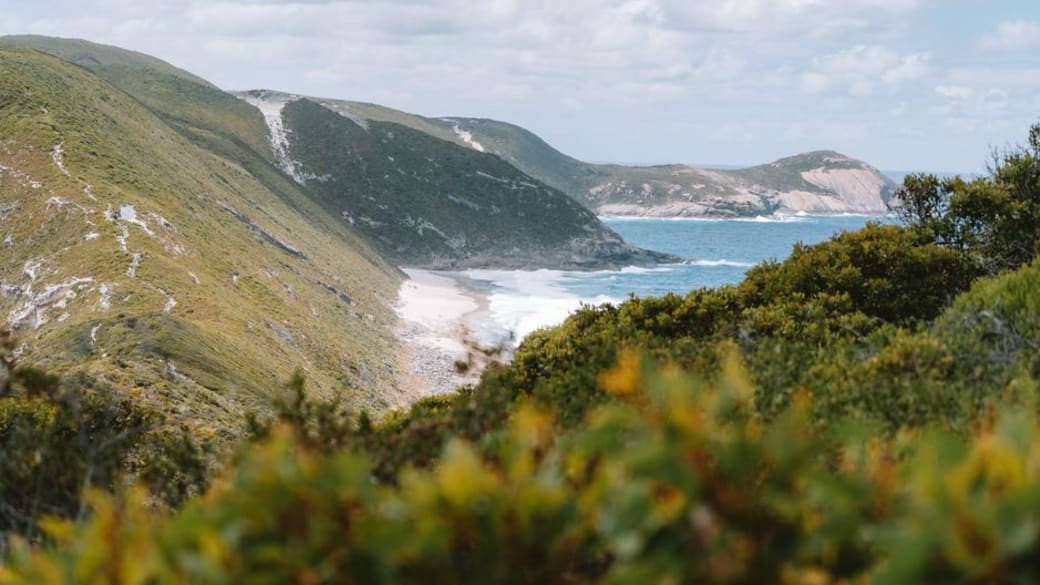
Middleton Beach and Ellen Cove Boardwalk
Middleton Beach is the closest patrolled beach to Albany’s town center, and the combination of calm water and easy access makes it the most practical choice for families with young children. The beach faces into King George Sound rather than the open ocean, which keeps the water relatively sheltered for most of the year.
The Ellen Cove Boardwalk runs along the foreshore, connecting the beach to the broader coastal area. It’s flat, paved, and suitable for prams and younger walkers. The walk takes in views across the sound and is a good option for early mornings or evenings when the light is low, and the beach is quiet.
Emu Point and Frenchman Bay
Emu Point sits at the edge of Oyster Harbour and has some of the calmest water in the Albany area. The shallow, protected conditions make it particularly well-suited to families with toddlers or children who are still building confidence in the water. There’s a boat ramp and a small jetty, and the area has a relaxed, local feel that’s different from the more visited Middleton Beach.
Frenchman Bay is a short drive further along the coast toward Torndirrup National Park. The bay itself is sheltered and scenic, and it sits at the gateway to the national park’s main geological features. It’s a useful stopping point if your family is heading out to The Gap and Natural Bridge, and the beach there is worth a walk even if you’re not swimming.
Misery Beach and Little Beach
Despite the name, Misery Beach is an appealing stretch of white sand tucked inside Two Peoples Bay Nature Reserve, about 35 kilometers east of Albany. The water is clear, and the beach is sheltered enough for swimming on calm days. It’s less visited than the beaches closer to town, which gives it a quieter character that suits families who prefer space over convenience.
Little Beach, also within Two Peoples Bay Nature Reserve, is a short walk from the car park and has a similar character: white sand, turquoise water, and a sheltered position that makes it swimmable for much of the year. The reserve is also significant for wildlife, with the noisy scrubbird and Gilbert’s potoroo both present in the surrounding habitat.
Torndirrup National Park and Geological Wonders
Torndirrup National Park covers the granite peninsula south of Albany and contains some of the most dramatic coastal geology in southern Western Australia. The park is accessible by car, and the main features are clustered close enough together that your family can cover several in a single visit.
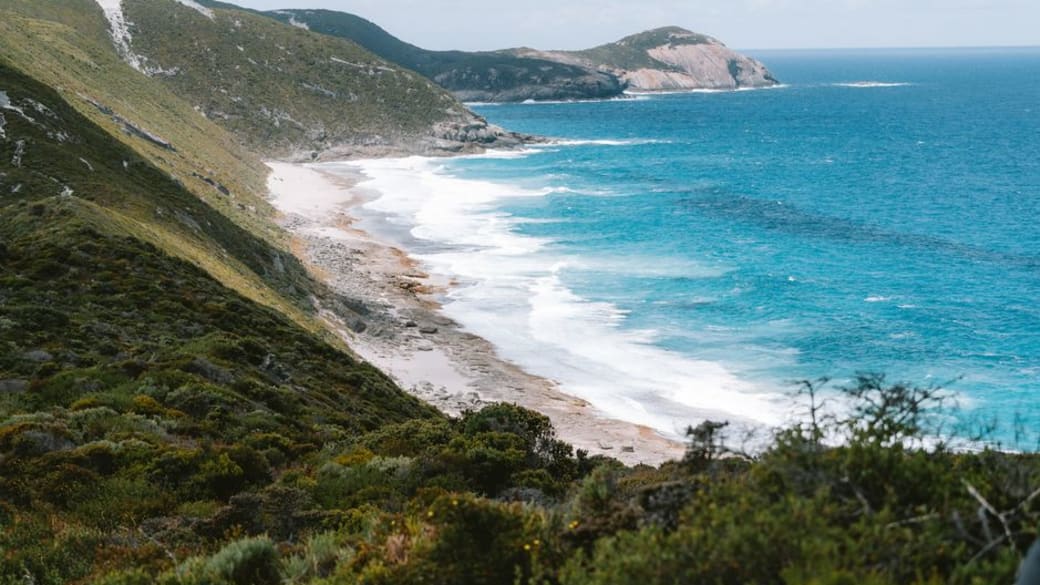
The Gap and Natural Bridge
The Gap is a narrow channel cut through granite by wave action over thousands of years. The walls drop steeply to the water below, and the force of the Southern Ocean as it moves through the channel is visible even on relatively calm days. Viewing platforms and safety railings are in place, but the exposure is real and worth keeping in mind with younger children.
Natural Bridge is a short walk from The Gap and is exactly what the name suggests: a granite arch formed by the same wave erosion process. The scale of it is easier to appreciate from the viewing area than from photographs. Both features are accessible on the same short walk from the car park.
The Blowholes
The Blowholes at Torndirrup National Park are a series of fissures in the granite through which seawater is forced upward by wave pressure. The effect depends on swell conditions, so what your family sees will vary. On high-swell days, the water can shoot several meters into the air. On calmer days, the sound and movement are still present but less dramatic.
The site is exposed, and the rock surface around the fissures can be wet and slippery. Staying on the marked viewing areas is the practical approach, particularly with children. The walk from the car park is short, and the terrain is manageable.
Albany Wind Farm
The Albany Wind Farm sits on the ridge above Torndirrup National Park and is visible from much of the surrounding coastline. Twelve turbines run along the ridge, and the site includes a viewing area where your family can observe them up close and learn how the wind farm operates and what it contributes to the local power supply.
For children interested in how things work, the scale of the turbines up close is striking. The ridge location also gives wide views across the coast and toward the Stirling Range on clear days.
Hiking, Walks, and Outdoor Adventures
Albany’s walking options range from short coastal strolls to full-day hikes on exposed ridgelines. There’s enough variety for your family to match the day’s walk to everyone’s energy levels.
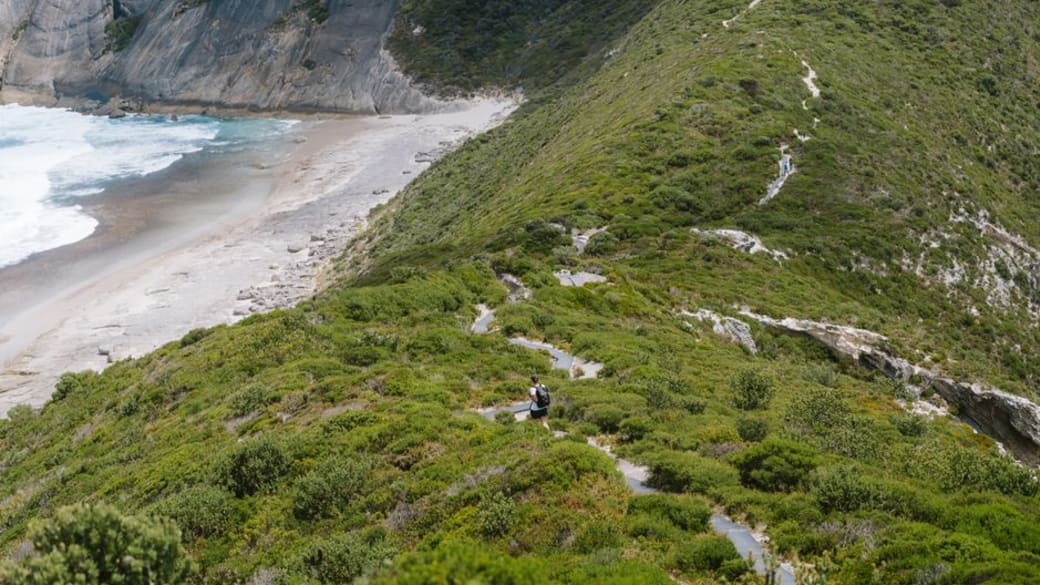
Bald Head Hike
The Bald Head Hike is a full-day walk that follows the spine of the Flinders Peninsula out to the southernmost point of the Albany coastline. The return distance is around 14 kilometers, and the terrain involves some exposed ridgeline walking with views across the Southern Ocean on both sides.
It’s a walk for families with older children and a reasonable level of fitness. The path is well-marked, but the exposure means sun protection and adequate water are non-negotiable. The reward at the end is a headland with views that are hard to match anywhere else in the region.
Bibbulmun Track
The Bibbulmun Track is one of Australia’s great long-distance walking trails, running roughly 1,000 kilometers from Kalamunda near Perth to Albany. For most families visiting Albany, the relevant section is the stretch that passes through or near the town, which can be walked in shorter day sections without committing to the full trail.
The track passes through jarrah and karri forest, coastal heath, and granite country depending on which section you choose. Albany sits at the southern terminus, and the final section into town along the coast is a manageable half-day walk that gives a real sense of what the trail covers.
Albany’s National Parks
Beyond Torndirrup, the Albany region includes Stirling Range National Park, Porongurup National Park, and Two Peoples Bay Nature Reserve, each with their own walking options. Porongurup has well-graded trails suitable for families with younger children, including the walk to Balancing Rock and the Granite Skywalk. Stirling Range has more demanding terrain, with Bluff Knoll requiring a reasonable level of fitness and appropriate preparation.
Two Peoples Bay has shorter coastal walks that connect the beaches and give access to the reserve’s wildlife habitat. For families who want variety across several days, rotating between these parks keeps the outdoor program fresh.
Wildlife, Nature, and Marine Encounters
The natural environment around Albany is one of its strongest draws, and the wildlife encounters here is all about the habitat rather than any managed experiences.
Albany’s Marine Environment and Whale Watching
Southern right whales and humpback whales move through the waters around Albany during their annual migration, generally between June and October. The whales use the sheltered waters of King George Sound as a resting and nursing area, which means sightings are possible from both shore and water.
Whale-watching tours operate from Albany during the season, and the whales’ proximity to the coastline means the experience is often closer than on open-ocean tours elsewhere. Check current operator availability and seasonal conditions before booking, as the timing and frequency of sightings vary year to year.
Albany’s Fauna, Birds, and Wildlife
The bushland around Albany supports a range of native fauna, including western grey kangaroos, echidnas, and a variety of reptiles. Two Peoples Bay Nature Reserve is particularly significant for birdlife, with the noisy scrubbird present in a habitat once thought to be its last refuge.
Waterbirds are common around Oyster Harbour and Emu Point, and the coastal heath supports honeyeaters and other small birds that are active in the morning. For families with children interested in wildlife, the variety here is enough to avoid needing a guided tour.
Albany’s Flora, Flowers, and Forests
The Albany region sits within one of the world’s recognized biodiversity hotspots, and the wildflower season runs broadly from late winter through spring. During this period, the coastal heath and surrounding bushland produce a dense display of flowering plants, including banksias, grevilleas, and a wide range of ground orchids.
The karri and tingle forests east of Albany, accessible on the drive toward Denmark, add a different character: tall, old-growth trees and a forest floor that feels absolutely ancient. For families who haven’t spent time in Australian old-growth forest, the scale of the trees is worth the detour.
Top Cultural Attractions and Activities in Albany
Albany’s built attractions cover military history, maritime heritage, colonial architecture, and local produce. Each one is distinct enough that visiting all four doesn’t feel repetitive.
National ANZAC Centre
The National ANZAC Centre sits on Mount Clarence, overlooking the harbor where the troopships departed in 1914. The building is designed around the personal stories of individual soldiers and nurses, and visitors are assigned a personal identity card at the start that follows a real person through the experience. For families with children old enough to engage with the concept of individual lives rather than abstract history, this approach makes the content land differently than a conventional museum.
The views from the site across Princess Royal Harbour are also worth the visit on their own terms. Check current opening hours before you go, as they can vary by season.
Albany Historic Whaling Station
The Albany Historic Whaling Station is the most intact former whaling station in the Southern Hemisphere, and the scale of it can be surprising. The chaser vessel Cheynes IV is preserved on site and can be boarded, and the processing facilities give a clear picture of how the industry operated until Albany’s station closed in 1978.
For kids, the combination of a real ship you can walk through and the industrial machinery of the processing plant tends to hold attention in a way that more passive displays don’t. The site also includes a whale skeleton and marine exhibits that connect the historical whaling operation to the whale watching that now draws visitors to the same waters.
Albany’s Historic District
The historic district around Stirling Terrace and the waterfront contains some of the oldest colonial buildings in Western Australia. The streetscape is intact enough that walking through it gives a sense of the town’s nineteenth-century character rather than a reconstructed version.
Several of the buildings are open to visitors, including the Old Gaol and Patrick Taylor Cottage. For families, the district works well as a self-guided walk you can take at your own pace. The terrain is mostly flat, making it manageable for younger children.
Limeburners Distillery
Limeburners Distillery produces single malt whisky on the outskirts of Albany and offers tastings and tours for adults. It’s worth including in an Albany itinerary if your family has older children who can occupy themselves while adults spend time at the tasting bar, or if you’re happy to treat it as a short stop rather than a main event.
The distillery draws on local barley and the cool southern climate, and the setting near Oyster Harbour is pleasant. Check current tour availability directly with the distillery, as schedules vary.
Indoor Activities in Albany
Albany’s wet season runs alongside the winter whale-watching months, so it’s worth having a few indoor options ready for the days the weather turns. These three work well for families who want a break from the coast without losing the day.
Albany Leisure and Aquatic Centre
This is Albany’s main indoor pool complex, with lap pools, a warmer pool for younger swimmers, and a gym and sauna if the grown-ups want to join in. It’s a reliable pick on a wet or cold day, and a good way to burn off energy between sightseeing stops.
Albany Public Library
The library on York Street is bright, modern, and built with families in mind, with a dedicated children’s area and low tables scaled for younger readers. A comfortable, free spot to read, rest, or wait out a downpour!
Museum of the Great Southern
Set on Residency Road, this is a separate site to the Albany Historic Whaling Station covered earlier in this guide, and it’s worth visiting in its own right. Kids can explore an interactive area, and you can walk the deck of the Brig Amity, a full-scale replica of the ship that carried Albany’s first European settlers.
Parks and Playgrounds in Albany
Albany has more play spaces than a first look suggests, and they’re spread across the areas your family will already be visiting for the beaches and coastline.
Eyre Park
Eyre Park sits just back from Middleton Beach and is one of the biggest play spaces in town, with equipment for a wide age range, a small lake, a basketball court, and picnic tables and BBQs if you want to make a stop of it. It’s an easy add-on to a Middleton Beach visit rather than a separate trip.
Middleton Beach Playground
This coastal-themed playground sits right on the Middleton Beach foreshore, close to the cafes and restaurants along the strip. It suits older kids best, with climbing equipment that goes beyond a simple toddler set, so little ones are better served by Eyre Park nearby.
Emu Point Playground
Right alongside the calm water at Emu Point, this playground makes a natural pairing with the swimming and jetty time already on offer there. It’s a good spot to let kids run before or after time in the water, with grassed areas and BBQs close by.
Mutenup / Foundation Park
On Parade Street, this park has a fenced kids’ play area separate from its off-leash dog space, so younger children can run around without worrying about dogs underfoot. There’s plenty of parking, grassed areas for a picnic, and toilets on site, which makes it an easy stop if your family has a dog along for the trip too.
Cull Park
Cull Park in Mira Mar has a play area, a small pond crossed by a footbridge, and shaded picnic spots with BBQs, giving your family a quieter alternative to the busier beachfront playgrounds. It’s a good option if you want somewhere calmer to let younger kids run around away from the coastal wind.
Albany Heritage Park
This reserve covers Mount Clarence and Mount Adelaide above the town, and beyond the National ANZAC Centre already covered in this guide, it has its own network of walking trails, lookouts, and war memorials worth a wander with older kids. It’s a shorter, gentler option than the full Bald Head Hike if your family wants coastal views without committing to a full day on the trail.
Day Trips from Albany
Albany’s position in the Great Southern region puts several significant natural areas within comfortable day-trip range. Each of the three options below offers something distinct from what’s available in Albany itself.
Porongurup National Park and Granite Skywalk
Porongurup National Park is about 40 kilometers north of Albany, making it an easy half-day or full-day trip. The park sits on an ancient granite range that predates most of the surrounding landscape by billions of years, and the combination of rounded domes and karri forest gives it a character unlike anything closer to town.
The Granite Skywalk trail leads to a viewing platform perched on a granite outcrop with wide views across the range and toward the Stirling Range to the north. The walk is moderately difficult and suitable for families with children who are comfortable on uneven terrain. The karri forest sections of the trail are particularly good for younger children who respond to the scale of the trees.
Stirling Range National Park and Bluff Knoll
Stirling Range National Park is roughly 80 kilometers north of Albany and contains the only mountains in southern Western Australia that regularly receive snow in winter. Bluff Knoll, at 1,095 meters, is the highest peak in the range and the most popular summit walk.
The Bluff Knoll trail is around 6 kilometers return with significant elevation gain, and it’s a mountain walk rather than a gentle nature trail. Families with fit older children will find it rewarding; families with younger children are better served by the lower-elevation walks within the park, which still give access to the range’s wildflower diversity and dramatic ridgeline scenery. Weather on the summit can change quickly, so layers and water are worth carrying regardless of the forecast.
Denmark WA and Green Pool
Denmark is about 55 kilometers west of Albany along the South Coast Highway. The town has a relaxed character and sits on the Denmark River estuary, with easy access to William Bay National Park and its most visited feature, Green Pool.
Green Pool is a natural rock formation that creates a sheltered swimming area with clear, calm water. The granite boulders that form the pool’s walls are large enough to climb and explore, making the site engaging for children beyond just swimming. Elephant Rocks, a short walk from Green Pool, adds another layer of geological interest with a cluster of rounded granite boulders that sit at the water’s edge.
Frequently Asked Questions About Visiting Albany WA
Albany is worth the trip for families who want a destination that combines natural scenery, accessible history, and wildlife encounters without the crowds of more heavily marketed coastal towns. The range of things to do in Albany WA means your family is unlikely to run out of options, even on a longer stay.
Late spring through early autumn, roughly October to April, gives the most reliable weather for outdoor activities and beach visits. Winter brings whale-watching season and wildflowers, but also cooler temperatures and more rain, which suits families who are happy to mix outdoor and indoor activities.
Three to five days gives your family enough time to cover the main attractions, spend time at the beaches, and fit in at least one day trip. A full week allows for a more relaxed pace and the option to explore the surrounding national parks in more depth
Albany is around 420 kilometers south of Perth, and the most common way to get there is by car along the Albany Highway, which takes roughly four to five hours. Regional flights operate between Perth and Albany Airport, with flights typically between 60-75 minutes. Coach services also run between Perth and Albany for families traveling without a vehicle.
Final Thoughts
Albany rewards families who come prepared to move among different experiences rather than settling into a single beach or attraction. The coastal geology, the ANZAC history, the whale watching season, and the surrounding national parks each add something the others don’t. Start with the National ANZAC Center and the Albany Historic Whaling Station to anchor the trip in the town’s character, then work outward from there. For a full picture of things to do in Albany WA, use this guide as your planning base and check directly with local operators for current availability and pricing before you go.
Where are the best places to visit in Western Australia?
Western Australia stretches 1,000+ km beyond Broome in the tropical north, all the way down and around the coast to Albany and Esperance in the south (and another 450 km to South Australia!). It’s the country’s largest state, and the landscape shifts dramatically along the way: red desert, coral reef, wild southern coastline, and karri forests, all in one region. If you’re in this region or considering a trip there, check out our Western Australia activity guides for family-friendly stops all along this vast coastline.
DISCLAIMER: This article/page contains affiliate links. This means that if you make a purchase after clicking on one of these links, then we may receive a small commission – at no extra cost to you. See our full disclosure and Privacy Policy for more information. Thank you for supporting our site and helping make it the inspiring location-independent, long-term family travel and worldschooling blog it aims to be!